Cycling In Bang Krachao: Bangkok's Green Lung Explained
Bang Krachao is the jungle peninsula sitting directly across the Chao Phraya from central Bangkok, and it is the closest thing the city has to protected countryside. Here is what it is, why cyclists go, and which guided rides cover it.
In Short
Bang Krachao is a green peninsula in the Chao Phraya river, reached from central Bangkok by a short ferry crossing. Guided bike tours cover it from $35.26 per person, including the Jungle Ride, Meal and Pickup at from $76.66, rated 4.9 across 524 reviews, and most tours include the boat crossing, bike and guide.
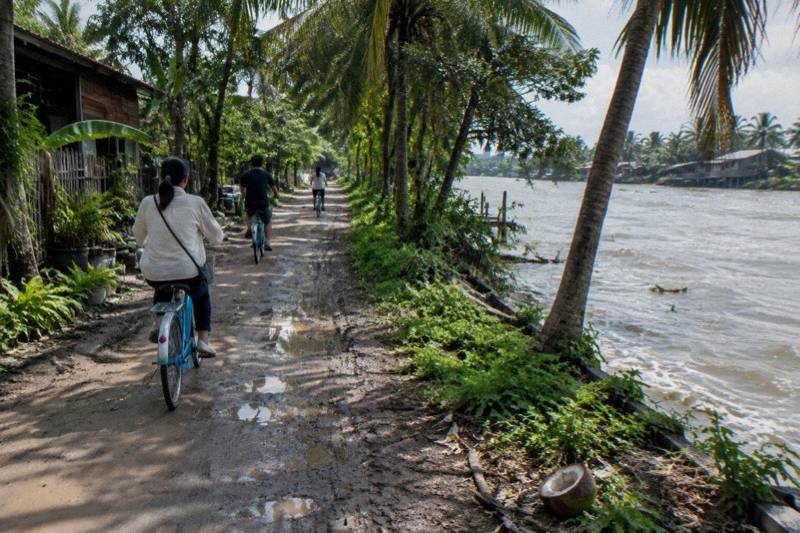
Bangkok ends, more or less, at the river. On the east bank the city presses hard against the Chao Phraya with condos, tollways and soi after soi of concrete. On the west bank, inside a wide bend of the same river, the map changes character almost immediately: banana groves, palm, raised concrete paths along klongs, wooden houses, small orchards and the odd temple. That loop of low-lying land is Bang Krachao, and for two decades it has been the default answer to the question of where Bangkok cyclists go when they want trees instead of traffic.
Locals and long-term residents call it the green lung, a phrase that stuck because the peninsula really does read like a patch of oxygen on a satellite image, wedged into the river's horseshoe in Phra Pradaeng, across the water from Khlong Toei and near Samut Prakan. Bikes are how the peninsula is usually explored, and the guided tours are the easiest way in: they bundle the bike, the guide, the river crossing and often a meal into a single morning. This page explains what the area is, what the rides cost, and how the pieces fit together, drawing on the tour details covered elsewhere on Bangkok Bike Tours.
What Is Bang Krachao, Bangkok's Green Lung?
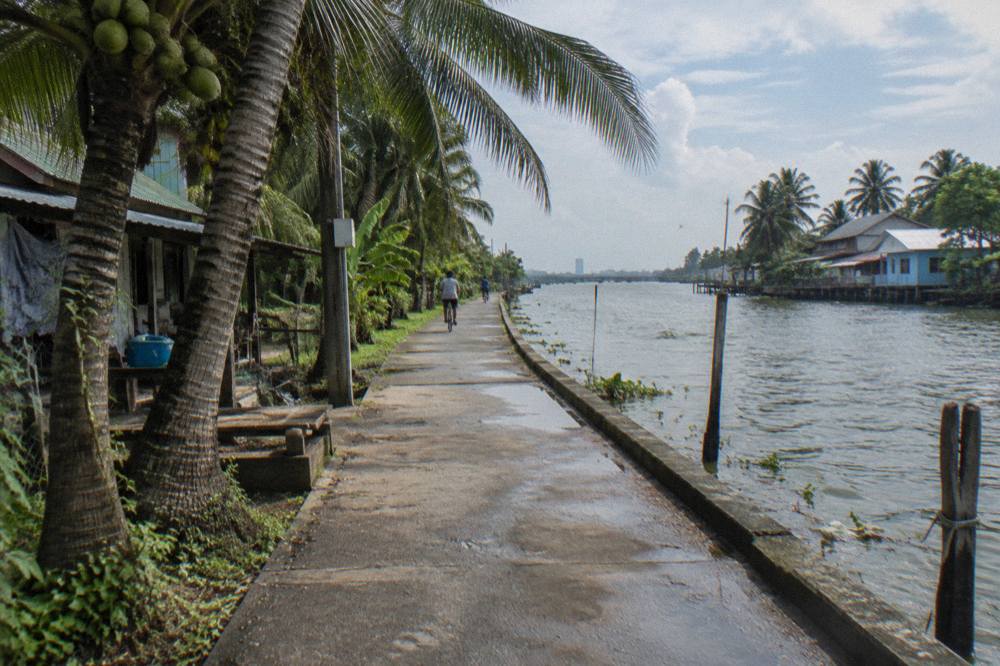
Bang Krachao is a peninsula of farmland, orchards and settlements sitting inside a horseshoe bend of the Chao Phraya river, administratively part of Phra Pradaeng district in Samut Prakan province and immediately across the water from central Bangkok. Although the skyline is visible, it has no towers and no mass transit, only narrow lanes and raised concrete paths above the waterline, which is why the green lung label fits so well. The area is widely described as Bangkok's green lung, and the description is not marketing: the land inside the river loop stayed agricultural while the city grew around it, protected partly by geography and partly by sustained planning pressure over the years. For a closer look at this green pocket, the guide to the Bang Krachao cycling route covers the cycling routes and what to expect when you go.
“This was a really slick tour - great bikes, precisely run, and our guide, Eddie, was outstanding at ensuring our safety on some of the major roads. The boat trip across the river, and riding through the ‘lung of Bangkok’ was peaceful and enjoyable. We would HIGHLY recommend this trip to others and would happily do it again on a future visit.”
Six subdistricts make up the peninsula, and the names that matter to cyclists are Bang Kobua, where a single tour meeting point sits, and Bang Nam Phueng, home to the weekend floating market of the same name. Sri Nakhon Khuean Khan Park, a large public park and former orchard, occupies much of the peninsula's centre and is the reason many loop rides exist in the first place. The villages scattered across the peninsula are ordinary working neighbourhoods, not resorts, which is exactly the point: Bang Krachao's appeal is that people farm, fish and cook there at a pace the east bank gave up decades ago.
The area's protected status has a history worth a sentence. Environmental campaigns pushed back against industrial development inside the loop over an extended period, and the land was eventually designated as an environmental conservation area rather than an extension of the port and factory belt downstream. The result today is a strange and pleasant tension: you can stand on a raised path between mango trees and still see Bangkok's glass towers across the water, close enough that the river traffic is clearly audible. Few major cities have this arrangement, an agricultural enclave a ten-minute boat ride from a financial district, and it explains why Bang Krachao has become the single most common destination for guided cycling in the region.
Readers who want the route detail rather than the background can go straight to the Bang Krachao cycling route guide, which walks the paths turn by turn, or the guide to a Bang Krachao ride for the tour-by-tour picture.
Why Do So Many Cyclists Cross The River For It?
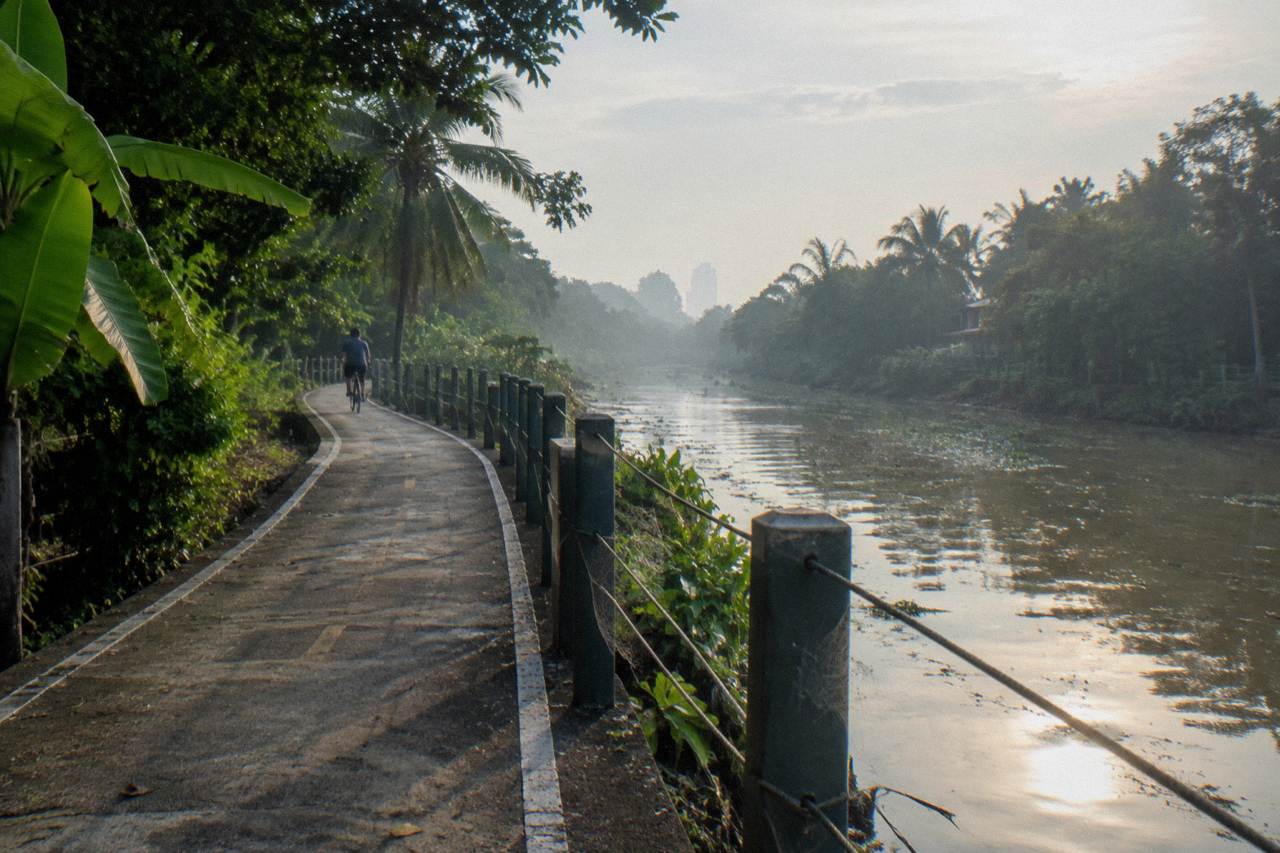
Cyclists cross the river for Bang Krachao because it delivers flat, shaded, almost car-free riding through jungle, canals, farms and villages on one compact loop, just a short ferry ride from central Bangkok. With paths running level and continuous along concrete embankments and tree cover keeping the sun off, it offers a combination that Bangkok's streets rarely manage this close to a major city centre. For visitors with limited time, it delivers a countryside experience without a two-hour drive to a province that actually is countryside.
The contrast is the product. On the Bangkok side, a cyclist negotiates traffic that drives on the left, buses, construction and heat radiating off asphalt. On the peninsula side, within minutes of stepping off the boat, the loudest sounds are usually birds, cicadas and the odd motorbike passing on a lane wide enough for one. The terrain suits every fitness level: there are no hills of any consequence, and the main obstacle is the occasional tight turn, a dog dozing in shade or a section where two paths meet at a house's front step. It is the kind of ride that suits almost anyone, and the tour design reflects that, with six green-lung rides running three to four and a half hours.
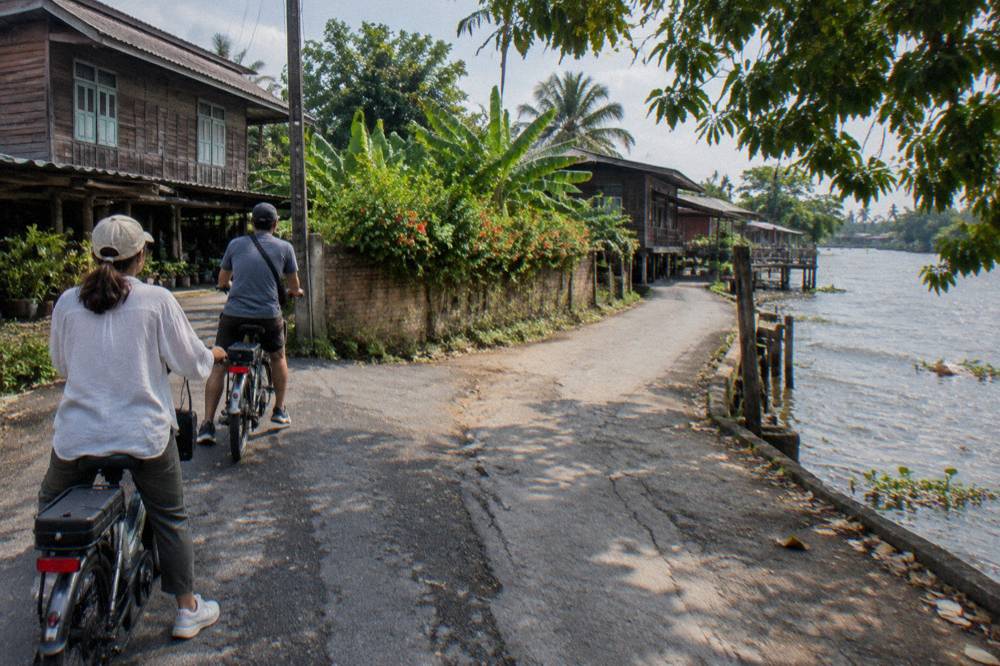
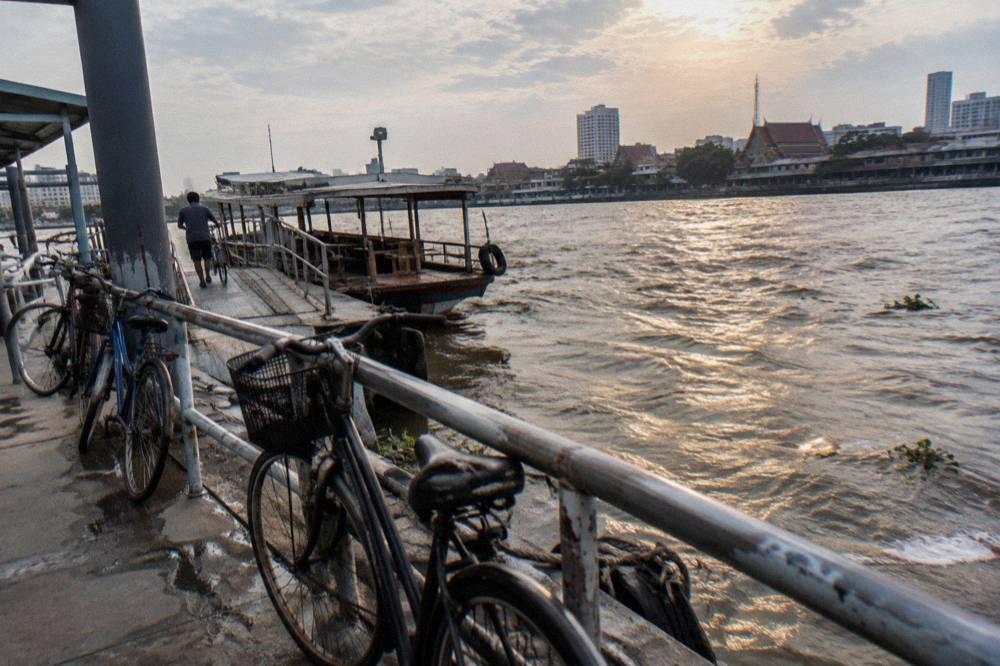
There is also a practical reason tours cluster here. The crossing itself is part of the experience: bikes roll onto a small ferry, the river opens out, and the city reappears as a skyline rather than a set of obstacles. Several of the guided rides include the boat or ferry crossing in the price, so the rider never has to work out the logistics alone. Between the crossing, the paths, the park and the market, the peninsula packs a full day's variety into three to four and a half hours of gentle pedalling, which is why the guided jungle rides here give the area a full outing rather than treating it as one stop among many.
The three rides above are the core green-lung options. The Jungle Ride, Meal and Pickup is the full-service version, with hotel pickup and lunch included. The 4.5-Hour Nature Ride, Meal keeps the lunch but asks riders to meet at a 7-Eleven on Kasem Rat Road near the pier. The Bamboo Original Jungle Ride is the budget entry at from $35.26 per person, meeting at 444 Kasem Rat Road, and it substitutes a Thai snack or meal, water and soft drinks for a full lunch.
Which Guided Rides Cover The Green Lung?
At least five guided rides cover Bang Krachao directly, from the $35.26 Bamboo Original Jungle Ride through the $76.66 Jungle Ride, Meal and Pickup to a 3-Hour Green Lung Ride starting on the peninsula itself at from $51.00 per person. All of them supply the bike and a guide, most cap the group between six and ten riders, and the differences come down to duration, food and where you meet. The table below lines up the main options with their key figures. For a dose of greenery closer to the city centre, the guide to walking and cycling in Lumphini Park explains how to reach the park and which guided rides pair well with a visit.
| Tour | Duration | Price from | Rating | Group max | Meeting point |
|---|---|---|---|---|---|
| Jungle Ride, Meal and Pickup | 4 hours | $76.66 pp | 4.9 from 524 reviews | 10 | Hotel pickup listed |
| 4.5-Hour Nature Ride, Meal | 4.5 hours | $54.00 pp | 4.8 from 149 reviews | 6 | 7-Eleven, Kasem Rat Rd |
| Bamboo Original Jungle Ride | 3 to 4 hours | $35.26 pp | 5.0 from 140 reviews | 8 | 444 Kasem Rat Rd |
| Jungle Escape Ride, 4 Hours | 4 hours | $39.86 pp | 4.9 from 50 reviews | 8 | 59, 3 Sunthonkosa Rd |
| 3-Hour Green Lung Ride | 3 hours | $51.00 pp | 4.9 from 43 reviews | 6 | Soi Bua Phueng, Phra Pradaeng |
The Jungle Escape Ride, 4 Hours is a strong mid-range pick: from $39.86 per person, 4.9 from 50 reviews, a maximum of eight riders, helmet, snack, water and soft drinks, the boat crossing, and free cancellation, meeting at 59, 3 Sunthonkosa Road on the Bangkok side. It skips lunch to keep the price down, which suits riders who plan to eat at the peninsula's market or back in the city afterwards.
One option stands apart geographically. The 3-Hour Green Lung Ride starts on the Bang Krachao side of the river, at 13, 2 Soi Bua Phueng in Phra Pradaeng, Samut Prakan, which means riders make their own way across first and skip the cross-river leg entirely. It runs with a maximum of six people, includes bottled water and free cancellation, and does not include food, so it works best for visitors staying near the river who want the shortest possible commitment.
For families, the Family Bamboo Bikes, Meal ride takes the same territory privately: from $81.26 per person, four hours, 5.0 from 22 reviews, with lunch, water and soft drinks and the boat crossing included. And for riders who prefer their own guide and pace, a private version exists too: the 4-hour Private Bike Tour Bang Krachao Green Lung runs from $110.08 per person with the total depending on group size, drawn from 14 reviews so far.
The full-service benchmark remains the related ride on this page. The Jungle Ride, Meal and Pickup runs four hours with up to ten riders, includes lunch, the boat crossing and, unusually for this category, hotel pickup, and carries 4.9 from 524 reviews, the deepest review pool of any green-lung tour. Its higher price buys the logistics: no pier to find, no meeting time to misjudge.
Readers comparing the wider field, including boat-combination rides that touch the river differently, can start from the Bangkok bike and boat tour guide for the crossover options.
How Much Does A Bang Krachao Bike Tour Cost?
Group tours of Bang Krachao's green lung run from $35.26 to $76.66 per person, while private options start at $81.26 for the Family Bamboo Bikes tour and $110.08 for a private green-lung ride. All figures are from-prices per person on the booking page, and what moves the number is not distance cycled but inclusions: lunch adds a few dollars, hotel pickup adds more, and private groups price on group size.
| Price band | Rides in it | What the money buys |
|---|---|---|
| Under $40 | Bamboo Original Jungle Ride ($35.26), Jungle Escape Ride ($39.86) | Bike, guide, snack, drinks, boat crossing; no lunch |
| $40 to $60 | 4.5-Hour Nature Ride ($54.00), 3-Hour Green Lung Ride ($51.00) | Lunch or a shorter loop; meet at a stated address |
| Over $60 | Jungle Ride, Meal and Pickup ($76.66), Family Bamboo Bikes ($81.26) | Lunch plus hotel pickup or a private group |
Two cautions keep the comparison honest. First, the cheaper tours almost all exclude hotel pickup and food beyond a snack, so a rider staying far from the river should factor a cross-city fare, and the public transport to tour start points guide covers the meeting-point geography in detail. Second, the from-price is the floor: some rates vary by group size, so confirm the exact live rate for the day you pick when booking. Currency context helps when budgeting the extras, market food, temple donations, a coffee on the pier: the baht trades at about 33 to 34 per US dollar, with rates moving daily, per the Bank of Thailand's published rates.
How Do You Get To Bang Krachao From Central Bangkok?
You take a short ferry across the Chao Phraya River, departing from piers around Khlong Toei and the upper reaches of the river, and the crossing itself takes only minutes. The real work is reaching the right pier on the Bangkok side at the right time; guided tours remove that friction by bundling the crossing into the ride, with hotel pickup included only on the Jungle Ride, Meal and Pickup.
For independent riders, the river is also the practical approach from the historic districts. The Chao Phraya Express Boat runs commuter services along the river, with Orange line fares at 19 baht flat and Yellow at 24 baht flat on weekdays per the operator's own fare page, though these weekday commuter lines are not the tourist boats to the heritage piers and no tourist-area fare is confirmed here. The simpler frame for Bang Krachao: get yourself to the Khlong Toei area, cross on the local ferry with the bike, and ride from the west bank landing. Cyclists planning to tack a Grand Palace visit onto a river day should note the palace's official page allows entry only between 8:30 AM and 3:30 PM and bans bike pants on its dress list, details on the official visitor information page.
Riders who prefer to have a bike waiting on the peninsula rather than bring one over can read the Bang Krachao bike rental guide for the self-guided route, and the Bang Nam Phueng floating market guide covers the weekend market that anchors most Sunday loops. Tour-side logistics are simpler: every tour includes a meeting address, and two tours handle arrival differently, the Jungle Ride offers hotel pickup instead of a stated meeting point, and the 3-Hour Green Lung Ride starts on the peninsula itself.
What Should You Expect On The Ground?
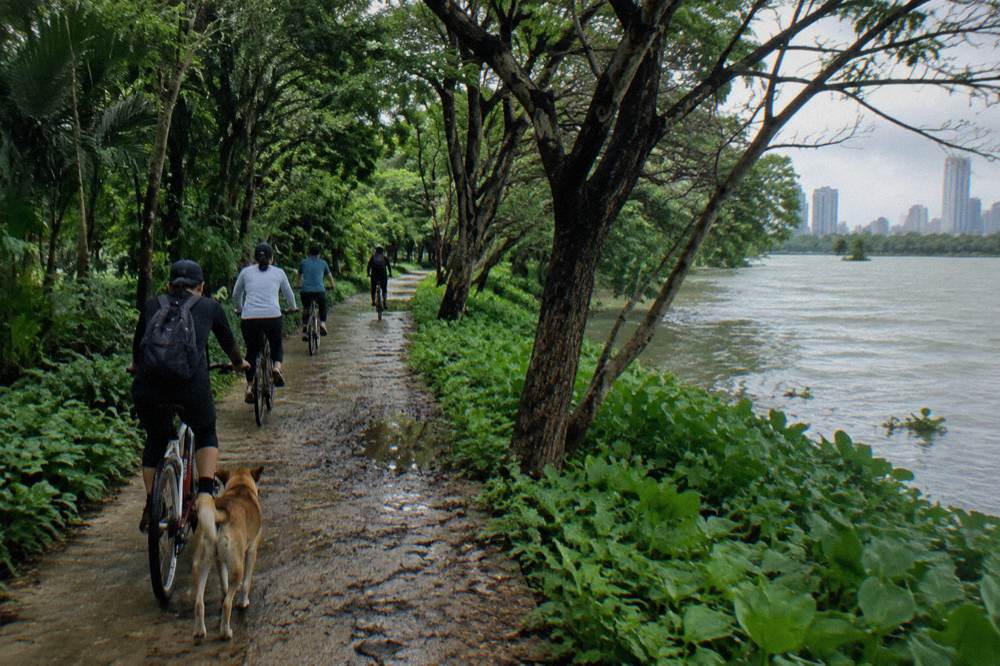
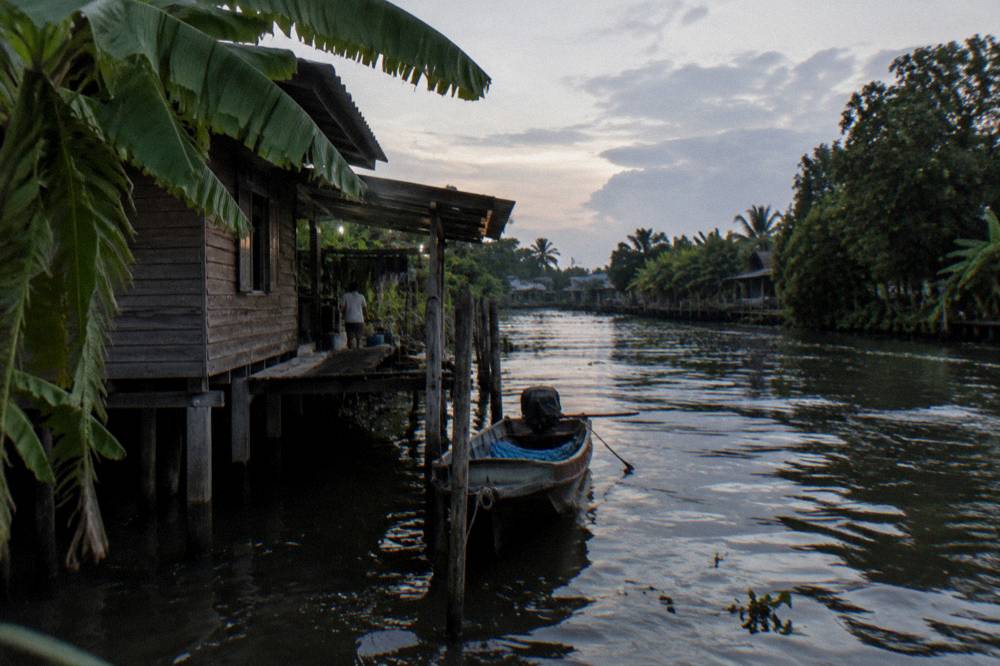
Expect flat, shaded riding on raised concrete paths through orchards, klongs, stilt houses and temples, rougher mixed surfaces in the villages, and tropical heat and humidity at any time of year. This is everyday Thailand rather than a manicured park: laundry drying, monks on motorbikes, mango and banana trees overhanging the path, and fish rising in the canals, all within sight of the towers across the river.
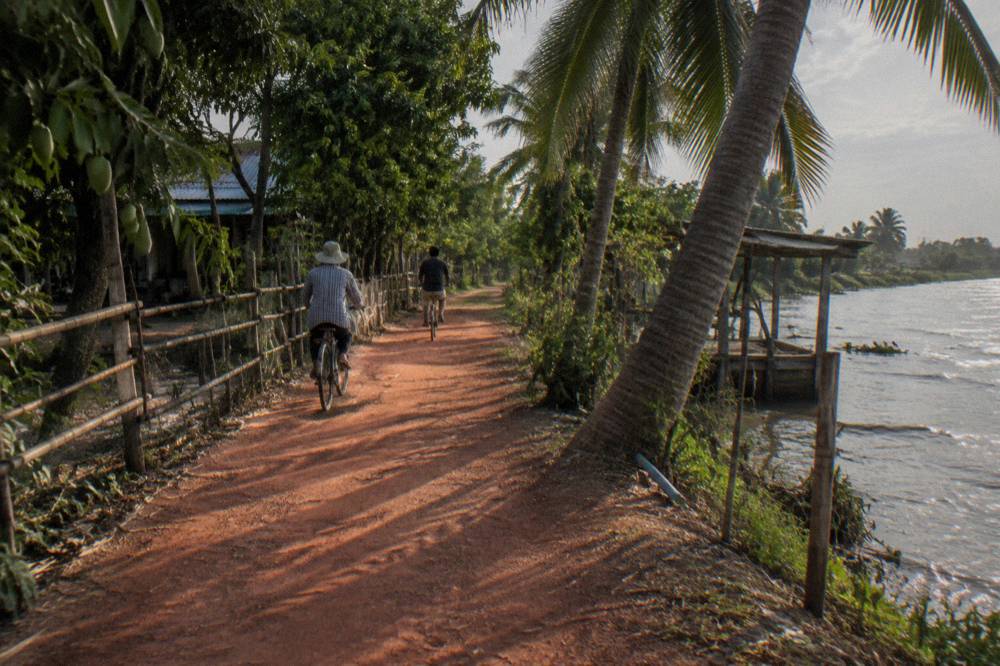
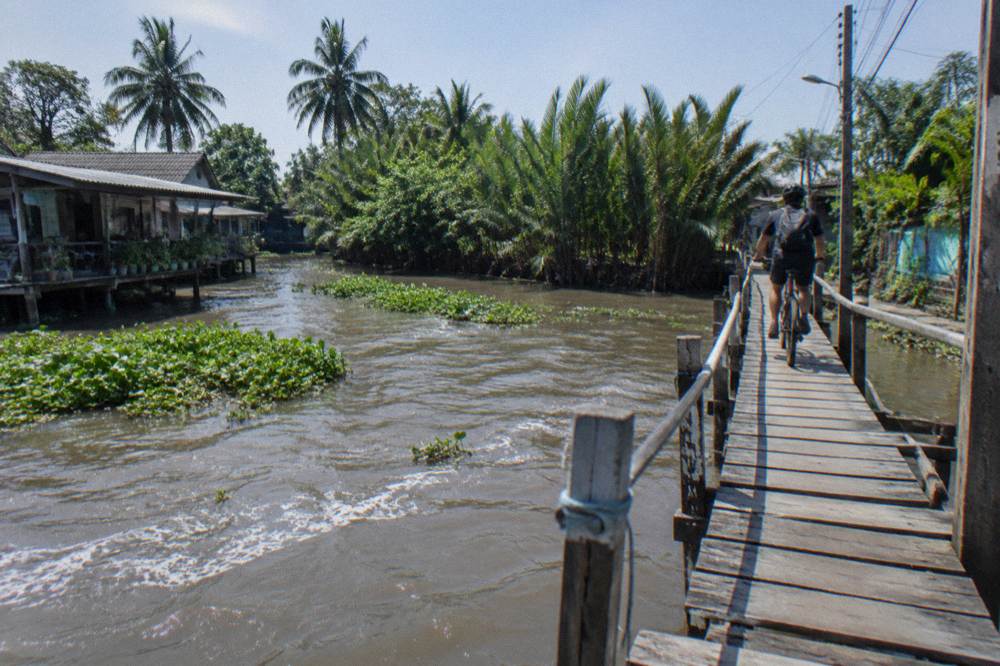
The riding surface deserves honest description. The main arteries are concrete strips a little wider than a bike, built above the water level, and they are smooth enough for any bike with functioning brakes. Between them, the villages connect via compacted lanes, sandy patches and short wooden bridges, all rideable but occasionally narrow enough that riders go single file and give way to residents. After rain, surfaces stay damp longer than in the city because the shade holds the moisture, and the humidity does not drop with the sun. The what to wear on a Bangkok bike tour guide has the clothing detail; the short version is light, covering, quick-drying fabric and shoes that can handle a wet bridge plank.
| What you encounter | How it behaves | What to do |
|---|---|---|
| Raised concrete paths | Level, continuous, occasionally cracked | Ride single file, call out passes |
| Village lanes | Narrow, mixed surface, shared with locals | Slow down, yield to residents |
| Canal bridges | Short, sometimes wooden, sometimes wet | Dismount if unsure of grip |
| Weekend market crowds | Dense around Bang Nam Phueng on weekends | Walk the bike through the stalls |
| Heat and humidity | Present year round, national averages 18 to 38 °C | Drink before you are thirsty, use the shade |
Wildlife is part of the deal. Monitor lizards work the canals, kingfishers and the larger wading birds appear along the klongs, and the peninsula's most famous residents are the fireflies that gather in the riverside trees after dusk, the reason twilight rides exist. One such ride, the Twilight Firefly Ride, runs 3 to 4 hours from $53.66 per person with dinner included, earns 4.9 from 243 reviews, and meets at 444 Kasem Rat Road. Insects in general come with the greenery, so repellent earns its place in a bag more reliably than a rain jacket between December and February.
Which Mistakes Trip Up First-Time Visitors?
The recurring mistakes are assuming the peninsula is a theme park rather than a working neighbourhood, underestimating the heat, booking a morning ride after a late-night arrival, and turning up at the market or the park expecting fixed hours that are not published anywhere official. None of these ruin a day by themselves, but each one converts a good ride into a rushed one, and all are avoidable with a little planning.
| Mistake | Why it happens | The fix |
|---|---|---|
| Treating paths as private bike tracks | The villages are homes, not trails | Ride as a guest: slow, quiet, yielding |
| Riding midday in the hot months | March to May are roughly the hottest | Book the first departure of the day |
| Skipping the ferry logistics | Assuming a stated meeting point means pickup | Read the meeting-point line on the booking page |
| Expecting a meal on a snack tour | Tours differ on food | Check whether the ride includes lunch or a snack |
| Planning a palace stop in riding kit | Bike pants are on the banned dress list | Carry long loose trousers, or visit on another day |
The heat point deserves emphasis because it is the one that catches visitors from cooler climates. Thailand's climate runs six rainy months, three cooler dry months and three hot months, with national average temperatures spanning 18 to 38 °C per the Tourism Authority of Thailand's weather overview, and roughly the hottest stretch falls between March and May. The peninsula's shade helps enormously, but the humidity is real, and the riders who enjoy the morning most are the ones who treated the first water stop as a scheduled event rather than an emergency. The Bangkok heat guide for cyclists covers this in depth.
“It was a great experience the guide and his wife were taking care of it! We went off the beaten track, we walked around the floating market and ate typical Thai dishes! Really, we recommend this outing.”
The second avoidable error is reading group size backwards. A maximum of six riders, as on the 3-Hour Green Lung Ride and the 4.5-Hour Nature Ride, means more guide attention and more stops for photos, while a maximum of fifteen, as on one larger green-lung ride, means a lower price and a more social pace. Neither is wrong; the mistake is discovering your preference after booking. Free cancellation is stated on most of these rides, which softens the cost of a wrong guess, but two rides in this category, the Bamboo Original Jungle Ride and the Family Bamboo Bikes ride, leave their cancellation policy unstated, so a change of plan on those two remains an open question.
When Is The Best Time Of Year To Ride The Green Lung?
Roughly December to February, the driest stretch of the Thai year, is the comfortable window for Bang Krachao, with September and October the wettest months and March to May the hottest, though rides run year round and the shade takes the edge off every season. The peninsula's tree cover is the reason tours operate in all twelve months: the same humidity that makes March heavy also keeps the green lung green in the dry season.
“Very enjoyable, relaxing afternoon cycling around Bang Kachao. Ate lots of food and had some nice conversations. Highly recommended.”
Rain deserves a calmer framing than first-time visitors usually give it. A rainy-season ride is typically a matter of one sharp shower rather than a washed-out day, the paths drain fast, and the landscape is at its most vivid when it is wet. The trade-off is surface water on the raised paths and bridges, so brakes and care matter more than gear. The rainy season riding guide works through the detail, and the best time to cycle in Bangkok guide sets the peninsula in the city-wide picture.
Weekends change the character of the ride in a way worth planning around. The Bang Nam Phueng weekend floating market draws Bangkokians across the river, so a Saturday or Sunday loop trades quiet for atmosphere, food stalls and crowds on the paths around the market itself. Riders who want the peninsula at its most solitary should aim for a weekday morning; riders who want coconut pancakes with their cycling should aim for the weekend and budget walking pace near the stalls. Firefly season aside, the twilight rides run on the riverside trees' nightly performance, and they are the one format where the calendar matters less than the clock: the departure is set so the group reaches the firefly trees after dark.
Common Questions About Bang Krachao
What Is Bang Krachao?
Bang Krachao is an agricultural peninsula inside a horseshoe bend of the Chao Phraya river, administratively in Phra Pradaeng district, Samut Prakan, directly across the water from central Bangkok. Known as the city's green lung, it combines orchards, canals, villages and Sri Nakhon Khuean Khan Park, all reachable by a short ferry crossing.
How Do You Get To Bang Krachao?
Most visitors take a short ferry crossing from the Bangkok side of the river near Khlong Toei. The guided rides handle this in different ways: most list a stated meeting address on the Bangkok side and include the crossing, the Jungle Ride, Meal and Pickup lists hotel pickup instead, and the 3-Hour Green Lung Ride starts on the peninsula itself in Phra Pradaeng.
How Much Does A Bang Krachao Bike Tour Cost?
Group tours run from $35.26 per person for the Bamboo Original Jungle Ride to from $76.66 for the Jungle Ride, Meal and Pickup, with mid-range options near $40 to $54. Private versions start higher: the Family Bamboo Bikes ride is from $81.26 per person and the Private Green Lung Ride from $110.08, with that total depending on group size.
Is Bang Krachao Good For Beginner Cyclists?
Yes, the terrain suits beginners: it is flat, the main paths are continuous raised concrete, and the guided rides cap groups between six and ten riders on most options. The challenges are heat, humidity and narrow village lanes rather than hills or distance.
When Is The Best Time To Visit Bang Krachao?
Roughly December to February, the driest stretch of the year, is the most comfortable window. September and October are the wettest months and March to May the hottest, but the peninsula's shade keeps rides workable year round, and weekend mornings add the Bang Nam Phueng floating market at the cost of crowds.
Do The Green Lung Tours Include Lunch?
Some do and some do not. The Jungle Ride, Meal and Pickup and the 4.5-Hour Nature Ride include lunch; the Bamboo Original Jungle Ride includes a Thai snack or meal plus drinks but not a full lunch; and the Jungle Escape Ride and 3-Hour Green Lung Ride include a snack or no food respectively. Check the inclusions on the booking page before assuming a meal stop.