Is Thailand Bicycle Friendly?
An honest look at cycling in Thailand and Bangkok: traffic, heat, quiet green routes like Bang Krachao, and when a guided bike tour makes sense.
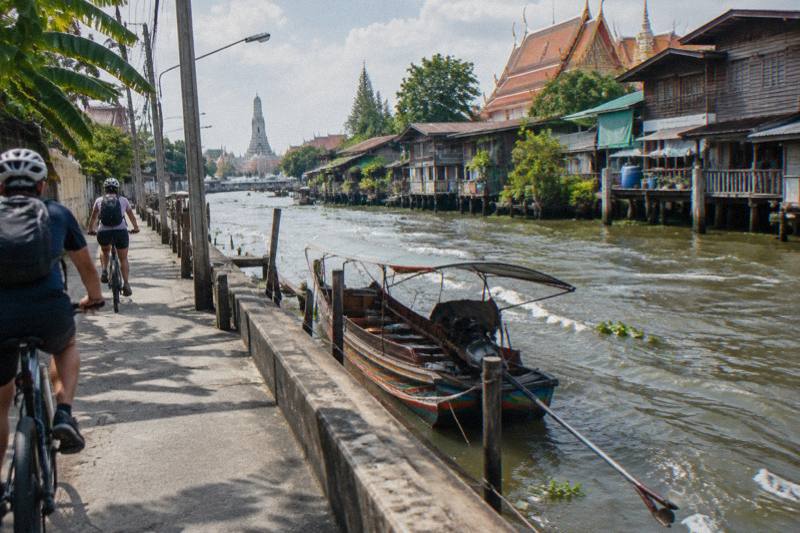
Thailand rewards cyclists who pick their ground. The same city that puts six lanes of buses and motorbikes on Sukhumvit also hides raised concrete paths through mango and banana groves ten minutes by ferry from the downtown piers, and lane after lane of flat, dead-quiet canal-side track in Thonburi. The question is not whether the country is bicycle friendly, it is where, when and how you ride it. Traffic drives on the left, the heat is real for much of the year, and protected bike lanes are rare, so most visitors who enjoy cycling here do it either early, on the water-side lanes, or behind a local guide who knows which soi to turn down.
Yes and no: Thailand is bicycle friendly in pockets, but not as a whole network. Certain areas welcome riders and make cycling genuinely pleasant, while the country as a whole lacks connected, bike-focused infrastructure, so your experience will depend heavily on where you ride rather than on any nationwide system of bicycle-friendly routes. Bangkok's core streets carry dense traffic and offer almost no segregated cycling lanes, while Thonburi's canal lanes, the Bang Krachao green area across the Chao Phraya and the temple town of Ayutthaya are flat, calm and genuinely pleasant on two wheels. Riding is legal and common, locals use bikes for short utility trips, and guided bike tours are an established way to see areas a visitor would never find alone. The friendly answer depends on picking the right district and the right hours.
The honest framing starts with what "bicycle friendly" means. If it means Dutch-style infrastructure, dedicated signals and lane continuity, Thailand does not offer that. If it means "can a reasonably confident adult visitor have a good day on a bike", the answer is clearly yes, in the right places, and thousands of reviews on Bangkok tours back that up. The most reviewed tour in the city's cycling selection, the Temples and Canals ride, carries 4,122 reviews and starts from $22.00 per person, which says something about how many visitors end up on a bike here and enjoy it enough to write about it.
Local cycling culture is mostly practical. Food vendors, students and commuters use bicycles for short hops on side streets, and motorbike and car drivers are used to sharing narrow soi with slower two-wheelers. That familiarity cuts both ways: drivers expect bicycles, but they also expect them to yield, so a visitor used to priority cycling lanes at home will need to adjust their expectations rather than their legality. Nothing about Thai traffic is out to get cyclists; it is simply busy, and it moves on the left.
What Is Cycling In Bangkok Actually Like?
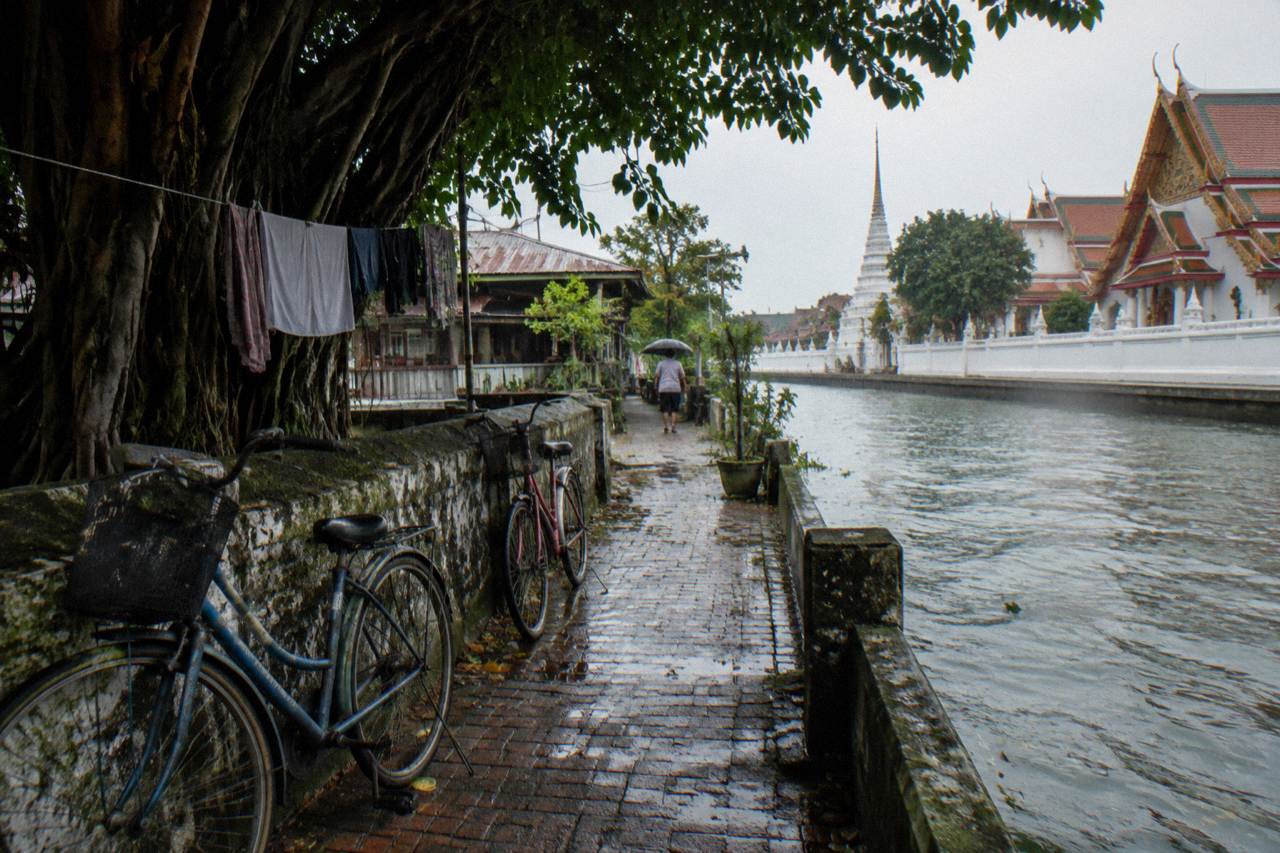
Cycling in Bangkok is genuinely a tale of two cities. In the core you contend with loud, fast arterial roads where traffic never seems to pause. Yet the moment you drop into the old quarters or cross the river, everything changes: the terrain stays flat and the lanes turn sleepy, making for a calm, easy ride through a slower side of the city. Most guided routes deliberately spend minimal time on big roads, hopping between temple lanes, market alleys and canal-side concrete paths where the traffic is a pushbike, a food cart or the occasional motorbike. A visitor on a well-chosen route experiences the calm Bangkok, not the expressway one.
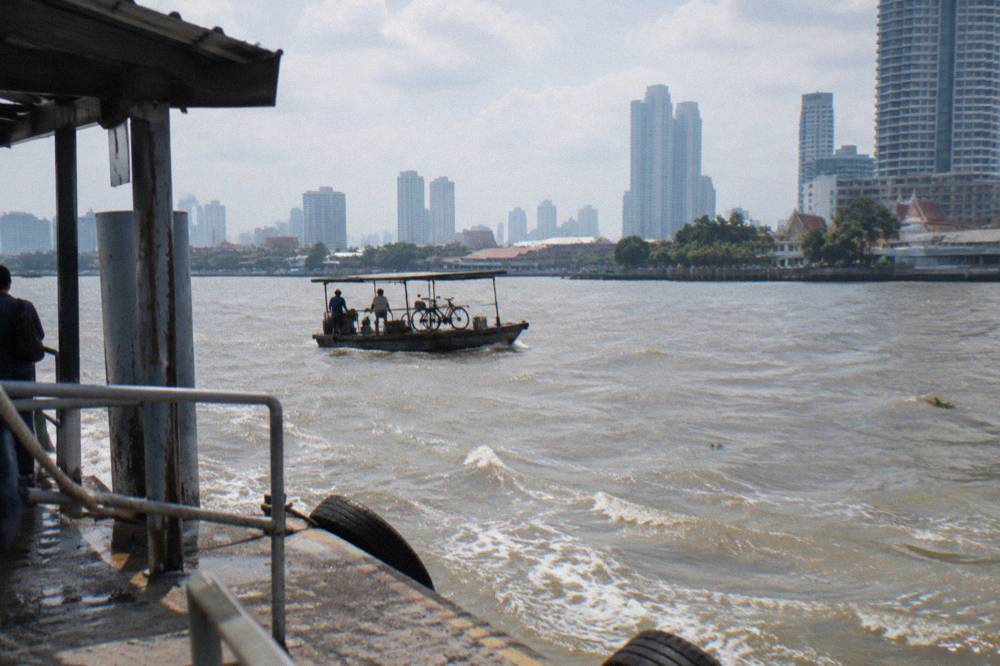
The difference is geographic more than anything. East of the river, around Silom, Sukhumvit and Siam, the grid is wide, the traffic constant and the footpaths crowded; cycling here is transport, not pleasure. West of the river in Thonburi, and south in the Bang Krachao green pocket, the streets narrow into lanes where through-traffic cannot build up speed, and the ride becomes shady, flat and quiet. The Chao Phraya itself is part of the cycling experience: many tours include a short ferry crossing in the ticket, and the river marks the line between the two Bangkoks better than any map.
Surface quality is the practical thing to know. Lane surfaces range from smooth concrete to broken pavement with open drainage covers, so rides here favor attention over speed. Guides call out hazards; solo riders should assume every puddle hides an edge. None of this makes the city unfriendly, it makes it a place where guided riding or a carefully chosen route beats improvisation every time.
For a closer look at the safety question, the site's guide on cycling safety in Bangkok covers traffic behaviour and street-level risk in detail.
Which Parts Of Bangkok Are Best For Cycling?
The best parts of Bangkok for cycling are Thonburi's canal lanes, the Bang Krachao green lung across the river, and the old-town temple quarter around the Grand Palace and Wat Pho. Chinatown's back sois also reward riders who head out early in the day. All four are flat, all four sit within a few kilometres of each other, and all four are where the guided tour industry concentrates, because they are where riding is actually enjoyable. Ayutthaya, an hour plus north, is a fifth option with its own historical park riding.
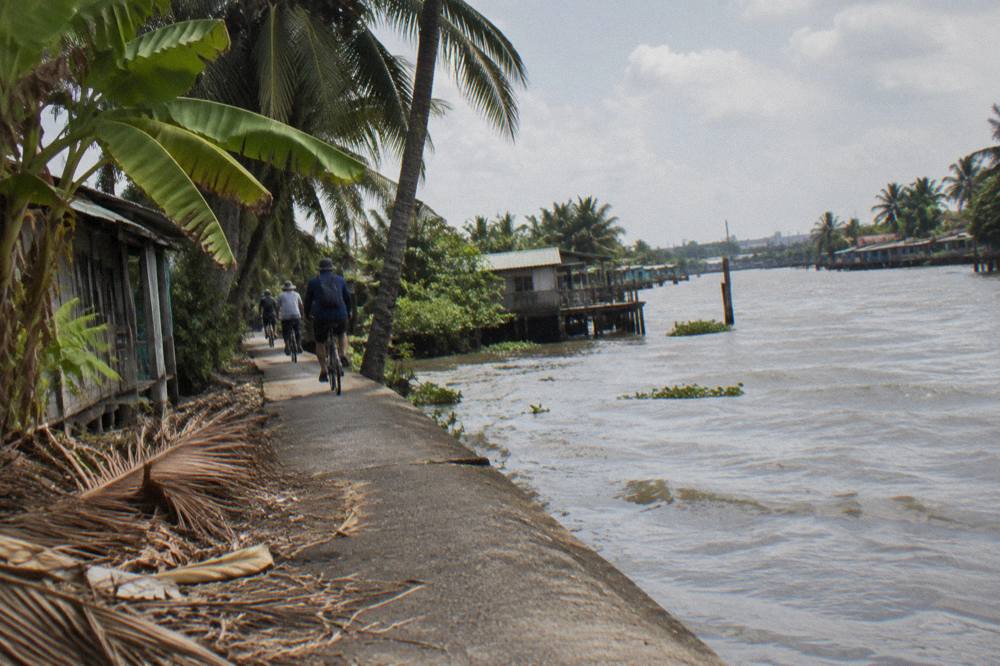
Each area suits a different rider. The old town and Chinatown are cultural density: temples, shophouses, flower markets and street food packed into rides of three to four hours, usually with a river crossing included. Bang Krachao is the opposite, a predominantly green peninsula of orchards, stilt houses and elevated paths through greenery, reached by a short ferry from a city pier. Thonburi's canals sit between the two, mixing wooden houses, tiny temples and long straight concrete tracks beside the water.
“We had an incredible experience on the bike tour. A big thank you to our guides Tanya and Whiskey for being friendly, attentive, and so knowledgeable, making the ride both fun and insightful as we explored parts of Bangkok we would never have seen on our own.”
The comparison below uses figures from the tours covered here, and it shows how the areas differ in price, group size and inclusions:
| Ride | Area | Duration | Group max | From (per person) | Rating |
|---|---|---|---|---|---|
| Classical City Ride | Old town and Chinatown | 3 hours | 16 | $39.56 | 4.8 from 2,481 reviews |
| Half-Day Ride, Lunch Included | Thonburi canals | 4 hours | 10 | $39.31 | 4.9 from 286 reviews |
| Colors Small Group Ride, Meal | Bang Krachao, from Yan Nawa | 4 to 4.5 hours | Not stated | $42.00 | 4.8 from 185 reviews |
| Jungle Ride, Meal and Pickup | Bang Krachao | 4 hours | 10 | $76.66 | 4.9 from 524 reviews |
| Bamboo Original Jungle Ride | Bang Krachao | 3 to 4 hours | 8 | $35.26 | 5.0 from 140 reviews |
One planning note if a temple ride will pass the Grand Palace: the official visitor page prices the foreign ticket at 500 baht, includes Wat Phra Kaew and the Queen Sirikit Museum of Textiles, and opens daily 8:30 AM to 3:30 PM. The official banned-dress list names bike pants among the items not allowed, so a cyclist arriving in riding kit will be turned away at the gate; the practical information page lists the full dress rules.
For route ideas beyond tours, the site's Bangkok cycling routes overview breaks down the same districts self-guided.
Is Bang Krachao Good For Beginner Cyclists?
Yes, Bang Krachao is arguably the most beginner-friendly cycling area in the Bangkok region, with flat terrain, low traffic, tree cover, and paths too narrow for cars. Reached by a short ferry from the city side, it gives new riders a calm setting where they can build confidence without contending with busy roads. The peninsula is locally called the green lung, and its elevated concrete tracks wind past orchards, small farms and stilt houses with almost no motor traffic. Beginners ride it every day, usually on guided tours that include the bike, the crossing and a guide in the price. Once you are back on the city side, the riders in coloured vests you see everywhere are motorbike taxis, and this guide on the benefits of cycling in Bangkok covers what a pedal-powered ride offers compared with other ways of getting around.
“Incredible opportunity to see a different side of Bangkok, well worth the effort, well organized and guide was very friendly and knowledgeable!”
The tour options show how accessible it is. The Bamboo Original Jungle Ride runs 3 to 4 hours from $35.26 per person for a group of at most 8, bike, guide, a Thai snack or meal, and drinks included, rated 5.0 across 140 reviews. The Jungle Ride, Meal and Pickup costs from $76.66 per person for up to 10 riders and adds hotel pickup and a lunch, rated 4.9 across 524 reviews. A step up from that, the Jungle Escape Ride covers 4 hours from $39.86 per person, group of 8, with helmet, snack, drinks and the crossing included. For a full picture of the area, the site's Bang Krachao bike tour guide covers operators and routes.
Two honest caveats. The elevated paths have edges with drops into greenery or water in places, so beginners should ride single file and resist photographing while moving, and the shade is real but the humidity is still Bangkok's. The paths' total length is not published, so treat any kilometre figure you see for the famous elevated loop as a rough guide; enjoy it as a network rather than a distance to tick.
How Does The Heat Affect Cycling In Thailand?
Heat is the biggest physical factor in Thai cycling: national average temperatures span 18 to 38 °C, and the hottest stretch falls roughly March to May, which makes early-morning and evening rides the standard advice for the hot months. The rainy season, roughly six months of the year with the wettest around September and October, brings afternoon downpours rather than all-day rain, so a morning ride usually stays dry. The drier, cooler stretch around December to February is the premium window.
The Tourism Authority of Thailand describes the climate as six rainy months, three cooler dry months and three hot months, and its weather planning page is the reference to check before fixing dates. For cyclists the practical translation is simple: start by 7 or 8 AM in the hot months, take the shaded Bang Krachao or canal routes over open asphalt, and drink before you feel thirsty. Most tours include water, and several supply water and soft drinks, but the exact inclusions vary tour to tour, so check what your ride provides.
“It was an awesome tour! Perfect for kids. The park was lovely, and dinner was delicious! This was the highlight of our trip!”
Guided rides are scheduled around this reality, which is one of their quiet advantages. The sunset and twilight options exist precisely because mid-afternoon is the worst window: the 5-Hour Sunset Ride, Meal runs from $80.00 per person for up to 8 riders with dinner included, and the Twilight Firefly Ride covers 3 to 4 hours from $53.66 per person with dinner, rated 4.9 across 243 reviews. Night city rides such as the Night Ride, Restaurant Dinner, from $37.00 per person, group of 8, with dinner included, trade heat for lit streets and cooler air.
For a full seasonal breakdown, see the best time to cycle in Bangkok.
Do You Need To Follow Any Rules When Cycling In Thailand?
The rules that matter to a visiting cyclist are behavioural rather than legalistic: traffic drives on the left, you blend with the flow rather than claim a lane, and specific venues such as the Grand Palace enforce dress codes that catch cyclists out. A helmet requirement for cyclists is not mentioned in official guidance, so the practical questions are what each tour supplies and what common sense demands. Helmets are included on some rides and available on request on others.
“We had the best bike tour ever! The tour guides were amazing, spoke perfect English, and provided us with fresh fruit and drinks along the way. I would highly recommend to anyone visiting Bangkok because we had a blast!”
Left-side riding deserves a line of its own because it catches visitors from right-side countries on the very first pedal strokes, especially at junctions and roundabouts where instinct points the wrong way. Guides handle navigation for exactly this kind of friction; a rider who signs up for the Classical City Ride, 3 hours from $39.56 per person, group of 16, follows a guide through the old town's left-flowing traffic with a snack, drinks and a river crossing in the price, and 2,481 reviews at 4.8 suggest the format works.
A few practical habits keep any Thai ride smooth: avoid the big arterial roads entirely rather than fighting them, expect motorbikes to filter past on both sides, dismount in crowded market lanes, and lock or watch the bike at every stop, since tours usually keep the group together partly for security. Alcohol is explicitly forbidden on several rides, and the dress note for temple stops is long trousers or a skirt over knees and covered shoulders, which rules out arriving in bike shorts at religious sites.
Should You Ride Self-Guided Or With A Guide?
Most visitors cycle Thailand's cities more happily with a guide, because a guide solves navigation, hazard-spotting, left-side traffic and access to lanes that do not appear on maps, while self-guided riding suits confident cyclists who want flexibility in quieter areas like Bang Krachao or Ayutthaya. The cost gap is smaller than people assume: guided Bangkok rides start at $19.00 per person, and that lowest price belongs to the Hidden Gems Bike & E-Scooter Tour to Street Food, rated 4.9 across 119 reviews.
What the guide buys is concrete. Thonburi's canal network is a maze of narrow lanes and unmarked turns, and a local guide takes them without stopping. Guides also carry the language for market stops, know which temple lanes are open to bicycles, and time the route around ferry crossings, temple dress rules and the heat curve. Some rides run as small groups, which keeps the experience conversational rather than coach-like; exact caps are not given, so check with the operator before booking.
“Fabulous experience with our guide, Jojo. We wanted a change of scenery from the city and this was perfect. A leisurely ride around the jungle with stops for delicious food along the way. We are vegetarian and this was accommodated for too!”
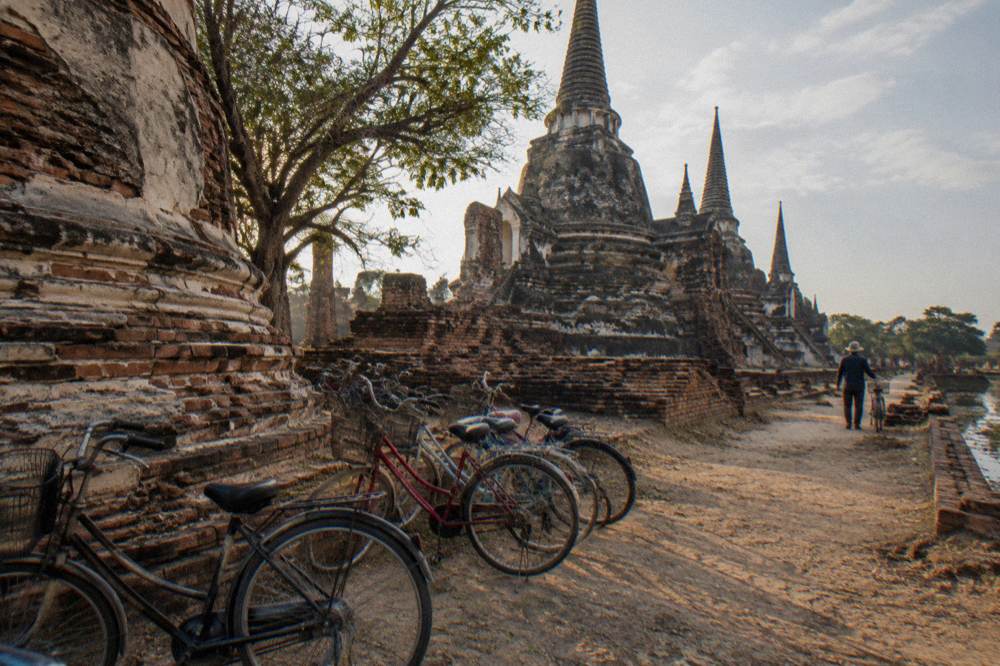
Self-guided works best outside the dense core. Ayutthaya's historical park is the classic case: flat, island-bound, temple-studded and calm, with tours such as the Historical Park Ride from $47.00 per person, rated 4.8 across 163 reviews, as an alternative to renting independently. In central Bangkok, a solo rider without local experience spends the first hour recalibrating to left-side traffic; with a guide that hour is spent seeing things. That trade-off, more than any safety statistic, is why the answer for a first-time visitor usually lands on guided.
Whichever way you lean, the rides collected here at Bangkok Bike Tours state price, duration, group cap and inclusions up front, so the guided-versus-solo decision can be made on facts rather than guesswork. If the answer to friendliness is 'in the right places', the guided rides are the right places.
What Should You Check On The Booking Page Before You Pay?
Three details cause most of the surprises on Bangkok rides: food, helmets and pickup. A snack is not a meal, a helmet on request is not a helmet in the price, and only one ride covered here lists hotel pickup, so read the inclusions and the not-included lines before you assume lunch, headgear or a lift from your hotel is part of the deal.
“What an eye opening experience to the local culture. If you have ever wondered what the daily life looks, feels and tastes like in Bangkok, then this tour is for you. Sky, our guide, was very personable and engaging. He was extremely knowledgeable of the area and way of life. What a great way to spend 3-4 hours of our holiday.”
Food trips people up first. The Bamboo Original Jungle Ride, from $35.26 per person for 3 to 4 hours and rated 5.0 across 140 reviews, prints the phrase a Thai snack or meal; that is a snack, not a booked lunch. Want a proper meal in the ticket? Nineteen tours on the site state a meal outright, including the Half-Day Ride, Lunch Included from $39.31, the Colors Small Group Ride, Meal from $42.00, the Canal Boat Combo, Lunch from $45.00, the 4.5-Hour Nature Ride, Meal from $54.00, the 5-Hour Ride, Lunch Included from $55.19, and the Jungle Ride, Meal and Pickup from $76.66.
Helmets deserve the same suspicion. The Classical City Ride, from $39.56 per person, and the Temples and Canals ride, from $22.00 per person, both list a helmet only on request or if desired, an ask on the day rather than an item bundled in the price. Others include one outright, among them the Half-Day Ride, Lunch Included and the Canal Boat Combo, Lunch.
Pickup is the third trap. Among the rides covered here, three include hotel pickup: the Bangkok Jungle Bike Tour, one Ayutthaya day trip, and one ride that bundles a hotel transfer; several others put hotel pickup and drop-off under not included, the Temples and Canals ride among them, so plan a taxi to the meeting point. Start points differ too. The 3-Hour Green Lung Ride meets on the Bang Krachao side in Samut Prakan, while the Bamboo Original Jungle Ride gives a Khlong Toei address on the city side.
Two smaller lines finish the check. Drinks vary between bottled water and water plus soft drinks from ride to ride, and one option here leaves cancellation terms unstated while many others print free cancellation, so confirm both on the booking page before you count on a refund.
Common Questions About Thailand Bicycle Friendliness
Is Thailand Bicycle Friendly?
Thailand is bicycle friendly in specific areas rather than as a nationwide network. Bangkok's core is traffic-heavy with few protected lanes, but Thonburi's canals, Bang Krachao, the old town and Ayutthaya are flat, calm and well suited to riding, and guided bike tours are an established, well-reviewed way to experience them.
Is It Safe To Ride A Bike In Bangkok?
Riding is safe on the quiet lanes and green areas most tours use, and less comfortable on major arterial roads, which guided routes largely avoid. Traffic drives on the left and drivers are accustomed to bicycles, but there is little segregated infrastructure, so attention to surface hazards and traffic flow matters. Deeper detail is on the site's cycling safety page.
Do I Need To Wear A Helmet In Thailand?
Whether helmets are legally required for cyclists in Bangkok is not mentioned on this page, so check current local rules before riding. Practically, helmets are included on several tours, available on request on others, and the booking page for each ride states exactly what is supplied.
What Is The Best Area For Beginners To Cycle In Bangkok?
Bang Krachao, the green peninsula across the Chao Phraya, is the most beginner-friendly: flat, shaded, almost car-free and reached by a short ferry. Guided rides there run from $35.26 per person with bike, guide and a Thai snack or meal included, in groups capped at 8 to 10.
When Is The Best Time Of Year To Cycle In Thailand?
The drier, cooler stretch falls roughly December to February and is the premium window. The hottest period is roughly March to May, and the wettest months are roughly September and October, when rain tends to arrive in afternoon downpours rather than all day, so check the booking page for your tour's departure time.
Can I Visit The Grand Palace During A Bike Tour?
Yes, but the official dress list bans bike pants, short pants and sleeveless tops, so pack a change of clothes. The foreign ticket is 500 baht, the site opens daily 8:30 AM to 3:30 PM, and the ticket includes Wat Phra Kaew and the Queen Sirikit Museum of Textiles.