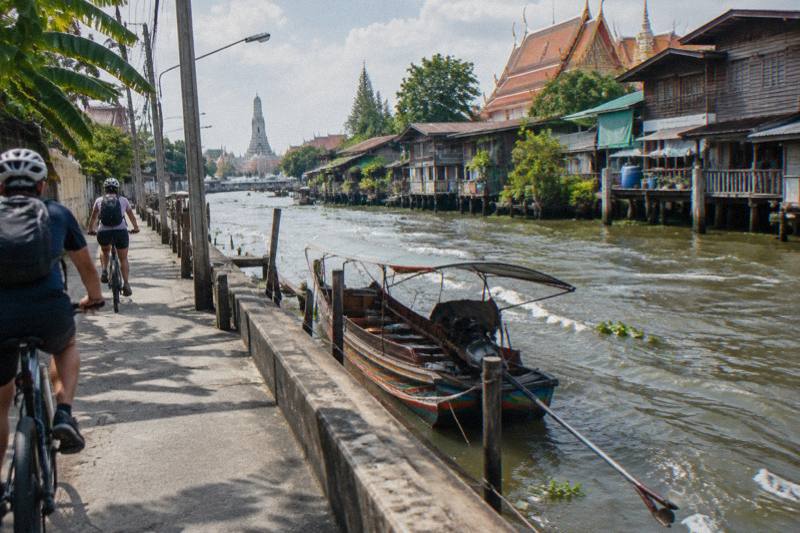
What Are The Benefits Of Cycling In Bangkok?
Why two wheels work in Bangkok: pace, quiet canal lanes, green escapes, low cost and guided routes away from heavy traffic, explained with real tour figures.
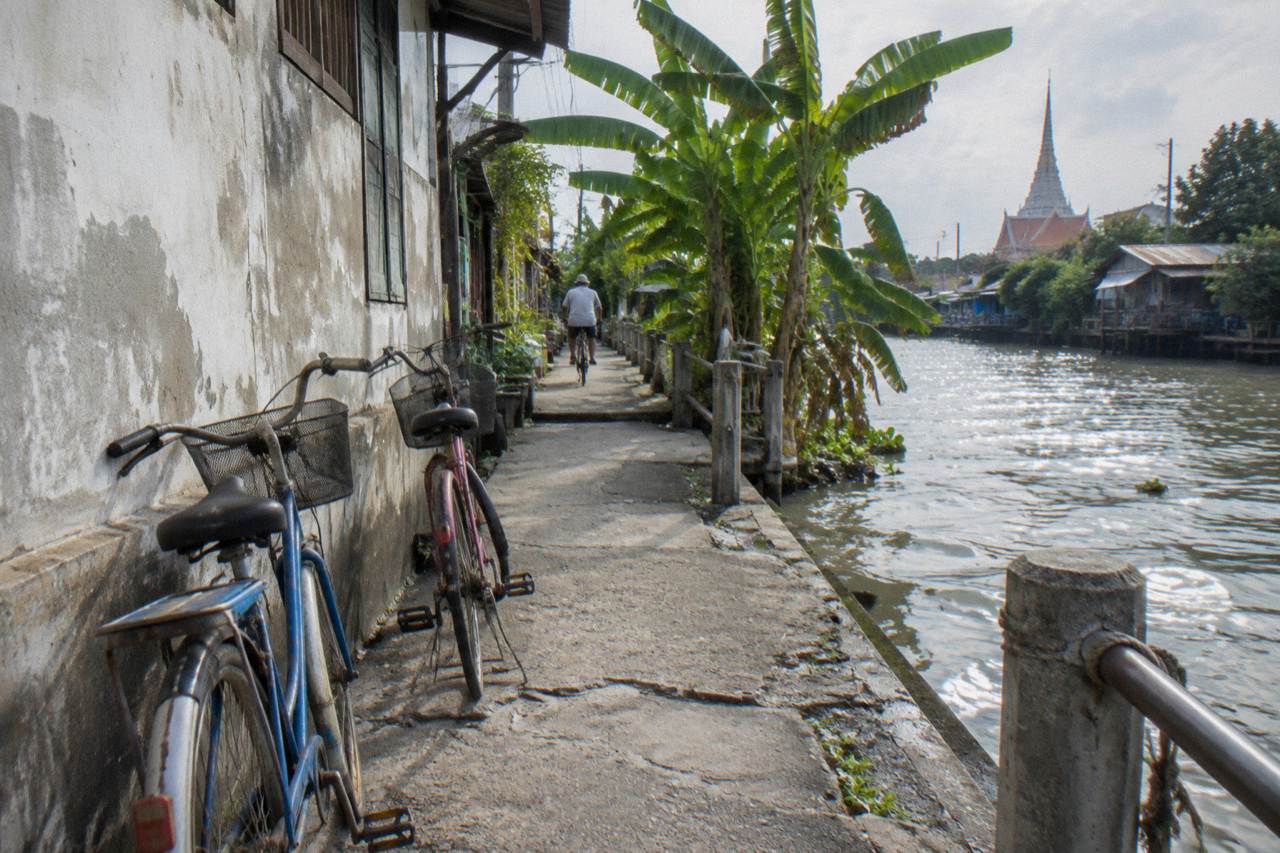
Cycling in Bangkok buys three things a car, a taxi or a tour bus cannot: access to narrow canal-side lanes and alleys where vehicles do not fit, a pace slow enough to stop for street food, temples and riverside views, and a very low cost per hour on the guided rides covered here, which run from $19.00 to $113.15 per person for three to eight hours with bike and guide included. The city's traffic drives on the left, dense and often slow, and the quietest riding sits in the older districts west and south of the river bends, where guided groups spend most of their time.
The question is really two questions. One is whether riding a bicycle in a metropolis of this size is sensible at all. The other is what a bike adds that other ways of moving around do not. On the first, the honest answer is that cycling works best in specific places: the Thonburi side of the river with its canal lanes, the Bang Krachao peninsula opposite Khlong Toei, the temple district around Rattanakosin, and the market alleys of Chinatown and its fringes. Guided operators concentrate there for that reason. On the second, the benefits stack up in a way that surprises visitors who arrived expecting only skyscrapers and jammed expressways.
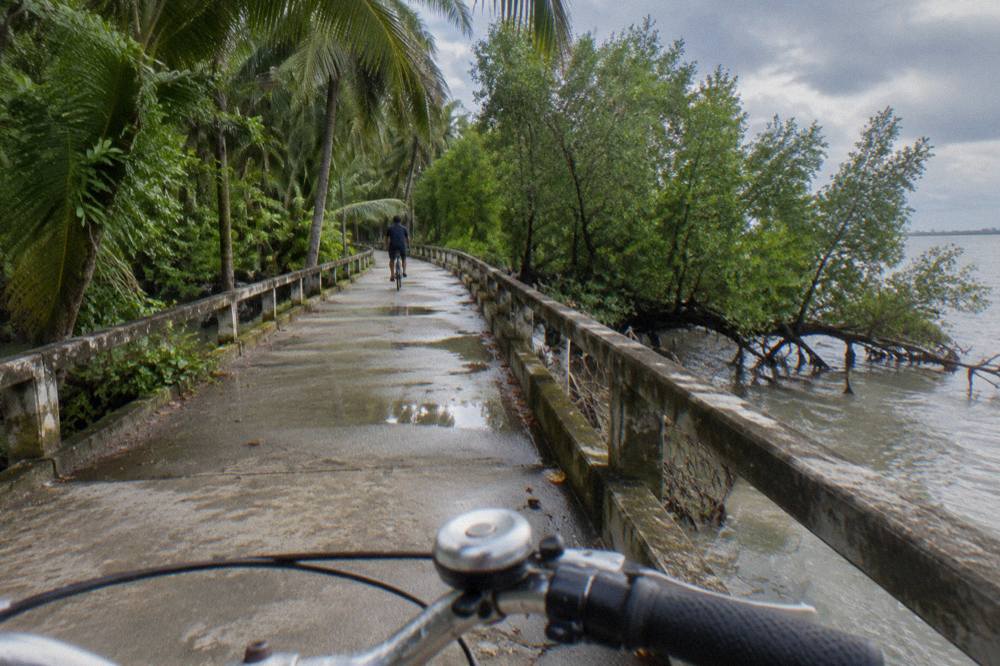
Consider what a bicycle does to a day. A three-hour ride such as the Temples and Canals tour, rated 4.9 across 4,122 reviews and priced from $22.00 per person, moves through back streets and along canals. A rider stops when a temple gate looks good and never circles a block hunting for parking. The bike is not a shortcut through Bangkok, it is a different filter for the city.
The Classical City Ride (from $39.56, 4.8 across 2,481 reviews) covers the old town in 3 hours with a maximum of 16 riders. The Half-Day Ride, Lunch Included (from $39.31, 4.9 across 286 reviews) spends 4 hours riding from its start on Somdet Phra Pin Klao Road in Bangkok Noi with lunch and a group capped at 10. The Temples and Canals ride keeps groups to 8. Same city, three different rhythms.
The sections below take the sub-questions in turn: what a bike unlocks, where the quiet lanes actually are, what it costs, how guided routes handle traffic, and how heat and rain shape the experience.
How Does A Bike Change The Way You See Bangkok?
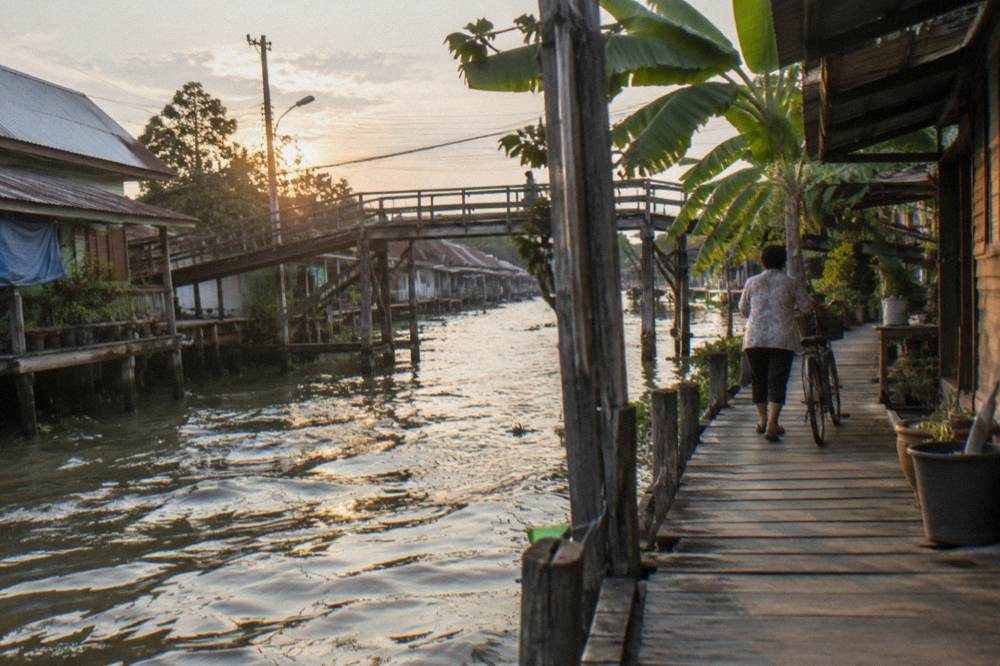
A bicycle replaces windshield-framed sightseeing with alley-level contact: riders pass doorways, kitchens, shrine houses and canal steps at walking speed or just above it, and can stop instantly, which is why guided routes reach places no vehicle tour can, from elevated green lanes on Bang Krachao to alleys in Talat Noi too narrow for a tuk-tuk. The benefit is not speed, it is granularity.
Bangkok's older fabric was built for foot and boat traffic. The lanes around the canals of Thonburi, the neighbourhood west of the Chao Phraya that includes Khlong San, Bangkok Yai and Bangkok Noi, follow paths laid out long before cars. Vehicle tours skirt these areas on arterial roads. Cyclists enter them. The same applies to Talat Noi on the east bank, where the Classical City Ride starts at 23 Charoen Krung 24 and threads streets where concrete and rusted iron sit beside family homes. A rider at that scale sees the city as a place people live in, not a set of monuments.
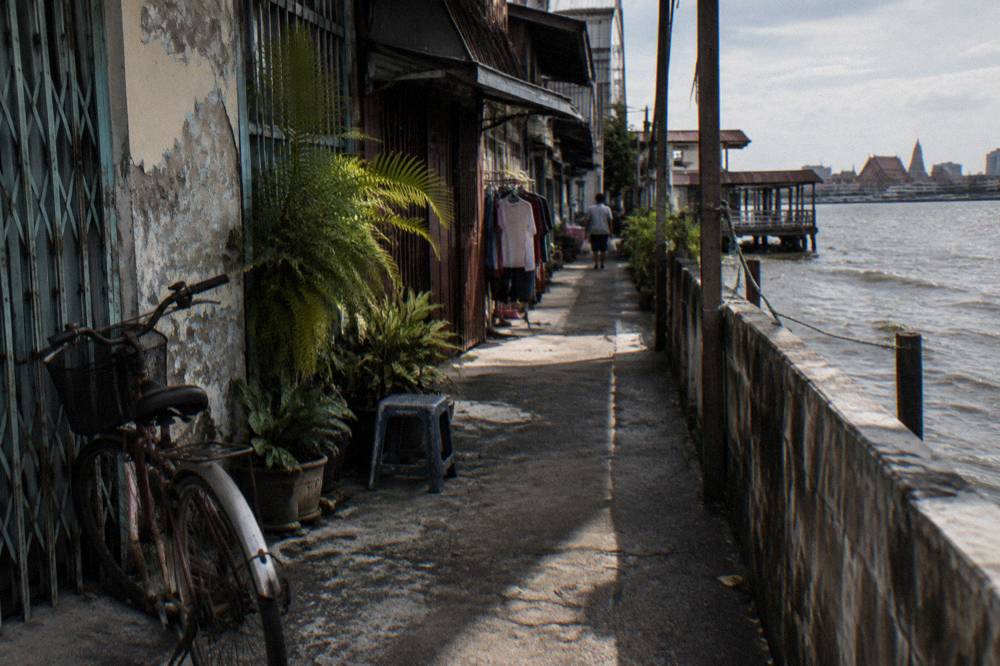
Pace matters as much as access. Walking covers perhaps a neighbourhood in an afternoon; a guided ride covers several, yet slowly enough that the guide can stop and explain a spirit house, a monastery wall or a boatyard. Photography from a bicycle tour happens at the curb, not through glass. Food stops happen where the food is. Several of the rides covered here lean into this directly: the Hidden Bike and Food Tour, rated 5.0 across 592 reviews and priced from $56.73 for 4 hours 30 minutes, builds a lunch or dinner into the route, and the Hidden Gems and Street Food Ride is a 3-hour loop past local food spots from $19.00 per person, with any food paid separately.
There is also the simple fact of being outdoors. Air-conditioned buses and malls insulate visitors from the city's actual climate and sound. Cycling in the early morning or evening puts the rider inside it: river breeze on the crossings, shade under rain trees on the peninsula paths, the noise of a market thinning as the lane turns a corner. For the full picture on where and how to ride in the city, the general cycling overview elsewhere on this site collects the basics, including the cycling in Bangkok guide.
Which Parts Of Bangkok Open Up On Two Wheels?
Four areas carry almost all the cycling value: the Bang Krachao peninsula across from Khlong Toei, the canal lanes of Thonburi, the temple and old-town core of Rattanakosin, and the market streets around Chinatown and Yaowarat, and each rewards a different kind of rider, from green-lung escapes to night rides through neon and steam. The benefit of the bike is that these areas connect into routes no single transit line joins.
Bang Krachao deserves its own paragraph. It is a river-bend peninsula in Phra Pradaeng District, Samut Prakan, sitting across the water south of Khlong Toei, and it is not part of Thonburi despite the frequent confusion. Tours reach it by a short ferry crossing from the Khlong Toei side, and on the far bank the roads give way to paths through orchards, palm groves and the Sri Nakhon Khuean Khan Park and Botanical Garden, which charges no entry fee and opens roughly 5:00 AM to 7:00 PM daily. Local ferries from piers such as Wat Khlong Toei Nok cost about 5 to 20 baht one way in cash. The weekend Bang Nam Phueng Floating Market is free to enter. Riders wanting depth can follow the Bang Krachao cycling route guide.
Thonburi, on the west bank, is the canal district. The Half-Day Ride, Lunch Included starts at 161/1 Thanon Somdet Phra Pin Klao and works through these lanes with a group maximum of 10, and the Canal Boat Combo adds a canal boat ride. The Night Ride with restaurant dinner starts on Itsaraphap Road in Bangkok Yai and uses the cooler hours. Chinatown and Yaowarat anchor the east-bank night rides, including the Chinatown Night Ride with street dinner, from $42.93, and the Hidden Paths Night Ride, from $50.59, both of which include dinner, a single street-food dish on the Hidden Paths ride.
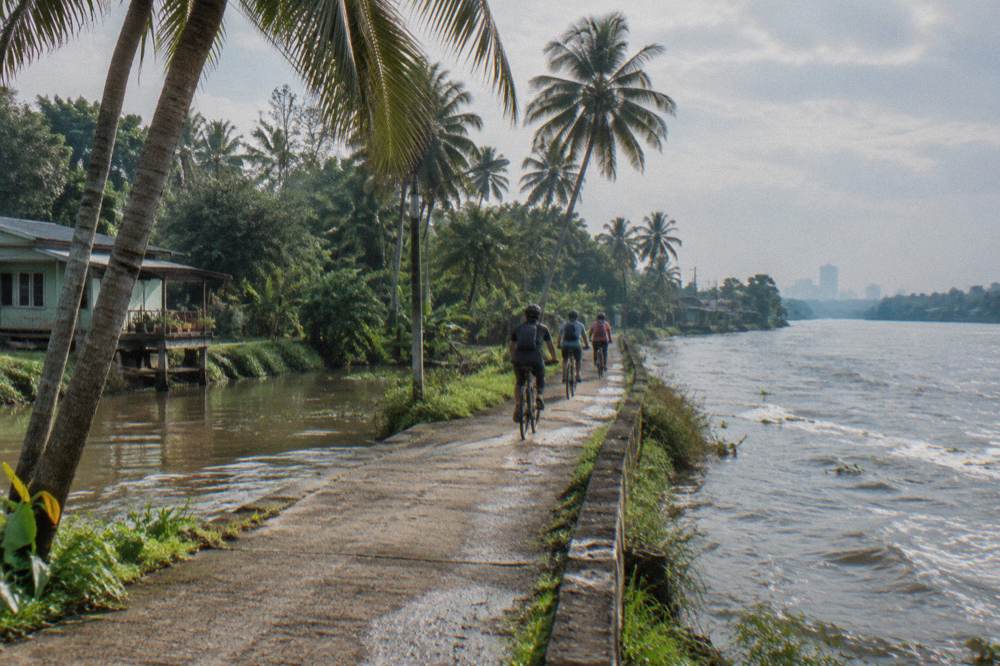
The table below shows how the four areas differ at a glance.
| Area | Where it sits | Riding character | Example ride (from price, duration) |
|---|---|---|---|
| Bang Krachao peninsula | Phra Pradaeng, Samut Prakan, across from Khlong Toei | Green lanes, orchards, park paths, flat | Jungle Escape Ride, $39.86, 4 hours |
| Thonburi canals | West bank: Khlong San, Bangkok Yai, Bangkok Noi | Narrow lanes, bridges, waterside homes | Half-Day Ride, Lunch Included, $39.31, 4 hours |
| Rattanakosin old town | East bank, Grand Palace and Wat Pho quarter | Monument sightseeing, river views, buses nearby | Temples and Canals, 3 Hours, $22.00 |
| Chinatown and Yaowarat | East bank, Bang Rak and Samphanthawong | Night energy, market alleys, street food | Hidden Paths Night Ride, $50.59, 3 hours |
Why Is Cycling In Bangkok So Affordable Compared To Other City Tours?
Guided bike rides in Bangkok sit at the low end of the paid-tour market: among tours with at least 15 reviews, prices run from $19.00 (the Hidden Gems and Street Food Ride) to $113.15 (the 8-Hour Boat and Bike, Pickup), and the majority cluster between roughly $37 and $57 per person for three to six hours with the bicycle and guide included. For a visitor comparing a half-day private car guide or a boat charter, the arithmetic is blunt.
The reason is structural. A bicycle tour's capital cost is a fleet of simple bikes and a guide's time. The group sizes are small but efficient: caps range from 6 on the smallest rides to 20 on the largest covered here. What the price includes varies and matters: some rides include a full lunch or dinner, some include a snack and drinks only, and one, the Bamboo Original Jungle Ride from $35.26, excludes hotel pickup and food beyond its stated snack and drinks. Checking inclusions against the booking page before choosing is worth five minutes.
| Ride | From price | Duration | Meal | Group max |
|---|---|---|---|---|
| Hidden Gems and Street Food Ride | $19.00 | 3 hours | No meal stated | 7 |
| Temples and Canals, 3 Hours | $22.00 | 3 hours | No meal stated | 8 |
| Half-Day Ride, Lunch Included | $39.31 | 4 hours | Lunch | 10 |
| Jungle Ride, Meal and Pickup | $76.66 | 4 hours | Lunch | 10 |
| Hidden Bike and Food Tour | $56.73 | 4 hours 30 minutes | Lunch or dinner | 10 |
| 8-Hour Boat and Bike, Pickup | $113.15 | 8 hours | Lunch | 8 |
Beyond tours, independent cycling costs almost nothing. The bike-share rate in Bangkok runs about 10 baht for the first 30 minutes, and at about 33 to 34 baht per US dollar, per the Bank of Thailand's daily exchange rates, that is a fraction of a dollar to start. Riders going their own way on the peninsula can rent a standard bike for about 50 to 100 baht a day, with e-bikes at roughly 200 to 500 baht a day at some piers and shops.
How Do Guided Rides Keep You Away From Heavy Traffic?
Guided rides concentrate on canal lanes and peninsula paths, and cross the river by ferry. Traffic in Thailand drives on the left, and the volume on the big roads is real, so route selection is everything.
The mechanics are visible in the start points. The Classical City Ride begins in Talat Noi, a district of small lanes, and the ride includes a ferry river crossing. The temples rides work the Thonburi side streets where through-traffic rarely bothers. Group size plays a part too: a guide leading 6 to 10 riders can hold a pace and pick turning points, and several rides cap groups small, such as the 4.5-Hour Nature Ride at 6.
A guide's route choice through canal lanes, peninsula paths and river crossings is a genuine part of what the ticket buys for visitors who do not read Thai signage. The safety question has its own treatment in the is cycling in Bangkok safe guide.
One planning note that riders often miss: the Grand Palace's official banned-dress list includes bike pants alongside short pants, torn pants and tight pants, so anyone planning to ride to the Rattanakosin quarter in cycling kit should carry a change of clothes. The palace charges foreign visitors 500 baht and is open 8:30 AM to 3:30 PM daily, per the official practical information page. Wat Pho, a roughly 10-minute walk from the Tha Tien express-boat pier, charges foreign visitors about 300 baht and asks that shoulders and knees be covered.
What About Heat, Rain And The Time Of Day?
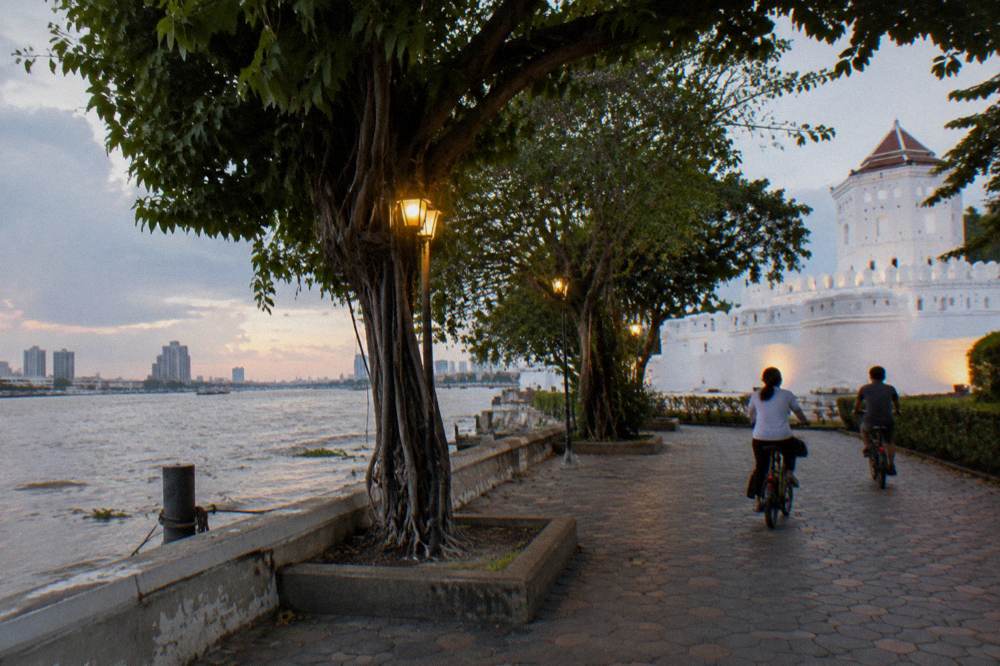
Bangkok's climate rewards early starts and evening rides: the hottest stretch runs roughly March to May, the wettest roughly September and October, and the driest roughly December to February, with national average temperatures spanning 18 to 38 °C, so night tours and morning departures are not a gimmick but the correct adaptation, and heat on a ride is managed with shade stops, water and pace rather than distance. The Tourism Authority of Thailand's weather page describes the six rainy months, three cooler dry months and three hot months that frame any visit.
The tour inventory reflects this directly. The Night Ride with restaurant dinner runs 3.5 hours from $37.00 and moves the whole experience into the cooler hours, including a boat crossing and a full dinner. The Twilight Firefly Ride on bamboo bikes, rated 4.9 across 243 reviews and from $53.66, rides the peninsula at dusk. The 5-Hour Sunset Ride with a meal starts late and finishes after dark. These are not niche products; they are among the better-reviewed rides covered here, which says something about when riders enjoy Bangkok most.
“It was an awesome tour! Perfect for kids. The park was lovely, and dinner was delicious! This was the highlight of our trip!”
Rain deserves a calmer treatment than guidebooks give it. The Tourism Authority of Thailand frames Bangkok's rainy season as lasting six months, and the "Hidden Gems and Street Food Ride" includes a free rain poncho if it rains. Riders booked for the wettest months can find the specifics in the site's rainy-season riding coverage, and heat management has its own treatment in the Bangkok heat and bike tours guide. Free cancellation is stated on most of the rides covered here, which softens the risk of a booking colliding with weather, though three rides, the Bamboo Original Jungle Ride, the Twilight Firefly Ride and the Family Bamboo Bikes tour, do not state a cancellation policy, so check the booking page before paying.
What Mistakes Trip Up First-Time Cyclists In Bangkok?
The common mistakes are booking a midday ride in the hot months, arriving at the wrong meeting point, assuming hotel pickup is included when most rides state the opposite, wearing cycling kit to temple stops where dress codes apply, and underestimating how much a guide's routing adds on a first visit. Each is avoidable with a few minutes of planning.
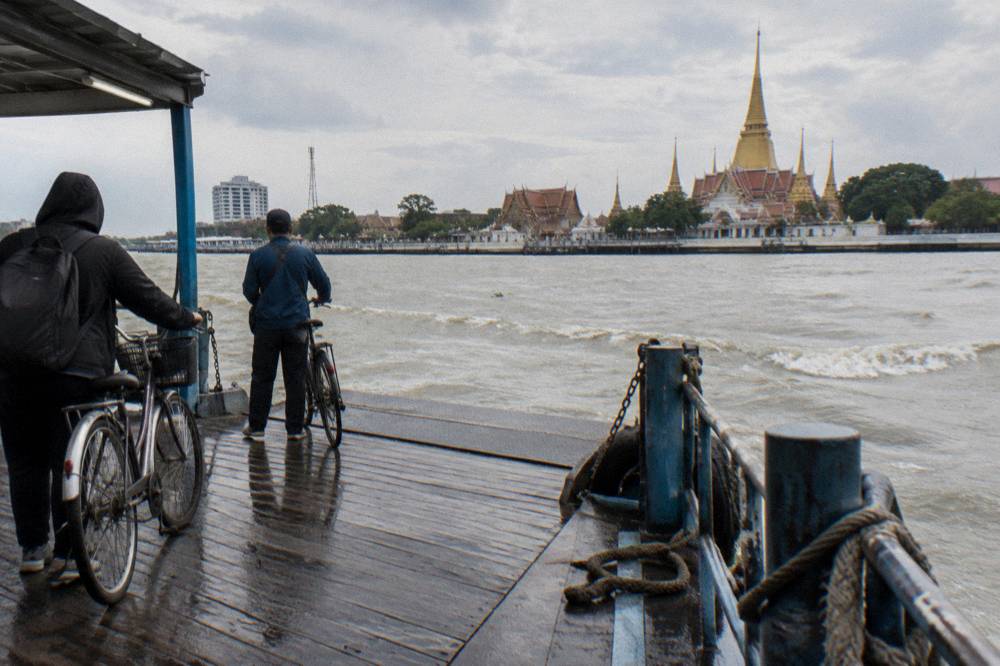
Meeting points catch out more riders than anything else. Most tours start at a fixed street address, and most state that hotel pickup is not included; only a few, such as the Jungle Ride, Meal and Pickup (from $76.66) and the 8-Hour Boat and Bike (from $113.15), list hotel pickup, while the Ayutthaya tours start in Ayutthaya itself, a separate city about 80 km north, not in Bangkok. Reaching the start point by river boat is often the pleasant option, and the Chao Phraya Express Boat operator's site maps the weekday commuter lines, though their published fares are for the long commuter routes, not the central tourist piers.
The remaining mistakes are about expectations. A snack is not a meal: several rides include only a snack with water or soft drinks, while others include a full lunch or dinner, and the difference matters when planning a day around the ride. Helmet supply varies: some tours include helmets, some supply them only on request, and at least one states nothing about helmets at all, so anyone who wants one should confirm on the booking page rather than assume. Finally, riders who want the green peninsula but book a city ride, or the reverse, end up on the wrong product: the Bangkok jungle tour guide and the temple bike tour guide separate the two experiences clearly.
Choosing well comes down to matching area, hour and group size to the day you want. A rider who does that gets the full benefit of two wheels in this city, and Bangkok Bike Tours covers the options area by area across the guides collected here.
Common Questions About Cycling In Bangkok
What Are The Benefits Of Cycling In Bangkok?
Cycling reaches lanes and canal paths no vehicle can enter, moves at a pace that suits food stops and photography, costs little per hour on guided rides (from $19.00 per person among rides with 15 or more reviews), and puts you outdoors in the city's riverside and green-lung districts rather than behind glass.
Is Cycling In Bangkok Safe For Visitors?
Cycling in Bangkok works best in the specific areas the guided rides use: the Bang Krachao peninsula, the Thonburi canals, the temple quarter and the market streets. Traffic drives on the left and guided routes avoid the heaviest arterials. Riders should take general care with traffic, heat and uneven surfaces, as with any big city.
What Does A Guided Bike Tour In Bangkok Cost?
Among tours with at least 15 reviews, from prices run from $19.00 (Hidden Gems and Street Food Ride) to $113.15 (8-Hour Boat and Bike, Pickup), with most half-day rides clustering between roughly $37 and $57 per person including bike and guide. What else is included, such as a meal, boat crossing or pickup, varies by tour.
Do Bike Tours In Bangkok Include Food And Drinks?
It varies by tour. Some include a full lunch or dinner, for example the Half-Day Ride, Lunch Included. Others include only a snack with water or soft drinks, and a few state no meal at all. The details for each ride are on its booking page.
When Is The Best Time Of Day To Cycle In Bangkok?
Early morning and evening. The hottest months run roughly March to May, and night rides such as the Night Ride with restaurant dinner and the Twilight Firefly Ride move the experience into the cooler hours. December to February is the driest stretch.
Can You Cycle In Bangkok Without A Tour?
Yes. Bike share runs at about 10 baht for the first 30 minutes, and standard bikes rent on the Bang Krachao peninsula for roughly 50 to 100 baht a day, with e-bikes at about 200 to 500 baht at some piers and shops. A guided ride adds routing, a guide's local judgment and included gear, which many first-time visitors prefer.