Cycling In Bangkok: Traffic, Heat And Where Riding Works
Bangkok is not an obvious cycling city, yet thousands of riders a year roll through its lanes on guided tours. The traffic drives on the left, the heat is real, and the parts of the city where riding genuinely works are narrower than the map suggests. Here is how it all fits together.
In Short
Cycling in Bangkok works best in the old quarters, along the canals of Thonburi and in the green pocket of Bang Krachao, not on the big multi-lane roads. Traffic drives on the left and heat is the main constraint, so most riders go early or late. Guided tours run from $19.00 to $113.15 per person and handle the route choices for you.
Bangkok registers in most travel imaginations as a city of traffic towers and expressway ramps, and that picture is not wrong. What it misses is the layer underneath: the elevated walkways of the old town, the lane-width paths threading Thonburi's canal settlements, and the jungle pocket of Bang Krachao that sits directly across the river from the port district. Cycling in Bangkok is less a question of bravery and more a question of picking the right streets at the right hour.
The scale of guided riding here surprises people. The most reviewed bicycle tour in the city, the Temples and Canals ride from $22.00 per person, has drawn 4,122 reviews, and several other operators count their reviews in the hundreds. Those riders are not reckless. They are on routes chosen to avoid the roads that give the city its reputation, usually in small groups, often crossing the river by boat rather than fighting bridge traffic. This guide lays out where riding works, what the traffic and the heat actually do, and when a guided tour is the easier answer, with route-level detail in the companion site overview of Bangkok cycling routes. If you would rather ride on your own, the guide to renting a bike in Bangkok covers what shops charge and the situations where a guided ride still makes more sense.
Is Bangkok Good For Cycling?
Bangkok is good for cycling in specific places rather than as a whole, and the places that work are genuinely excellent. The old town's riverside lanes, the canal communities of Thonburi, Chinatown's morning back streets and the green lung of Bang Krachao all deliver riding that visitors remember. The multi-lane arterials do not work at all, and nobody rides them for fun.
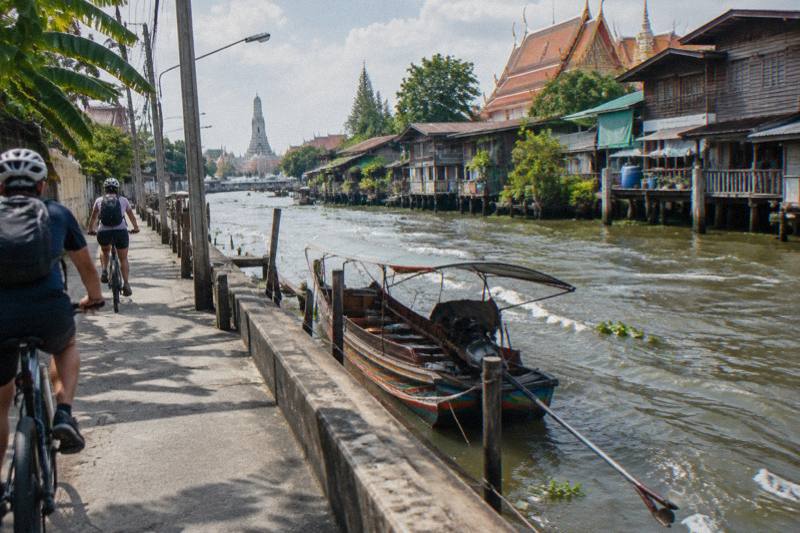
The honest framing is two cities. There is the Bangkok of Sukhumvit and Rama IV, six and eight lanes wide, buses and motorcycles moving fast, with nowhere pleasant for a bicycle. Then there is the Bangkok behind those arteries, where the asphalt narrows to a single lane, houses open straight onto the street and the river is never more than a crossing away. Guided tours overwhelmingly operate in that second city. When a tour named Classical City Ride runs from Talat Noi for three hours, it is working the tangled heritage streets near the river, not the commuter corridors.
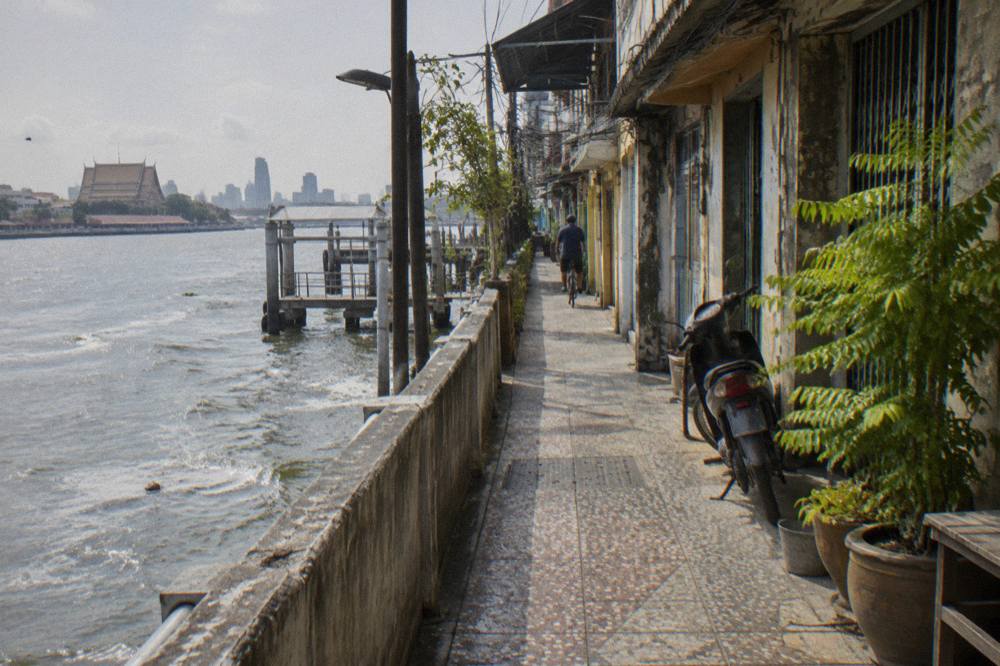
The geography helps more than visitors expect. The Chao Phraya cuts the city in half, and the western half, Thonburi, kept its pre-skyscraper street pattern: short blocks, dead-end lanes, canal-side concrete paths and neighbourhoods where a car is a nuisance. On the Bangkok side, the royal island around the Grand Palace and Wat Pho holds lane-width streets between major monuments. A rider can cover a remarkable amount of the historic core without ever merging into fast traffic.
The numbers back this up. The guided rides covered on this site count 33 bicycle tours in and around the city, spanning short street-food loops from $19.00 per person up to a full-day boat and bike combination at $113.15 per person. That is not the profile of a city where cycling is impossible. It is the profile of a city where cycling has found its niches and built an industry on them. A fuller safety discussion lives in the companion piece on whether cycling in Bangkok is safe.
Is Thailand Bicycle Friendly?
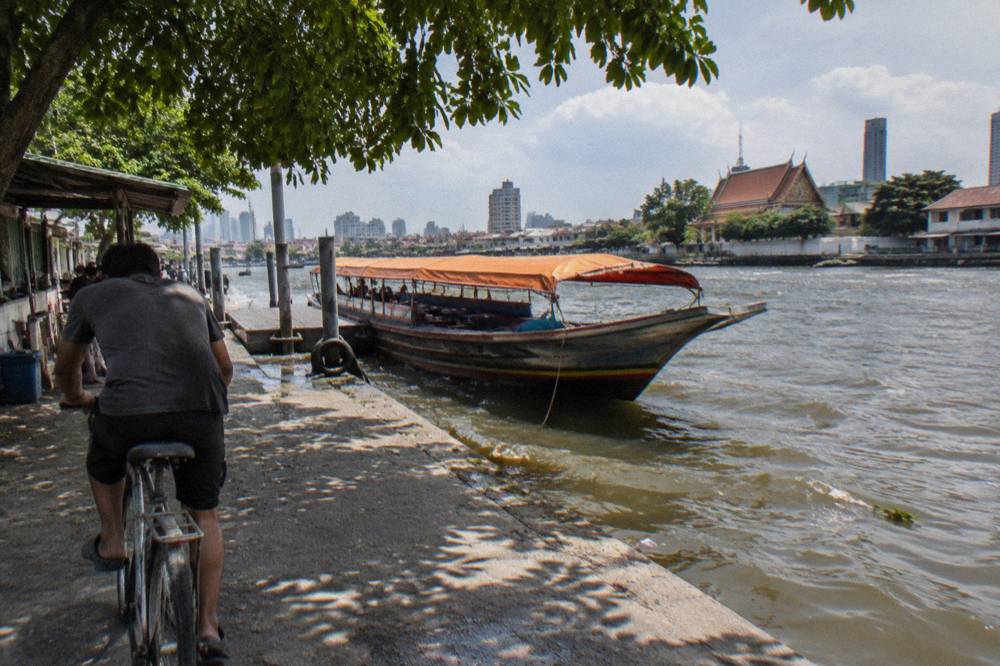
Thailand is moderately bicycle friendly, and Bangkok sits in the middle of the range. The country drives on the left, drivers are generally accustomed to sharing narrow streets with slower vehicles, and food stalls, markets and temples sit close enough to a bike's pace to reward riding. Dedicated cycling infrastructure is thin in the capital, and the friendliness drops sharply on high-speed roads, in the wet season downpours and in the midday heat. If the midday heat and wet-season downpours sound discouraging, the guide to cycling Bangkok in the December cool season shows how timing your trip around the friendlier months makes riding the city far more pleasant.
At the national level, bicycles are an ordinary part of the transport mix. Markets load goods onto freight tricycles, children ride to school in the smaller towns, and temple and heritage towns such as Ayutthaya have made cycling a core part of how visitors see them. Ayutthaya, the old capital an hour or so north, is flat, island-bound and threaded with small roads between ruins; four rides there run from $43.00 to $73.28 per person, and the Historical Park Ride alone carries 163 reviews at 4.8. That is bicycle-friendly terrain by any standard.
Bangkok itself is a harder grade. Traffic drives on the left, which matters for visitors from right-side countries more than any written rule, because the instinct to glance over the wrong shoulder is the first thing to break. Drivers in Thailand are used to motorcycles filtering and to slow vehicles in general, and a bicycle moving predictably in a narrow lane is treated as ordinary traffic. What the city lacks is safe space on fast roads, and it lacks protection from the sun between roughly late morning and mid afternoon.
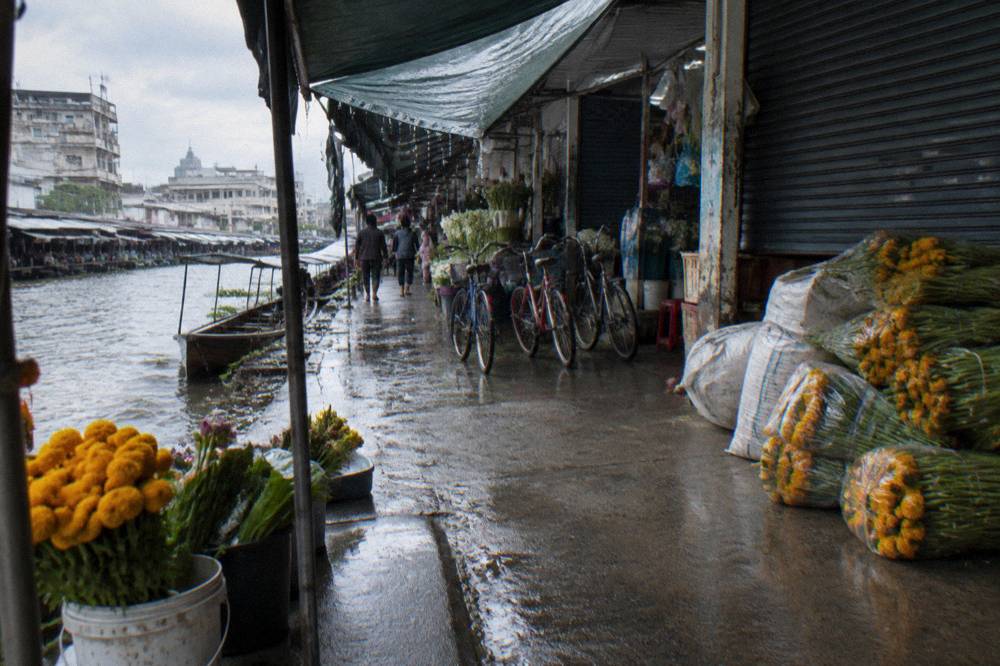
The seasonal picture comes from the Tourism Authority of Thailand, which describes the country's year as six rainy months, three cooler dry months and three hot months, with national average temperatures spanning 18 to 38 °C, and which is the source to consult for weather planning. Roughly speaking, the hottest stretch runs March to May, the wettest September and October, and the driest December to February. None of that makes Thailand hostile to bicycles. It makes timing the ride, early morning or after four, the single most useful planning habit.
For a sense of what a well-chosen Bangkok route feels like in practice, some formats capture the idea well: a compact city ride with a huge review base, a lunch-included half day, and a small-group ride with a meal.
How Does Traffic In Bangkok Treat A Cyclist?
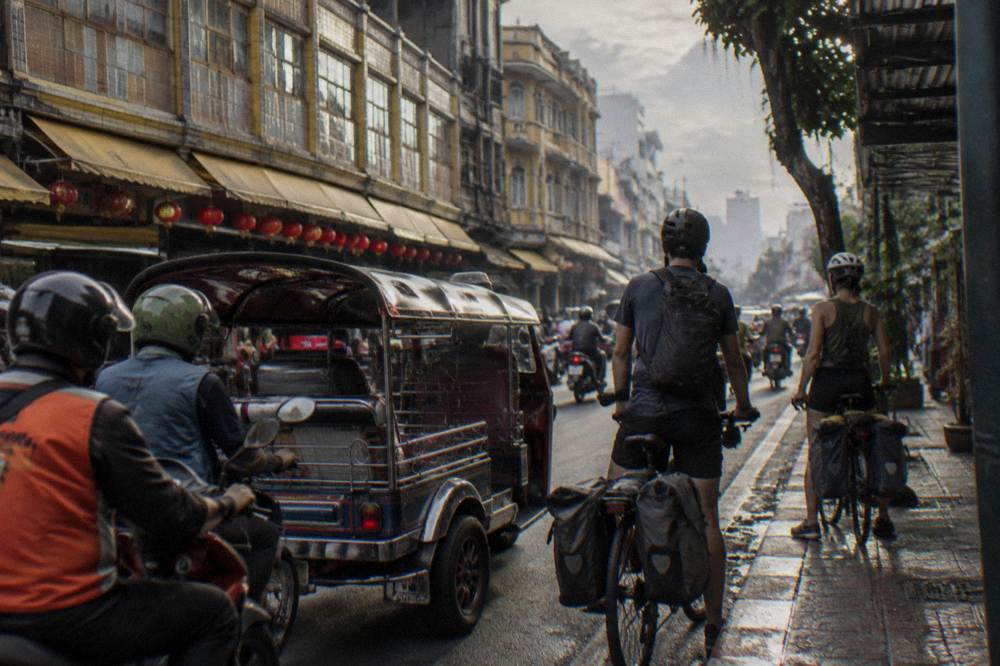
Traffic in Bangkok treats a cyclist as traffic, moving on the left, with motorcycles as the closest and most frequent companions. The real hazards are parked-vendor pinch points, unmarked edges and drainage covers in the old lanes, not aggression toward bicycles. Rush hour fills the arterials, so riders stay off them entirely and use the lanes and crossings where speeds are naturally low.
The left-side rule is the anchor fact. Everything flows on the left, so a cyclist keeps left, signals intentions with an arm, and checks over the right shoulder before any move, because that is where overtaking traffic comes from. Riders used to right-hand traffic should give themselves a quiet first half hour to recalibrate. Intersections in the old town are small and low speed, which is a large part of why tours concentrate there.
Motorcycles are the texture of Bangkok traffic. They pass on both sides, filter to the front at lights and treat narrow lanes as their natural habitat. They are generally competent around slow bicycles, having spent their whole riding life among tuk-tuks, carts and pedestrians, but a cyclist should hold a steady line and never swerve without a look. The classic pinch point is a fresh-market street: stalls claim the edges, the usable channel narrows to a bike's width, and the rule is simple patience until it opens again.
Surface quality is the underrated factor. Old-town lanes mix smooth asphalt, broken concrete, brick and steel drainage covers, sometimes within one block. Guided rides pace themselves around this, and it is one clear argument for following a leader who knows which soi has been freshly dug up. The question of whether that guide is worth paying for, versus routing yourself, is worth settling early.
When Is The Best Time Of Day To Ride?
The best times to ride in Bangkok are early morning, roughly before 9 AM, and late afternoon after 4 PM, when heat rather than traffic is the deciding constraint. Midday riding between March and May is the hardest combination the city offers. The rainy season adds short intense downpours, so riders plan around them rather than cancel because of them.
The day in Bangkok divides into heat bands more than traffic bands. Morning is cooler, the light is softer for photography in the old town, and the markets are at their busiest, which is exactly what many riders came to see. By late morning the sun is direct and the temperature climbs toward the top of the national 18 to 38 °C average range. Afternoon riding resumes around four, and the evening options are strong: the city has dedicated night rides, including a Night Ride with Restaurant Dinner from $37.00 per person carrying 104 reviews, and a Hidden Paths Night Ride with a street-food dinner from $50.59 per person with 86 reviews.
| Time window | What it offers | What to watch |
|---|---|---|
| Early morning | Coolest air, active markets, soft light | Wat compounds and some streets quiet |
| Late morning to mid afternoon | Peak sightseeing hours | Strong sun, hardest heat, plan water stops |
| Late afternoon | Cooling air, golden light on the river | Building rush traffic on arterials |
| Evening and night | Lit temples, street-food dinner rides | Own lights matter, smaller lane visibility |
The seasonal layer matters as much as the daily one. Roughly December to February is the driest and most comfortable window and the peak of the touring year. Roughly March to May brings the strongest heat, favoring short morning loops such as the three-hour Hidden Gems street-food ride, from $19.00 per person with 119 reviews. Roughly September and October are the wettest months, when rain typically arrives in heavy bursts rather than all-day drizzle; the practical habit is a covered stop and a willingness to wait the shower out. Riders chasing the cool window can read the fuller guide to the best time to cycle in Bangkok.
Heat management is not complicated but it is not optional. Water is included on nearly every guided ride covered here, usually bottled water and on many rides soft drinks too, but riders should still drink before setting out, favor loose cotton or breathable fabric over anything tight, and treat a shaded temple stop as part of the route rather than a delay. The companion guide to Bangkok heat and bike tours develops the packing and pacing side in full.
Which Parts Of The City Work Best For Cycling?
The parts of Bangkok that work best for cycling are the royal island old town around the Grand Palace and Wat Pho, the canal lanes of Thonburi, the Talat Noi and Chinatown shophouse grid, and the Bang Krachao green lung across the river. Each suits a different rider, and all four are where the guided options concentrate. The expressway corridors and the multi-lane north-south arterials are not cycling territory. If you're wondering how the rest of the country stacks up, the guide to whether Thailand is bicycle friendly covers traffic, heat, and the quieter green routes beyond the capital.
The old town is the classic first ride. Streets here are narrow, traffic is slow, and the density of temples, shophouses and river views per minute of riding is the highest in the city. The Classical City Ride, 3 hours from $39.56 per person, rated 4.8 across 2,481 reviews, starts at Talat Noi and works this grid, crossing the river by boat as part of the route. Its review base is the second largest of any ride covered here, which tells you the format satisfies a lot of first-time visitors. Dates and availability appear live on the tour page.
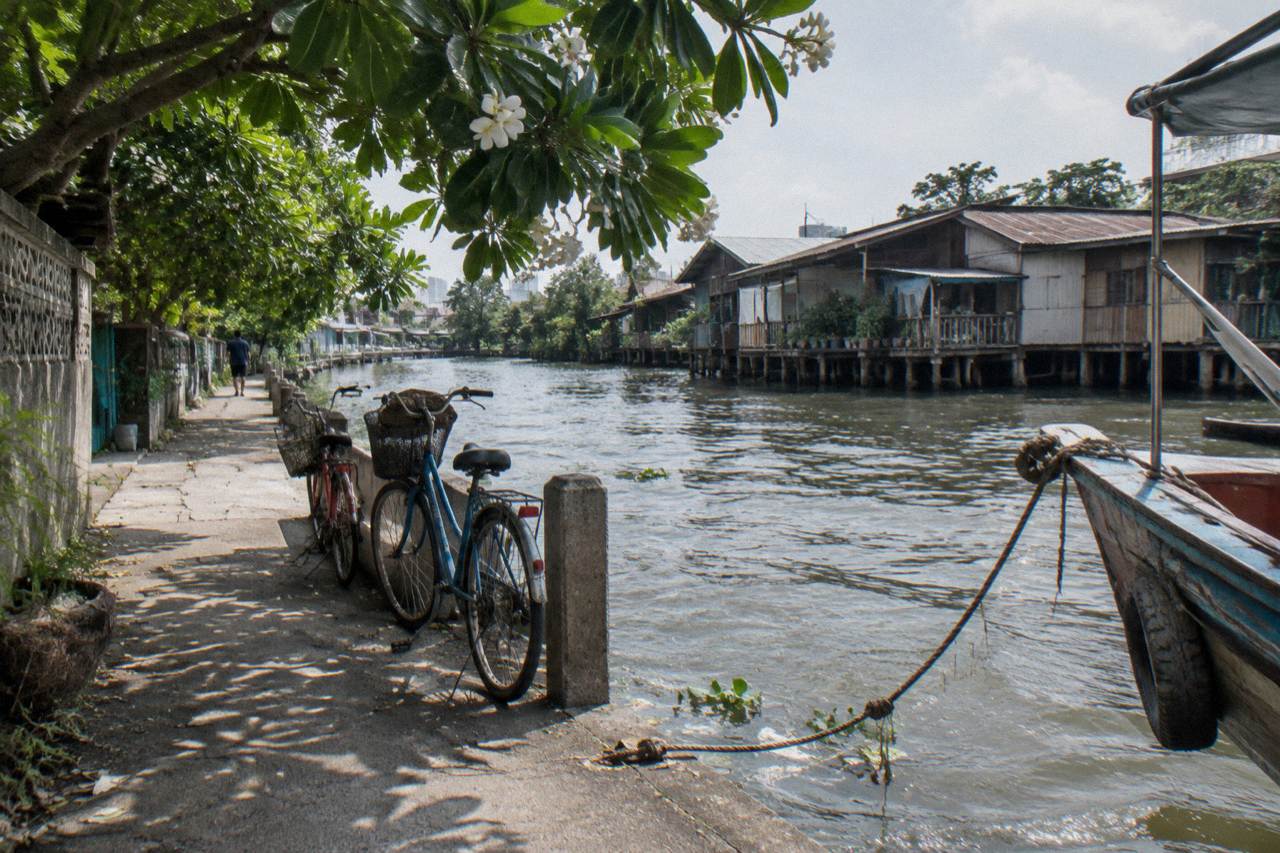
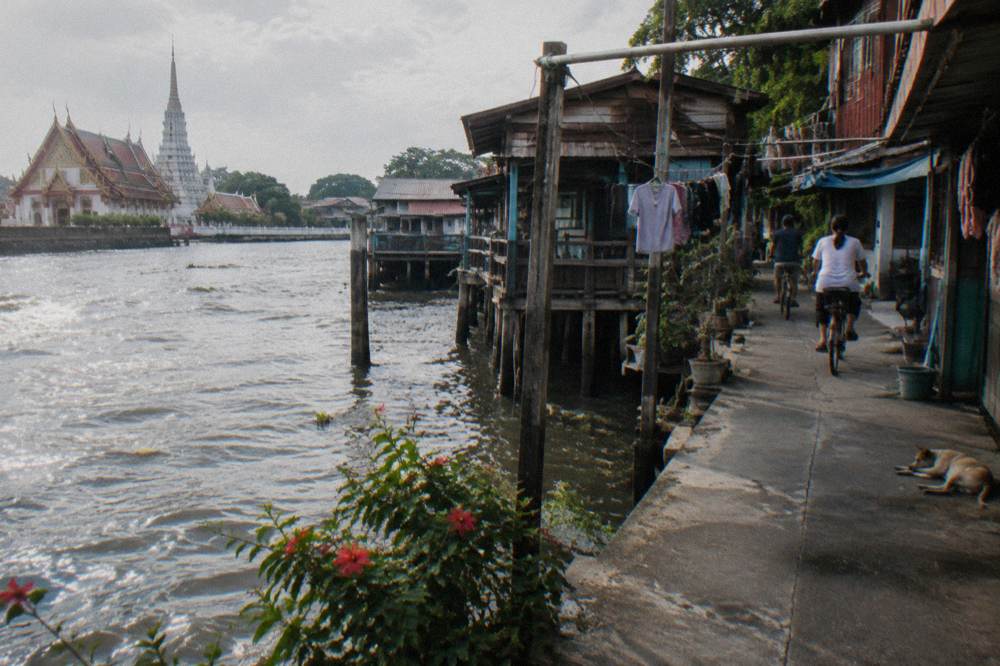
Thonburi, on the west bank, is where the city keeps its canal settlements. Rides here thread concrete paths between stilt houses, cross small bridges and stop at neighborhood temples that see almost no independent visitors. The Temples and Canals ride, 3 hours from $22.00 per person, rated 4.9 across 4,122 reviews, is the most reviewed tour of its kind in the city and centers on this terrain. Its low price and enormous review base make it the default recommendation for a first Bangkok ride, and its tour page breaks down what the three hours contain.
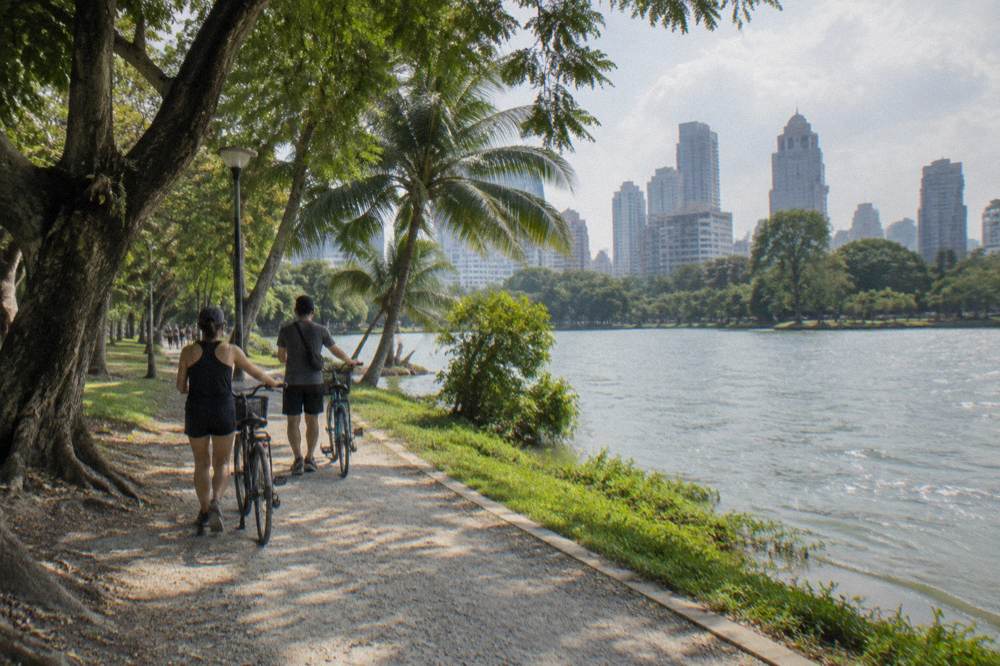
Bang Krachao is the third territory, and it is the least Bangkok-like of the three. The loop of green across from the port district holds orchards, palms, elevated paths and a floating market, reached by a short ferry crossing that several tours include in the price. The dedicated Bang Krachao bike tour guide covers the operators there, from the Jungle Ride with meal and hotel pickup at from $76.66 per person, 4.9 across 524 reviews, down to a self-meeting 3-Hour Green Lung Ride at from $51.00 per person with 43 reviews. Chinatown and the flower market form the fourth zone, an intense, food-forward grid best ridden early; the Chinatown bike tour guide maps those options.
| District | Character | Typical ride | From price |
|---|---|---|---|
| Old town royal island | Temples, shophouses, river views | Classical City Ride, 3 hours | $39.56 |
| Thonburi canals | Stilt houses, small temples, boats | Temples and Canals, 3 hours | $22.00 |
| Bang Krachao green lung | Orchards, elevated paths, market | Jungle Ride, Meal and Pickup, 4 hours | $76.66 |
| Chinatown and river | Street food, markets, night energy | Chinatown Night Ride, 4 hours | $42.93 |
Should You Ride On Your Own Or Take A Guided Tour?
Most visitors to Bangkok ride better with a guide, because route knowledge, traffic judgment and river crossings are the hard parts and a local operator already has them solved. Independent riding rewards longer-stay visitors and confident riders with a specific area in mind. The guided formats span $19.00 to $76.66 per person, nearly always include the bike and water, and cap groups between 6 and 16 riders.
The case for a guide is mostly about the invisible work. Which soi connects, which bridge has a usable path, which ferry pier serves the crossing, which stretch has been dug up this month: a guide carries all of that. Groups are small by design; among the rides discussed here, caps run from 6 on the Green Oasis Nature Ride to 16 on the Classical City Ride, with most between 8 and 10. Bikes are included on every guided option covered here, along with a guide and water, and several add a boat crossing, a snack or a full meal. Cancellation terms vary: most rides covered here state free cancellation on the booking page, though the Bamboo Original Jungle Ride and a couple of others do not state one, so check before booking.
| Ride | Duration | Group max | Included beyond bike and guide | From price |
|---|---|---|---|---|
| Hidden Gems Bike and E-Scooter Tour to Street Food | 3 hours | 7 | Bottled water, street food stops | $19.00 |
| Half-Day Ride, Lunch Included | 4 hours | 10 | Lunch, bottled water, helmet | $39.31 |
| Colors Small Group Ride, Meal | 4 to 4.5 hours | Not stated | Meal, drinking water, helmet, boat | $42.00 |
| E-Bike Backstreets | 3.5 hours | 8 | E-bike, snack, water and soft drinks, boat | $46.00 |
| 8-Hour Boat and Bike, Pickup | 8 hours | 8 | Lunch, bottled water, hotel pickup | $113.15 |
Independent riding suits a different visitor: someone staying a week, comfortable with heat and left-side traffic, and content to confine themselves to one district at a time. The honest constraint on self-routing is information, not ability. Park hours, ferry schedules and path conditions are exactly the details that change, and a rider without local knowledge spends the morning finding out the hard way. E-bikes narrow the gap for riders worried about distance and heat; the 3.5-hour E-Bike Backstreets ride from $46.00 per person, rated 4.8 across 117 reviews, is a good example of motor assist opening the city to less confident legs.
For many visitors the half-day lunch format is the sweet spot: long enough to cross the river and see the canal lanes, short enough to finish before the worst heat. The Half-Day Ride, Lunch Included runs 4 hours from $39.31 per person, rated 4.9 across 286 reviews, and its tour page lists the route and inclusions.
What Trips People Up When Cycling In Bangkok?
The mistakes that trip up cyclists in Bangkok are riding at midday, assuming right-hand traffic instincts will adapt on their own, dressing for temple visits in riding kit, and treating every bridge as a bicycle crossing. Each has a simple fix: ride early or late, recheck shoulder habits, carry a cover-up for temples, and use the ferry crossings the way tours do.
The dress-code mistake is the least obvious and the most common. The Grand Palace's official visitor page is explicit that bike pants sit on the banned list alongside short pants, torn pants and sleeveless tops, so a rider arriving in cycling gear faces a choice between missing the palace or missing the visit; the same page confirms the 500 baht foreign ticket, daily opening 8:30 AM to 3:30 PM, and a no-drone rule. The fix is a lightweight wrap or long shorts in the bag. What to wear beyond temples, in heat, is covered in the site's clothing guide for Bangkok rides.
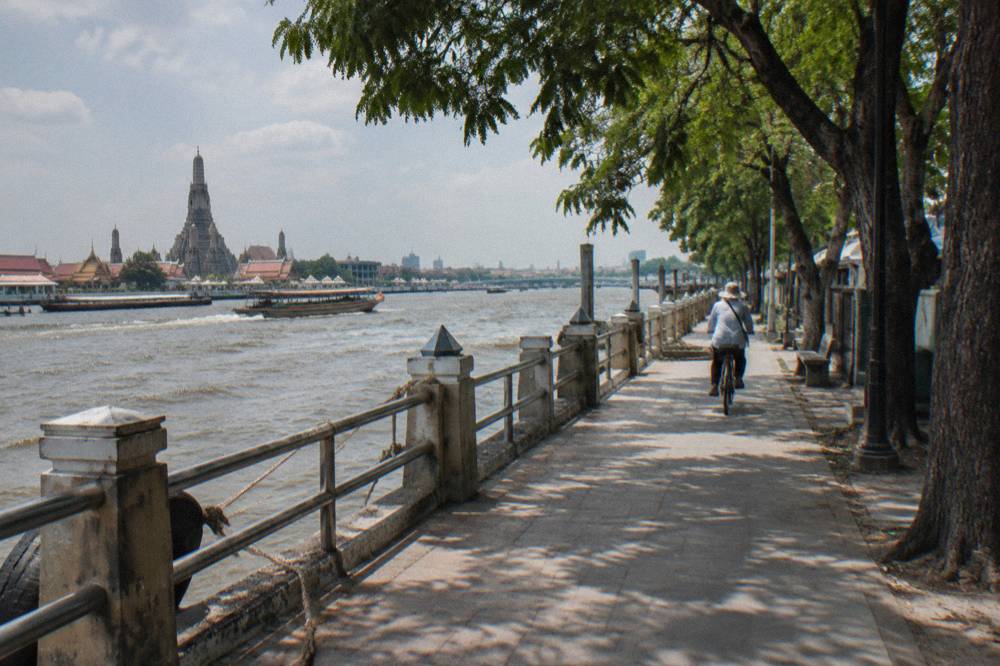
The other recurring errors are behavioral. Riding midday in the hot months turns a pleasant loop into an endurance exercise; the tours start early for a reason. Assuming a bridge is crossable wastes time, because several river crossings are not bicycle-friendly, which is precisely why so many tours include a short ferry crossing instead. Skipping the arrival formalities is another: Thailand's visa rules changed on 15 September 2026, when the previous 60-day visa exemption was revoked and the 30-day tourism scheme was revised and expanded to 60 countries and territories, and the Ministry of Foreign Affairs briefing is the source for where each passport stands. All arrivals also need the Thailand Digital Arrival Card, submitted up to three days in advance; the official page lists no fee.
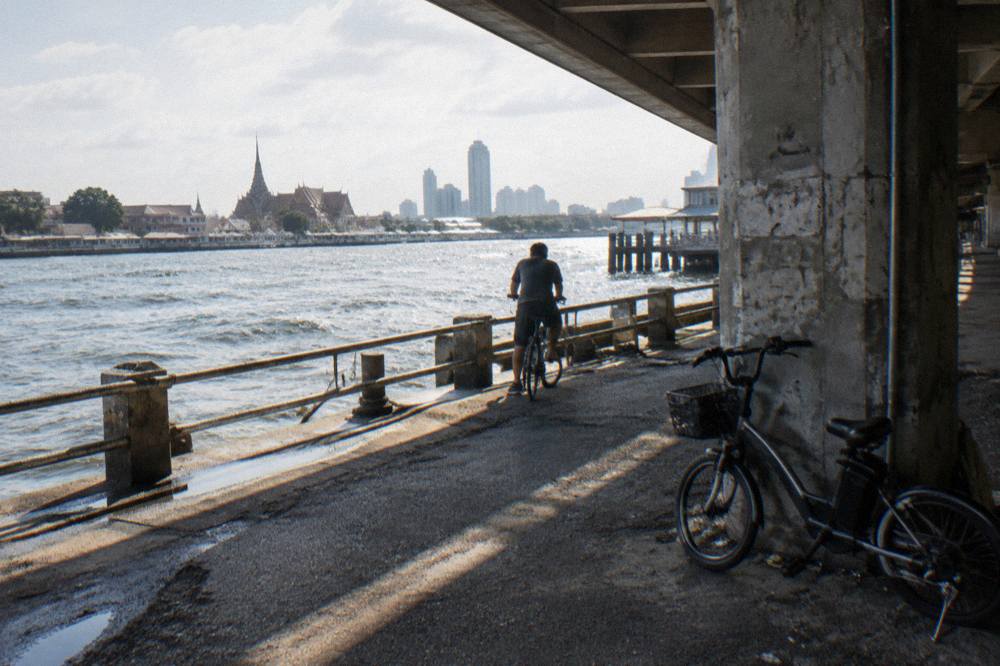
Money is the last practical point. Tour prices on this site are quoted in US dollars, from $19.00 at the bottom to $113.15 at the top, while street-level spending happens in baht at roughly 33 to 34 per dollar; the Bank of Thailand's exchange rate page carries the daily figures. Small notes matter at markets, temple donations and ferry landings in a way they never do at a hotel desk. Getting to the meeting point is its own small logistics task, and the site's public transport guide to tour start points handles it pier by pier.
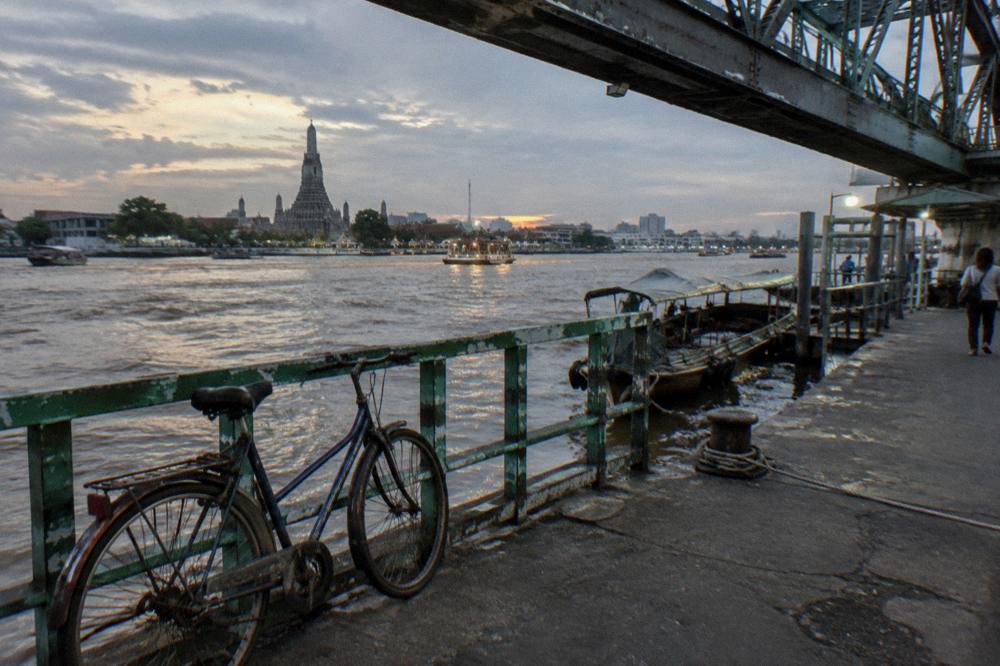
Whether you ride alone or follow a guide, the underlying mission is the same: more people on bikes in the parts of Bangkok where bikes belong, which is what Bangkok Bike Tours exists to document. A sound shortlist for a first visit usually spans a high-volume city classic, a lunch-included half day, and a small-group ride with a meal.
How Do You Match A Ride Length To Your Day?
Ride length in Bangkok is mostly a heat decision. Three hours covers the canal lanes or the old town before the sun peaks, four to five hours adds a river crossing, a temple stop and a meal, and the 8-hour format is a full day with hotel pickup. Durations across the options covered here span 3 to 8 hours, from $19.00 to $113.15 per person.
The short formats suit a first visit and the hot months alike. The Temples and Canals ride packs Thonburi into 3 hours, short enough to fit the coolest part of the day, and the Hidden Gems ride with street food stops, from $19.00 with 119 reviews, spends its three hours on street food rather than distance.
The middle band buys time and, on several rides, a meal. The Half-Day Ride, Lunch Included runs 4 hours from $39.31 with lunch mid-route, and the 5-Hour Ride at $55.19 adds a boat crossing along with its meal. For one-day visitors, the 8-Hour Boat and Bike, Pickup, from $113.15, 26 reviews at 5.0, bundles the whole city into a single outing.
| Ride | Hours | From price | Review base |
|---|---|---|---|
| Temples and Canals | 3 | $22.00 | 4,122 at 4.9 |
| E-Bike Backstreets | 3.5 | $46.00 | 117 at 4.8 |
| Half-Day Ride, Lunch Included | 4 | $39.31 | 286 at 4.9 |
| 5-Hour Ride, Lunch Included | 5 | $55.19 | 106 at 4.7 |
| 8-Hour Boat and Bike, Pickup | 8 | $113.15 | 26 at 5.0 |
The E-Bike Backstreets ride splits the difference at 3.5 hours from $46.00, rated 4.8 across 117 reviews, and motor assist makes the same clock feel lighter on hot mornings. Whatever the duration, take the earliest start available; the clock matters more than the route.
Common Questions About Cycling In Bangkok
Is Bangkok Good For Cycling?
Yes, in specific areas. The old town, Thonburi's canal lanes, Chinatown's morning streets and Bang Krachao all offer rewarding riding, and guided tours run there daily from $19.00 to $76.66 per person. The multi-lane arterials are not cycling territory, so the answer depends entirely on route choice.
Is Thailand Bicycle Friendly?
Moderately. Traffic drives on the left, drivers are used to sharing narrow streets with slow vehicles, and towns like Ayutthaya are genuinely bike-first destinations. Fast roads, midday heat and wet-season downpours are the counterweights, which is why timing and district choice matter so much.
What Side Of The Road Does Traffic Use In Bangkok?
The left, like the rest of Thailand. Riders from right-side countries should spend their first quiet stretch deliberately checking over the right shoulder before any move, because that is where overtaking traffic approaches from.
When Is The Best Time Of Day To Ride?
Early morning before about 9 AM and late afternoon after 4 PM. The national average temperature range spans 18 to 38 °C, and the hottest stretch falls roughly March to May, so midday riding in those months is the hardest combination the city offers. Evening rides with dinner included are also well established.
Do Bangkok Bike Tours Include The Bike And Water?
Yes: a bicycle is included on every ride covered here, a guide leads nearly all of them, and all but two tours include drinks, usually bottled water or water and soft drinks, with many rides adding a snack, a full meal or a ferry crossing. Helmets are included on some rides and available on request on others, so check the specific tour page before booking.
Can You Cycle To The Grand Palace?
You can cycle the streets around it, but entry requires modest dress, and the official banned list includes bike pants, short pants and sleeveless tops. Carry a wrap or change of clothes. The palace is open daily 8:30 AM to 3:30 PM and the foreign ticket costs 500 baht.