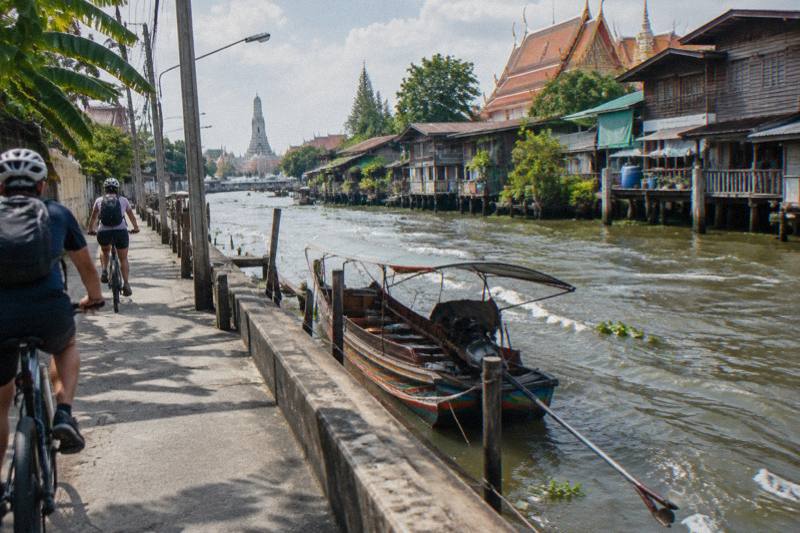
Bangkok Weather For Cyclists: Temperature, Rain And Daylight
Bangkok sits in a three-season tropical climate with national average temperatures running from 18 to 38 °C, and that range does more than any itinerary to decide when, where and how long you should ride.
In Short
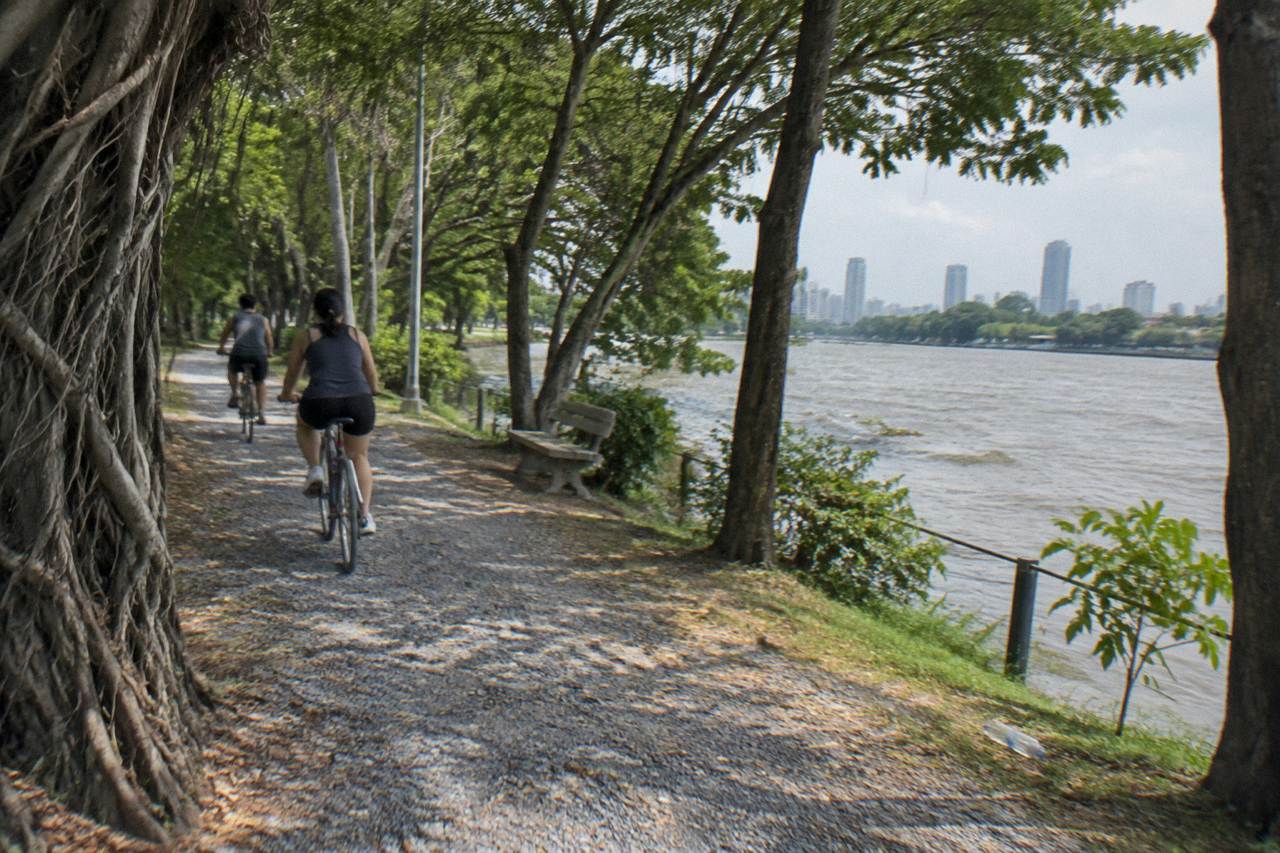
Bangkok has three seasons: roughly six rainy months, three hot months around March to May, and three cooler dry months around December to February. National average temperatures span 18 to 38 °C. The coolest riding window is the dry season, and in the hot months early morning or evening tours, such as a 3-hour ride from $39.56 per person, are the practical choice.
Bangkok weather is the single biggest variable in any cycling plan for the city. The Tourism Authority of Thailand describes a three-season climate: six months of rain, three months of hotter dry weather, and three cooler dry months, with national average temperatures stretching from 18 to 38 °C. Those are countrywide figures rather than Bangkok street-level readings, but the shape of the year they describe holds for the capital. Riders who understand the pattern book earlier starts, shorter routes in the hot months, and flexible plans in the wet ones.
This page walks through the seasons month by month in qualitative terms, then turns to the practical decisions: which tour lengths suit which weather, what to wear when the humidity climbs, and how the dress rules at sights such as the Grand Palace interact with cycling kit. Where a tour is named, its price, duration and review figures come straight from its booking page details.
What Is The Weather Like In Bangkok Across The Year?
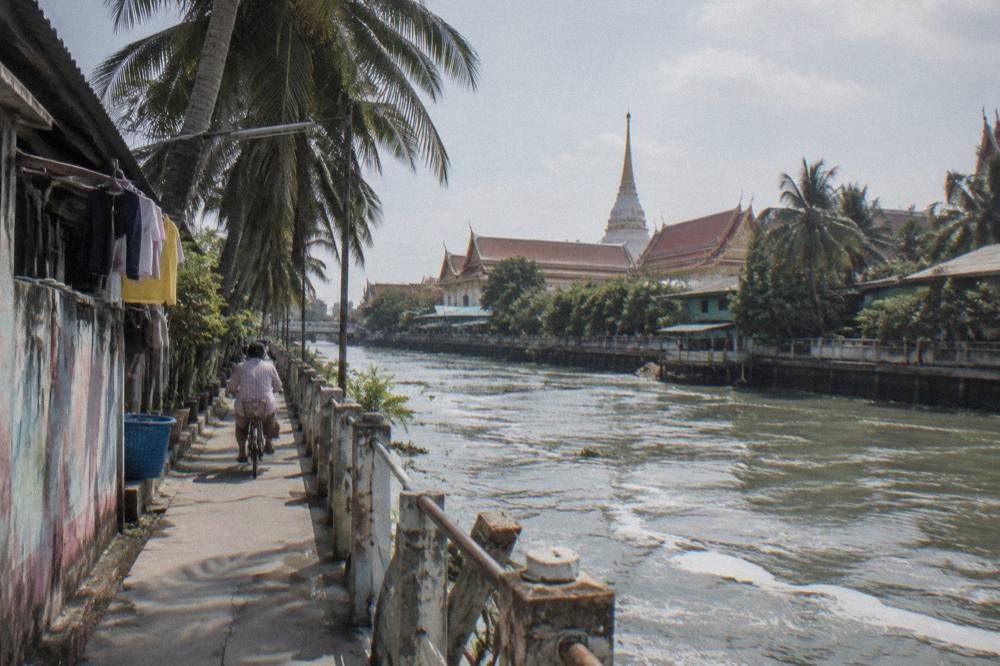
Bangkok sits in a tropical three-season pattern rather than the four-season cycle of temperate countries: roughly six rainy months, three hot months, and three cooler dry months, with national average temperatures ranging from 18 to 38 °C. The low end of that range belongs to the cool season nights, the top end to the hot season afternoons, and no month is genuinely cold.
The Tourism Authority of Thailand's weather page gives that three-way split and the 18 to 38 °C national average range without publishing month-by-month Bangkok figures, so any precise monthly temperature table for the city would be invented. What the split means in practice is straightforward. Rain concentrates in the middle of the year, heat builds toward the middle of the calendar's first half, and the turn of the year is the window most riders find comfortable.
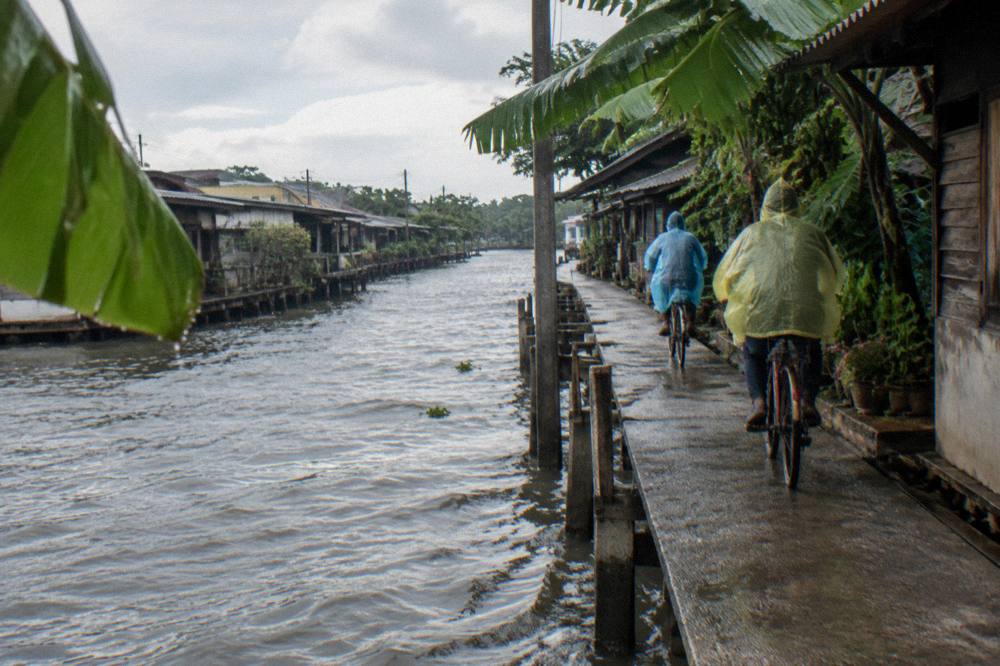
For cyclists, the useful way to read the year is not "good months and bad months" but "months that reward early starts versus months that forgive lazy ones." In the cooler dry stretch, a mid-morning ride is pleasant. In the hot stretch, the same ride at the same hour is a different experience. Rain, when it comes, tends to arrive in intense afternoon or evening spells rather than all-day drizzle, which is why the rainy months still leave room for morning rides.
The infographic below summarises the seasonal split and the national temperature band of 18 to 38 °C. The months in each season run by approximation rather than fixed dates: heat peaks roughly March to May, rain falls heaviest roughly September and October, and the driest stretch runs roughly December to February.
Which Months Are Hottest For Cycling In Bangkok?
The hottest stretch runs roughly March to May, when the national average range tops out at 38 °C and Bangkok afternoons feel every degree of it. For cyclists this is the season of early starts, short routes and sunset or night rides, because a four-hour ride that starts at midday competes directly with peak heat.
Heat in Bangkok is a compound problem: temperature plus humidity plus direct sun on unshaded roads. The 38 °C figure is a national average high, which tells you the ceiling without telling you how a particular street feels at 2 PM. Cyclists planning around it should assume that effort feels harder here than the same effort in a dry climate, and pick distances accordingly.
Tour length is the first lever. Among the options covered here, the 3-hour "Temples and Canals, 3 Hours" ride from $22.00 per person keeps exposure short, as does the 3-hour "Classical City Ride, 3 Hours" from $39.56 per person, rated 4.8 across 2,481 reviews. Longer days remain doable in the hot months, but the ones that work best either start early or shift to the evening, such as the 3.5-hour "Night Ride, Restaurant Dinner" from $37.00 per person, rated 4.7 across 104 reviews, which swaps the sun for illuminated streets and a sit-down dinner.
Electric bikes are the second lever. The "E-Bike Backstreets, 3.5 Hours" tour from $46.00 per person, rated 4.8 across 117 reviews, covers similar backstreet terrain to pedal tours with less physical output, which matters most exactly when the mercury climbs. A dedicated heat-planning breakdown lives in the guide to riding Bangkok in heat, including how to pace a ride across a hot day.
The Classical City Ride above offers one honest answer to hot-weather riding: a short 3-hour city route. Two further options push the same logic: the 4-hour Half-Day Ride, Lunch Included, which builds a lunch stop into the middle of the day, and the small-group 4 to 4.5-hour Colors Small Group Ride, Meal. All three list free cancellation, so a forecast that turns brutal does not have to lock you into a bad start time.
| Season (roughly) | Character | What it means for a ride |
|---|---|---|
| December to February, dry and cooler | The comfortable end of the 18 to 38 °C national range | Longest riding window of the year, mid-morning starts are fine |
| March to May, hot | Top of the temperature range | Early starts, shorter routes, evening or e-bike options |
| Rainy months, peaking roughly September and October | Intense spells rather than continuous rain | Flexible pacing, expect pauses, cover for the bike bag |
When Does The Rainy Season Hit Bangkok Bike Rides?
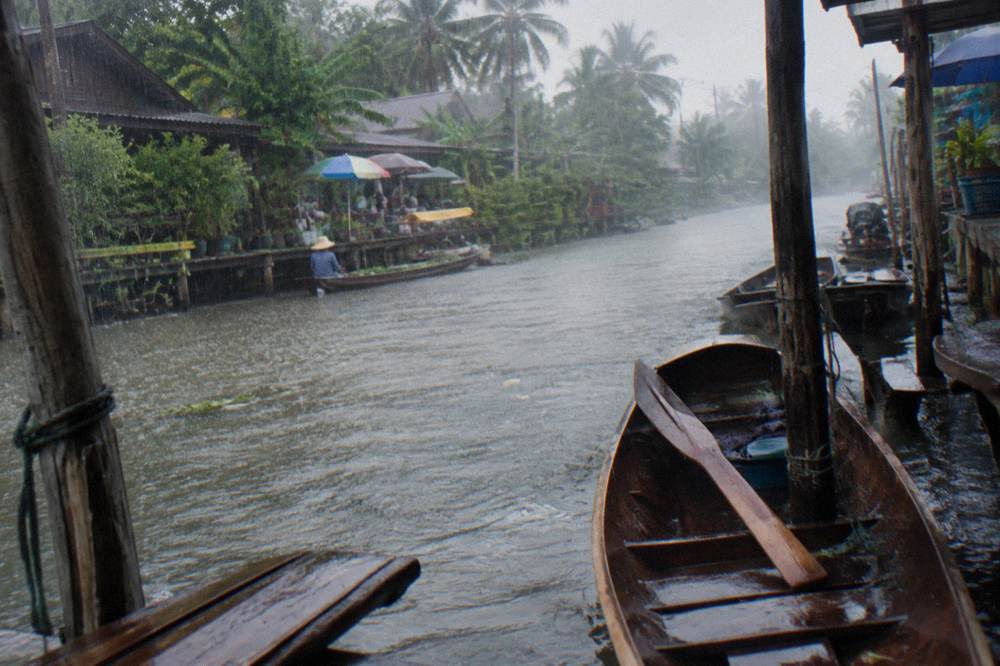
Rain concentrates in roughly six months of the Thai year, with the wettest stretch falling around September and October, and it typically arrives as heavy spells rather than steady all-day rain. Guided rides generally keep running, with guides adjusting pace and route, and most tours here list free cancellation, which is the safety net that matters when a forecast looks ugly.
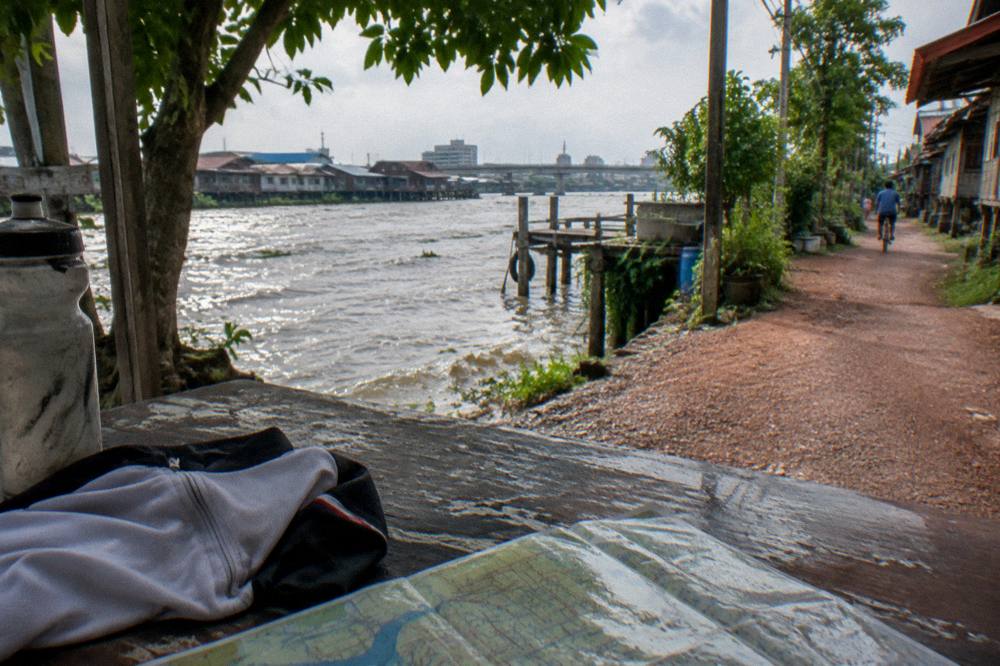
Rain changes a Bangkok ride in specific ways. Surface water gathers on the low riverside lanes around the Chao Phraya, painted road markings turn slick, and the city's drainage handles downpours at its own pace. Guides who ride these streets daily adjust for it; independent riders should slow down, avoid painted lines and metal covers, and treat the first minutes of rain as the most dangerous, when dust and oil lift off the road surface before being washed away.
The booking question is what happens if the weather turns on your chosen date. Most tours in the options covered here list free cancellation, which lets you move a ride if a storm system settles over the city. A few, such as the "Bamboo Original Jungle Ride" and the "Twilight Firefly Ride, Meal", do not state a cancellation policy, so check the booking page before relying on flexibility there. The fuller wet-season playbook, including what to pack and how jungle-side routes behave after rain, is in the rainy season bike tour guide.
For a rider deciding between a morning and afternoon slot in the wet months, the practical advice is to book the earlier window when one exists and to keep the evening option as a backup, since heavy spells often clear as fast as they arrive. Neither claim is a promise about any given day, it is simply how riders and operators tend to structure things around the pattern.
The Classical City Ride above is a good rainy-season shape: three hours, a compact Talat Noi and riverside route, and a group cap of 16, which keeps regrouping simple if the guide shortens a leg to dodge a downpour. It starts at 23 Charoen Krung 24 and carries a boat or ferry crossing, a fun twist when the river is running high after rain.
Is The Cool Dry Season The Best Time To Cycle In Bangkok?
Roughly December to February is the driest and coolest stretch of the Thai year, and it is when the longest rides feel best: the 6-hour "Floating Market Ride, Lunch" from $73.59 per person and the 5-hour routes become realistic rather than heroic.
Cool season riding rewards the tours that are too long to attempt in April heat. The "Full-Day Ayutthaya Ride, Lunch" runs 6 hours from $73.28 per person, rated 4.8 across 67 reviews, and the "5-Hour Sunset Ride, Meal" from $80.00 per person turns the long format into a golden-hour finish, rated 5.0 across 25 reviews. In the hot months those same rides demand real heat tolerance; in the dry months they are simply good days out.
The trade-off is demand. December and January bring peak visitor numbers, and tours with small group caps, such as the 6-person "4.5-Hour Nature Ride, Meal" from $54.00 per person, rated 4.8 across 149 reviews, can fill well ahead. Booking a little earlier than you would in September costs nothing and protects the date. The wider timing question, including month-by-month planning angles, is covered in the best time to cycle in Bangkok guide.
“Great way to tour the sights. We were able to get around easily with our bikes. Guide was very knowledgeable.”
One planning note for the cool season specifically: the comfortable daytime temperatures can tempt riders into adding a Grand Palace stop. Do the wardrobe check first, because the palace dress list has an edge aimed squarely at cyclists, covered in the clothing section below.
| Tour | Duration | Price from | Reviews | Why this weather window suits it |
|---|---|---|---|---|
| Floating Market Ride, Lunch | 6 hours | $73.59 | 4.9 from 16 | Longest format, best in cooler dry air |
| Full-Day Ayutthaya Ride, Lunch | 6 hours | $73.28 | 4.8 from 67 | Full-day temple circuit wants mild weather |
| 5-Hour Sunset Ride, Meal | 5 hours | $80.00 | 5.0 from 25 | Long route with a cooling finish |
| 4.5-Hour Nature Ride, Meal | 4.5 hours | $54.00 | 4.8 from 149 | Green-lung shade, small group of 6 |
| Night Ride, Restaurant Dinner | 3.5 hours | $37.00 | 4.7 from 104 | Heat-proof evening option |
How Do Heat And Humidity Change How You Plan A Ride?
Heat and humidity in Bangkok raise the effort cost of every kilometre, so the planning moves that matter are choosing a shorter or shaded route, shifting to an early or evening start, considering an e-bike, and taking the drink stops seriously. Water or soft drinks are included on nearly every tour discussed here that states its drinks policy, and several include a full meal, which doubles as a heat break.
The physical reality is simple: sustained effort in high humidity drains fluid faster than a rider notices, and by the time thirst registers you are already behind. Guided tours handle this structurally, with bottled water included on rides such as the "Half-Day Ride, Lunch Included" from $39.31 per person, rated 4.9 across 286 reviews, and the "Hidden Bike and Food Tour" from $56.73 per person, rated 5.0 across 592 reviews. Riders should still carry their own bottle on top of what is provided.
Shade is a route property, not a weather one. Green-side routes such as the Bang Krachao jungle rides run under tree cover for most of their length, which is why the 4-hour "Jungle Ride, Meal and Pickup" from $76.66 per person, rated 4.9 across 524 reviews, sells a heat story as much as a nature one: hotel pickup, a boat crossing to the green lung, and a lunch stop that breaks the hottest hours. City rides in contrast cross open stretches of old-town asphalt where the sun has no filter.
Duration discipline matters more than distance discipline. A 3-hour ride in the hot months is a different proposition from a 5-hour one at the same temperature, and the cheapest option here, the 3-hour Hidden Gems Bike and E-Scooter ride with street food stops from $19.00 per person, rated 4.9 across 119 reviews, is short enough that heat rarely becomes the deciding factor. If a longer day is the goal, the small group bike tour guide style options with meal stops break the day naturally.
What Should Cyclists Wear For Bangkok Weather?
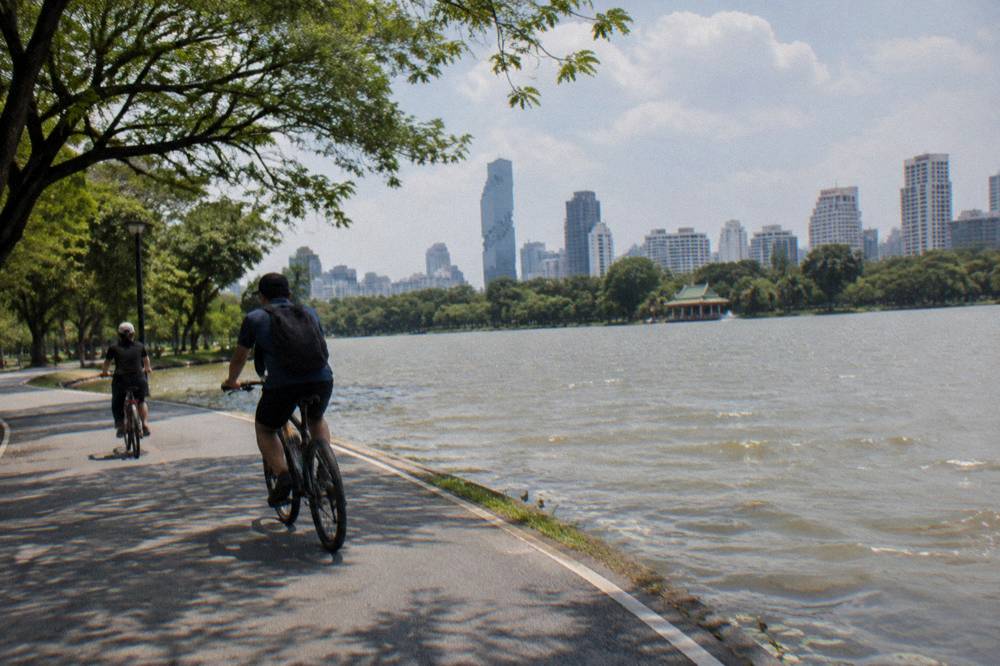
Light, breathable, covering clothing is the Bangkok answer: loose cotton or technical fabric, closed shoes for pedals and traffic, a hat or helmet per the tour's gear policy, and a light layer for sudden rain. The one hard rule with teeth is the Grand Palace dress code, and it names bike pants explicitly on the official banned list.
The official Grand Palace visitor page lists what may not be worn: sleeveless shirts, vests, short tops, see-through tops, short pants, torn pants, tight pants, bike pants, mini skirts, pants skirts and sleeping suits. A foreign visitor ticket costs 500 baht and includes Wat Phra Kaew and the Queen Sirikit Museum of Textiles, with opening hours daily 8:30 AM to 3:30 PM. For a cyclist, the point is that riding kit, however practical in the heat, fails this dress list, so any palace stop needs a change of clothes carried along or planned at the hotel.
Rain and heat pull the wardrobe in the same direction: quick-dry fabric. A soaked cotton shirt stays wet for hours in humid air; a light synthetic one dries on the bike. Footwear should survive puddles and gripping pedals in equal measure. The full clothing breakdown, including what works for temple stops generally, is in the what to wear guide.
Helmets are worth one precise sentence: policies differ by tour. Some rides include a helmet and some provide one on request, and no legal claim about helmets should be assumed either way; check each tour's gear policy before booking, and remember Thailand's traffic drives on the left, which matters more for road positioning than for clothing.
What Mistakes Do Cyclists Make With Bangkok Weather?
The recurring mistakes are starting rides at midday in the hot months, treating a cool morning as license for a 6-hour route without water planning, assuming rain means cancellation rather than a pause, wearing riding kit to the Grand Palace, and booking the smallest-group tours late in the peak dry season. Each one is avoidable with a single planning decision made in advance. Timing your trip around the cool season solves most of these problems at once, and the Bangkok in December cool season planning guide covers the weather, clothing, and tour choices that come with it.
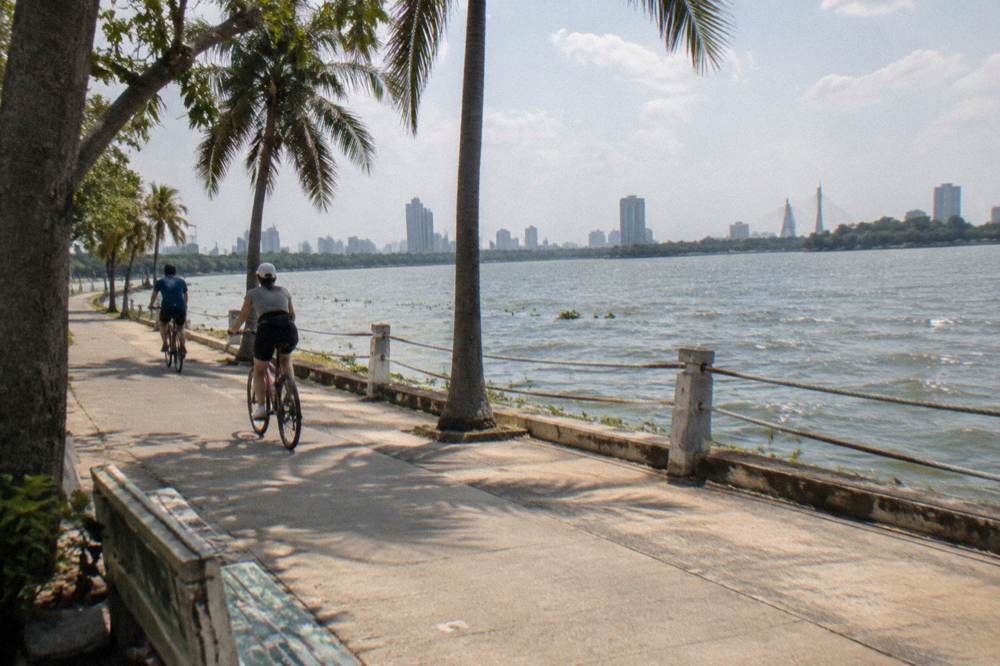
The midday mistake is the most common. Visitors equate a booked tour time with a fixed appointment and accept whatever start slot remains, when in reality the start time is the biggest weather decision of the day. In the hot stretch, a start before the heat builds or after it breaks is worth more than any route upgrade. Tour operators schedule around this themselves, which is why evening formats such as the "Chinatown Night Ride, Street Dinner" from $42.93 per person exist at all.
The second mistake is ignoring the dress-list interaction. Riders plan a temple-heavy route, arrive in cycling shorts, and discover the palace's rules apply to everyone. The fix costs nothing: pack a change of clothes or leave the palace for a non-riding day. Third is rain fatalism. Wet-season downpours are often short, guides pause rather than cancel, and the free-cancellation policies on most tours here let you move the date entirely if a serious system parks over the city.
The fourth is underestimating the sun in the "dry" season. December to February is cooler, not overcast, and a full day of riding without sun protection still takes a toll. The fifth is timing-related rather than weather-related but lands in the same planning bucket: assuming every tour has the same flexibility. Cancellation terms vary, and a couple of rides state none at all, so the moment to check is before booking, not after the forecast shifts.
How Do Tour Times Fit Around Bangkok Weather?
Tour durations on the options here run from 3 to 8 hours, and the sweet spot for hot months is 3 to 4 hours, while the dry season comfortably supports the 5 to 6 hour formats; the 8-hour "8-Hour Boat and Bike, Pickup" from $113.15 per person is a cool-season or heat-tolerant rider's tour.
Matching length to weather is the last planning step. The table below groups the main formats by the season that flatters them. Prices are per person "from" figures and every review count is printed beside its rating, because a 5.0 from 25 reviews and a 4.9 from 4,122 reviews tell different confidence stories.
| Format | Example tour | Price from | Rating and count | Best weather fit |
|---|---|---|---|---|
| 3 hours | Temples and Canals, 3 Hours | $22.00 | 4.9 from 4,122 | Any season, hot-month mornings |
| 3 to 3.5 hours | Historical Park Ride (Ayutthaya) | $47.00 | 4.8 from 163 | Open ruins, cooler months |
| 3.5 hours | Night Ride, Restaurant Dinner | $37.00 | 4.7 from 104 | Hot months, evenings |
| 4 hours | Jungle Ride, Meal and Pickup | $76.66 | 4.9 from 524 | Shaded jungle route, any season |
| 4 to 4.5 hours | Colors Small Group Ride, Meal | $42.00 | 4.8 from 185 | Dry season full experience |
| 5 hours | Longtail Boat Combo, Lunch | $56.73 | 5.0 from 17 | Dry season, river breeze |
| 6 hours | Floating Market Ride, Lunch | $73.59 | 4.9 from 16 | Cool dry season |
| 8 hours | 8-Hour Boat and Bike, Pickup | $113.15 | 5.0 from 26 | Cool dry season only, realistically |
Money and admin weather the same in every season, so they belong with the final booking steps. The baht has traded around 33 to 34 per US dollar, per the Bank of Thailand's daily rate page, and tour prices here are already quoted in dollars. Visitors arriving after 15 September 2026 fall under the revised visa-exemption schemes; the 60-day scheme was revoked and the 30-day tourism scheme now covers 60 countries and territories, and the Ministry of Foreign Affairs briefing points to the list for each passport. Every arrival also needs the Thailand Digital Arrival Card, submitted up to three days in advance. More on Bangkok Bike Tours planning sits on the homepage, including route guides for Bangkok street food rides that pair neatly with an evening tour.
Whether the answer turns out to be a short shaded morning ride, a cool-season full-day circuit, or a dinner-format evening route, the weather pattern does the filtering: hot months push riders toward brevity and evening light, wet months reward flexibility, and the dry stretch rewards ambition. Pick the season first, then the tour, and the rest of the plan tends to fall into place.
How Do You Reach The Start Point Before The Heat Builds?
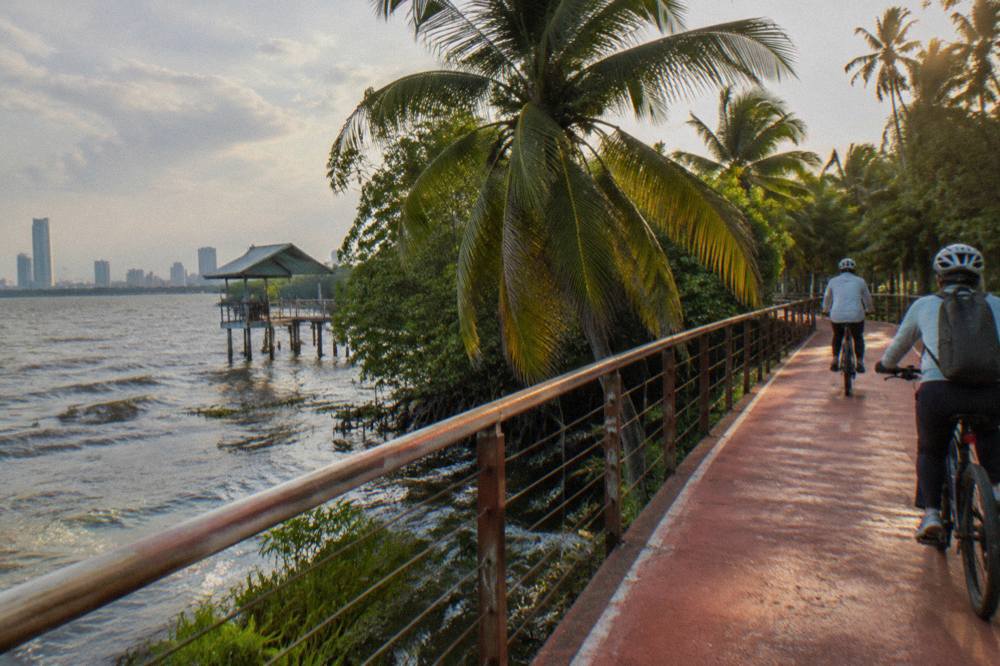
Most of the options here begin at a printed street address, so the trip to the meeting point is the first weather decision of the day. "Jungle Ride, Meal and Pickup" instead lists hotel pickup, and the Ayutthaya options start in Ayutthaya itself. Travel in the cooler hour before your slot and the ride begins ahead of the heat.
Start times shape the ride, and so does the journey before it. A morning slot in the hot stretch means crossing the city while the air is still manageable, before afternoons push toward the top of the national 18 to 38 °C range.
"Temples and Canals, 3 Hours" meets at 429 Krung Thon Buri Road on the Thonburi side of the river, from $22.00 per person, rated 4.9 across 4,122 reviews. "Classical City Ride, 3 Hours" meets at 23 Charoen Krung 24 in Talat Noi, from $39.56, rated 4.8 across 2,481 reviews.
| Tour | Start point | Group cap | Arrival note |
|---|---|---|---|
| Temples and Canals, 3 Hours | 429 Krung Thon Buri Road | 8 | Small group, so be early |
| Classical City Ride, 3 Hours | 23 Charoen Krung 24 | 16 | Riverside lanes hold surface water |
| Half-Day Ride, Lunch Included | 161, 1 Thanon Somdet Phra Pin Klao | 10 | Lunch splits the hot hours |
| Jungle Ride, Meal and Pickup | Hotel pickup listed | 10 | No dash through rain |
In the wet months, allow more travel time, not less: a heavy spell can soak the final blocks, and painted markings turn slick underfoot. The Chao Phraya express boat operator's site shows its commuter lines running Monday to Friday, so a weekend approach should not count on the river. And reread the printed address the night before: the "Bamboo Original Jungle Ride" leaves its cancellation terms unstated, so a missed start in a downpour is an expensive error.
Common Questions About Bangkok Weather For Cyclists
What Is The Weather Like In Bangkok Across The Year?
Bangkok follows a three-season tropical pattern: roughly six rainy months, three hot months and three cooler dry months. National average temperatures span 18 to 38 °C. The coolest, driest riding window falls roughly December to February, and the hottest stretch roughly March to May.
Which Months Are Hottest For Cycling In Bangkok?
The hottest stretch runs roughly March to May, topping the national average range at 38 °C. Early-morning or evening tours and shorter routes, such as a 3-hour ride from $22.00 or $39.56 per person, are the practical choices in that window, and e-bike formats reduce physical output.
When Does The Rainy Season Hit Bangkok Bike Rides?
Rain concentrates in roughly six months of the year, wettest around September and October, usually as heavy spells rather than all-day rain. Guided tours generally continue with adjusted pacing, and most tours here list free cancellation so dates can move with the forecast.
Is The Cool Dry Season The Best Time To Cycle In Bangkok?
Roughly December to February is the most comfortable window and the only one where 5 to 6 hour rides, such as the Floating Market Ride at from $73.59 per person, feel like an easy day rather than an endurance event. It is also peak visitor season, so small-group tours fill earlier.
What Should Cyclists Wear For Bangkok Weather?
Light, breathable, covering clothing, closed shoes and quick-dry fabric for sudden rain. If the route includes the Grand Palace, note the official dress list bans bike pants, tight pants and short pants; a 500 baht foreign visitor ticket applies and hours are 8:30 AM to 3:30 PM daily.
Do Bangkok Bike Tours Still Run When It Rains?
Operators generally keep riding through short downpours, adjusting pace and route, and several tours include a boat or ferry crossing regardless of weather. Most options covered here list free cancellation, so a severe-weather date can usually be moved; check the booking page for the specific tour's policy.