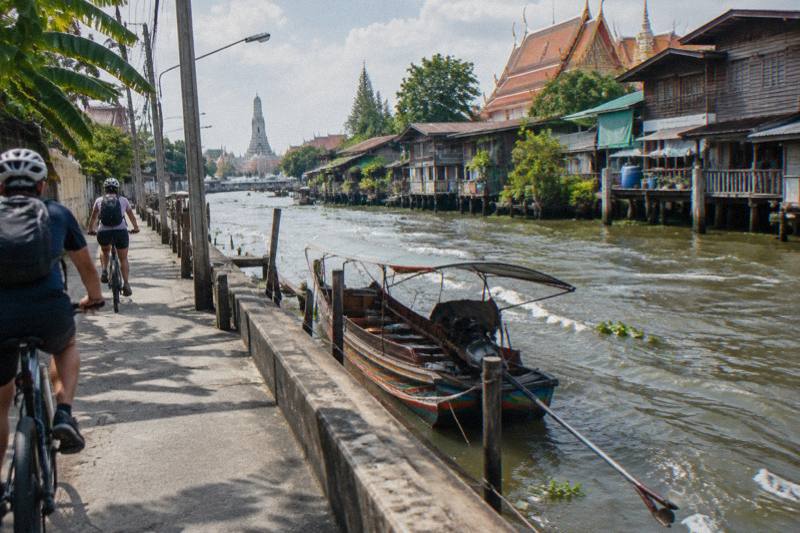
Best Time To Cycle In Bangkok: Cool, Hot And Rainy Months
Bangkok has three seasons rather than four, and the difference between them decides whether a bike ride feels effortless or exhausting. Here is how the cool, hot and rainy months shape a day in the saddle, and how to pick the month that suits your pace.
In Short
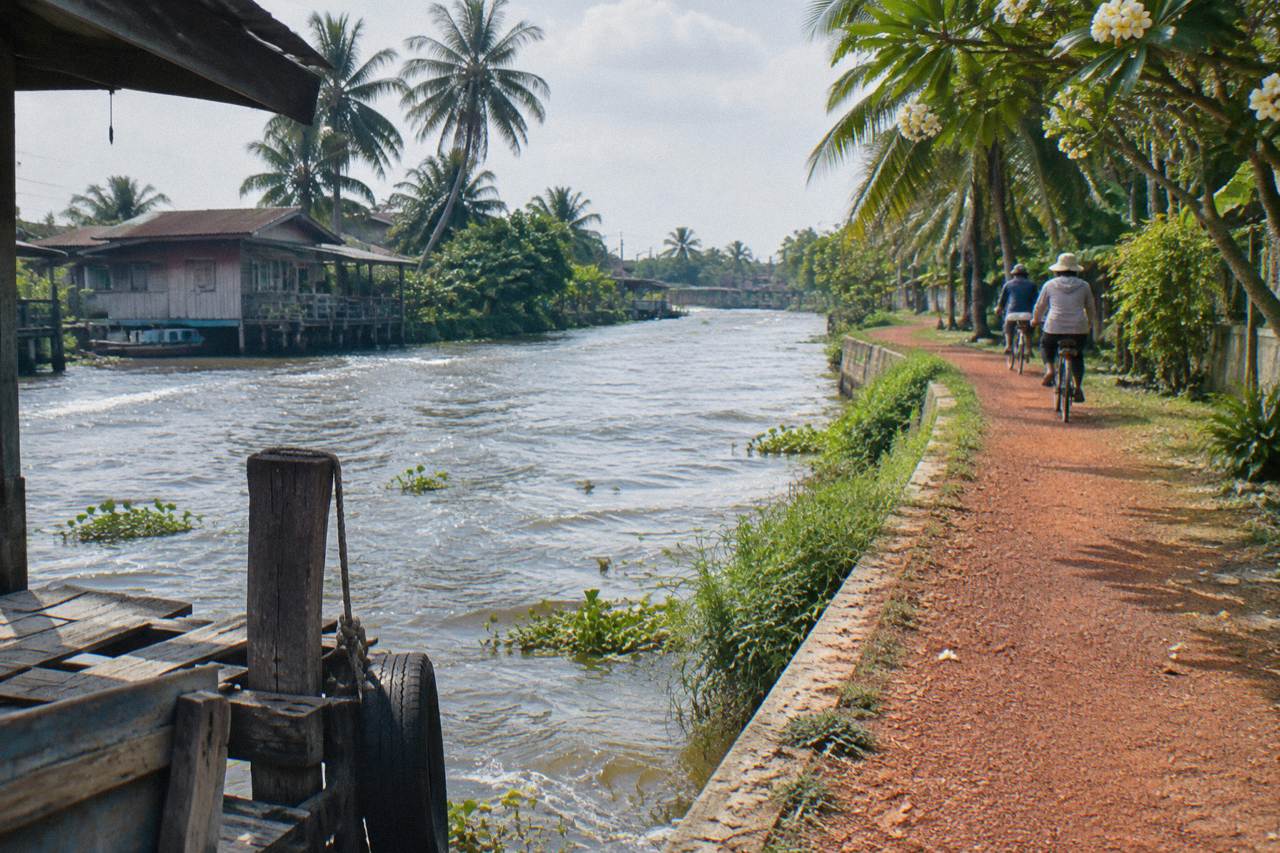
Roughly December to February is the driest and most comfortable stretch for cycling in Bangkok, with the national temperature band at its lower end. The heat builds from roughly March to May, and roughly September and October bring the heaviest rain. Morning starts and shorter rides help in every season.
Bangkok sits close to sea level, wrapped in concrete and cut through by a wide river, and its weather swings between three seasons rather than four. The Tourism Authority of Thailand describes the country's year as six rainy months, three cooler dry months and three hot months, with national average temperatures spanning 18 to 38 °C across the year. For a cyclist, that range is the whole story: the same city street that feels pleasant on a February morning can drain you by April noon.
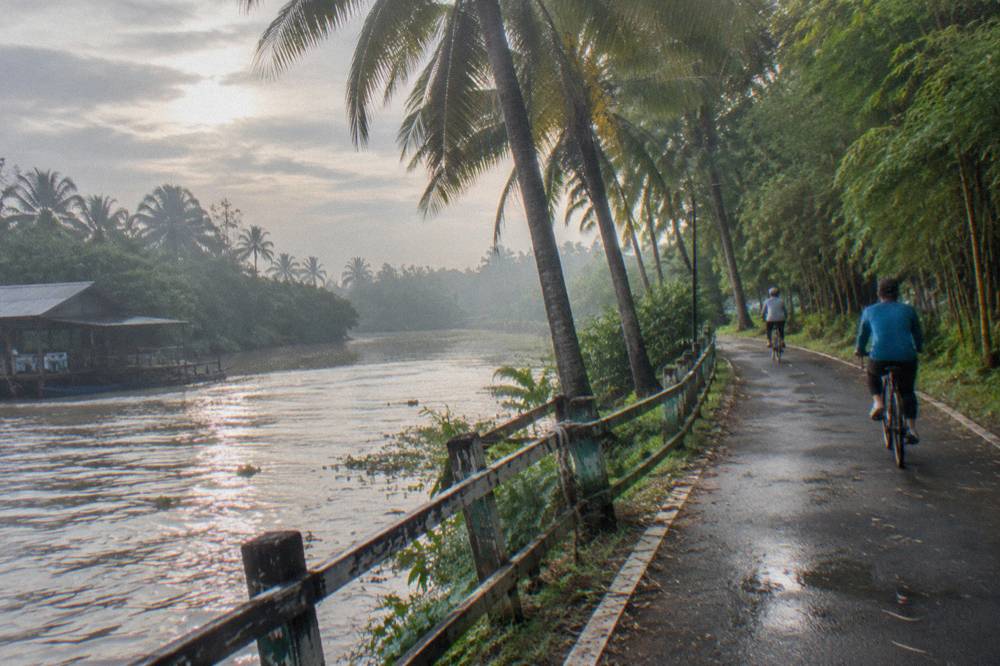
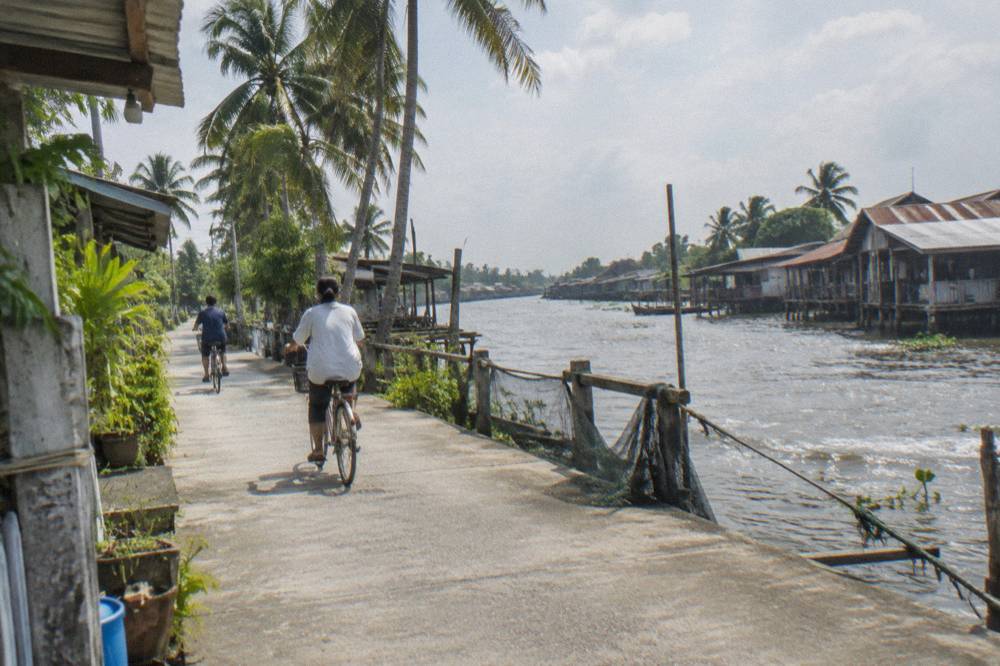
Choosing a month, then, is really choosing a style of ride. The cooler stretch favours long loops and full-day itineraries. The hot months push rides toward early starts, shade and water. The rainy season shortens storms into afternoon bursts and turns the green areas, especially the jungle-like Bang Krachao peninsula across the river, into their most photogenic selves. None of the three seasons makes cycling impossible, and guided rides run in all of them, but the month you pick changes what a sensible day looks like.
This guide walks through the seasons in order, then matches them to the practical decisions: start times, clothing, tour lengths and the mistakes that catch out first-time visitors. Season boundaries shift from year to year, so the month bands in this guide are approximate rather than fixed dates.
When Is The Best Time To Cycle In Bangkok?
Roughly December to February is the best window for cycling in Bangkok, because it is the driest stretch of the year and temperatures sit toward the lower end of the national 18 to 38 °C band. The improvement is relative rather than absolute: this is still a tropical city, and midday heat remains real. Riders who can only travel later in the year are not excluded, they simply plan around different constraints.
The reason December to February stands out is humidity and rainfall as much as temperature. The cooler dry months follow the monsoon, when the ground has cooled and the air carries less moisture. Mornings feel genuinely pleasant, and a three or four hour ride can run into the late morning without anyone wilting. That matters for the majority of Bangkok's guided rides, which are half-day trips rather than full-day expeditions.
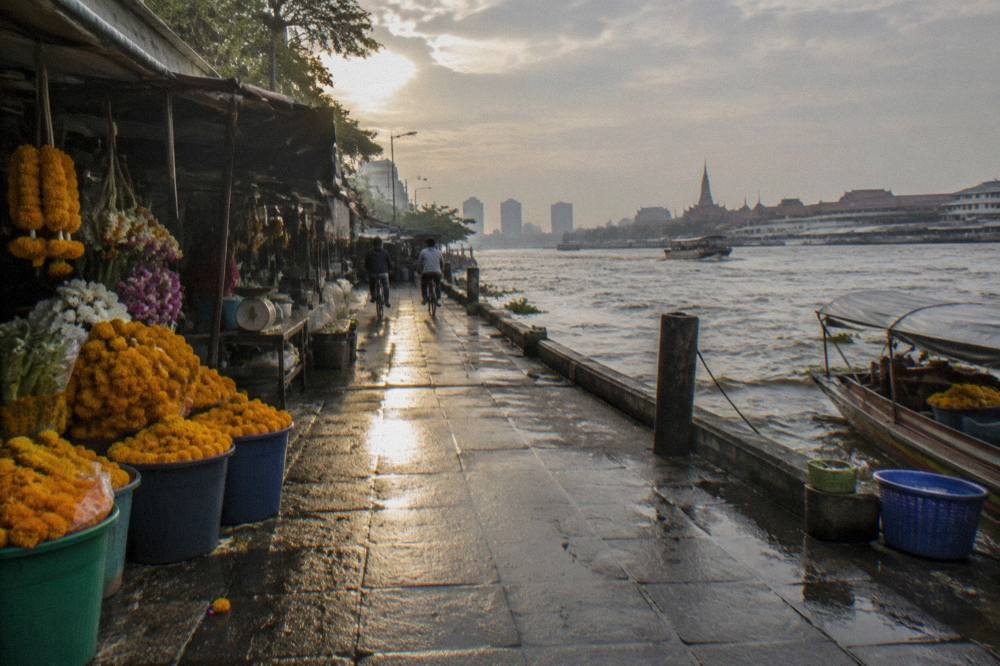
The trade-off is popularity. The comfortable months are also the peak visitor months, so the marquee sights, the flower market at Pak Khlong Talat, the old town temple cluster, the river promenades, carry more foot traffic. Group sizes on guided rides book up earlier too. If you are travelling in this window and want a small-group experience, booking ahead matters more than in the quieter rainy months.
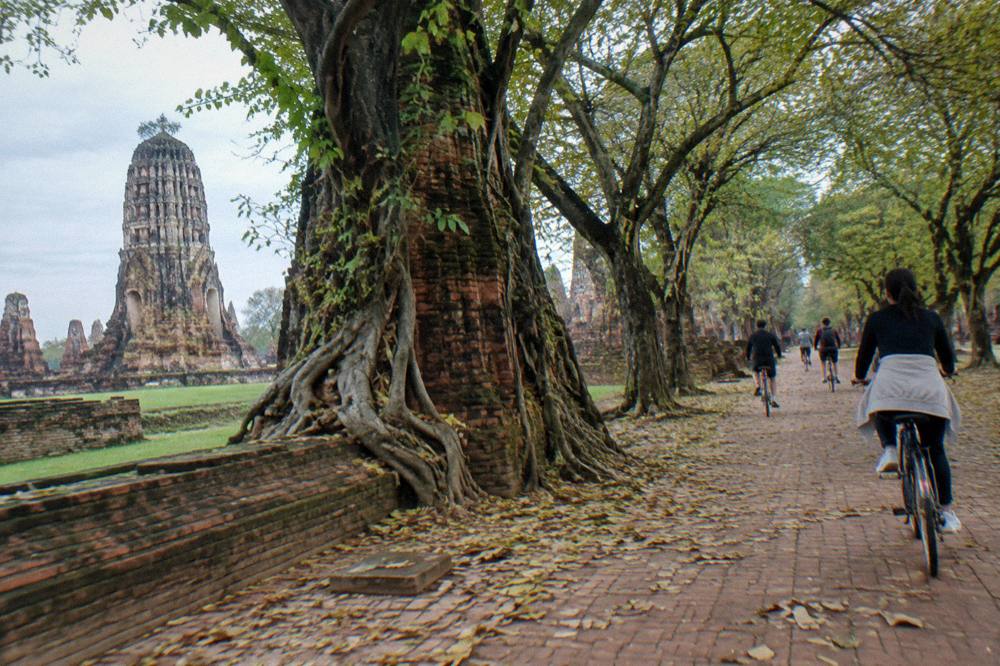
A related decision point is what you want from the ride itself. The cooler months suit the longer itineraries, such as the 5-hour options and the full-day Ayutthaya rides, because stamina is less of a constraint. A 3 to 3.5 hour Historical Park Ride in Ayutthaya, from $47.00 per person and rated 4.8 across 163 reviews, is a very different proposition in January than in April. If a long ride is the centrepiece of your trip, the cool season is when to schedule it.
For a first visit in the cool months, the Bangkok Bike Tours selection covers everything from a 3-hour temples loop to all-day combinations, and the seasonal question mostly resolves into which month, not whether to ride.
What Are Bangkok's Three Cycling Seasons?
Thailand's year divides into three seasons: a rainy stretch of about six months, a cooler dry stretch of about three months, and a hot stretch of about three months, according to the Tourism Authority of Thailand. National average temperatures span 18 to 38 °C across the year. The exact month boundaries are not confirmed, so any month-naming below is approximate, with roughly December to February driest, roughly March to May hottest, and roughly September and October wettest.
The three-season split matters for cyclists because each season changes the same route in a different way. Rain affects surfaces and visibility. Heat affects pace and hydration. Even the comfortable season affects crowds and booking lead times. A rider who understands which of the three forces they are planning around makes better choices than one chasing a single "perfect month". To see how that plays out month by month, the guide to Bangkok weather for cyclists covers the hottest and wettest stretches along with what to wear for each.
The table below summarises the qualitative bands. Because no month-level temperature or rainfall figures are verified for Bangkok specifically, the bands are directional: they tell you which force dominates a month, not what the thermometer reads on a given day.
| Season | Roughly | What dominates | What it means for a ride |
|---|---|---|---|
| Cooler dry | December to February | Lower humidity, little rain | Best window for long rides and midday touring |
| Hot | March to May | Heat toward the top of the 18 to 38 °C band | Early starts, shade, water, shorter loops |
| Rainy | Roughly June to October, heaviest around September and October | Afternoon downpours, humid breaks | Morning rides, flexible plans, green scenery |
One point worth repeating: the 18 to 38 °C range is a national average band, not a Bangkok forecast. The city's concrete holds heat, so an April afternoon in central Bangkok often feels hotter than the countryside number suggests. Night rides are one way around it: several tours on this site pair an evening ride with dinner, from the Chinatown Night Ride to the Twilight Firefly Ride. The overview of cycling in Bangkok covers how the city's layout interacts with its weather in more depth.
If your dates are fixed inside the hot or rainy stretch, the rest of this guide is written for you: both seasons are workable with the right tour shape.
Which Months Are The Coolest For A Bangkok Bike Ride?
Roughly December to February forms the cool, dry window, when rainfall is at its lowest and the national temperature band sits toward its lower end. These are the months when a 4 or 5 hour ride is comfortable for most visitors, and when midday touring remains realistic. They are also the busiest months, so early booking of guided rides is wise.
The cool season is the answer to the question most visitors are really asking: when can I ride without fighting the weather? In practice that means the long itineraries come into their own. The 5-Hour Ride, Lunch Included, from $55.19 per person and rated 4.7 across 106 reviews, mixes city streets with a boat crossing and a proper lunch stop, a shape that rewards a day when neither heat nor rain will cut it short. The same operator's Floating Market Ride runs 6 hours, from $73.59 per person, rated 4.9 across 16 reviews, and is squarely a cool-season itinerary.
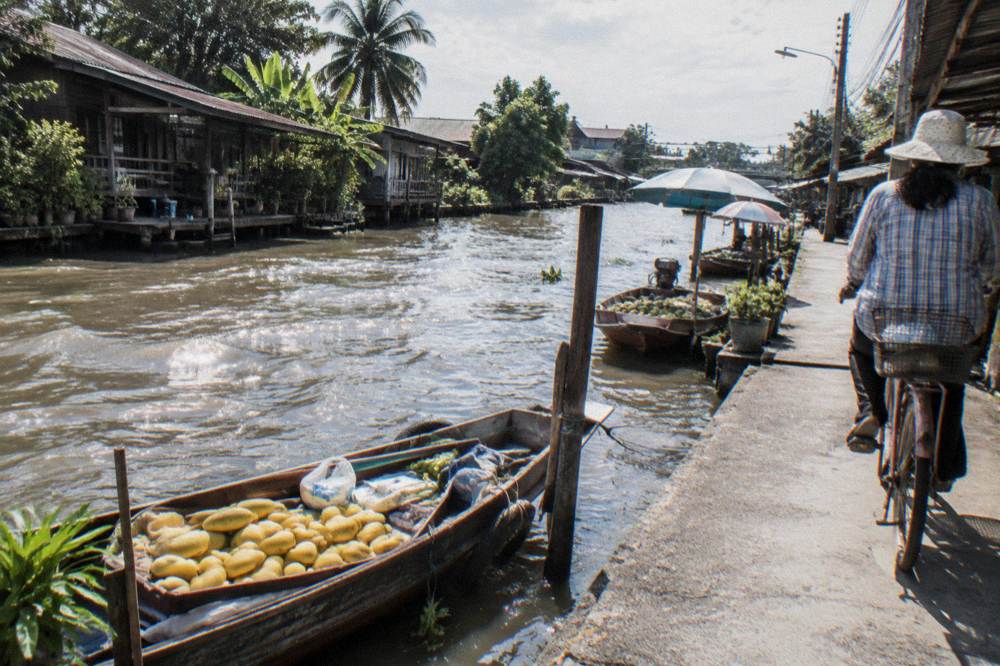
The city rides shine too. The Classical City Ride, a 3-hour loop from Talat Noi rated 4.8 across 2,481 reviews, from $39.56 per person, packs old town lanes, alleyways and a river crossing into a morning, and in December conditions it can run at a genuinely relaxed pace. Its review pool is one of the largest on any Bangkok ride, which says something about how many visitors use it as their introduction to the city on two wheels.
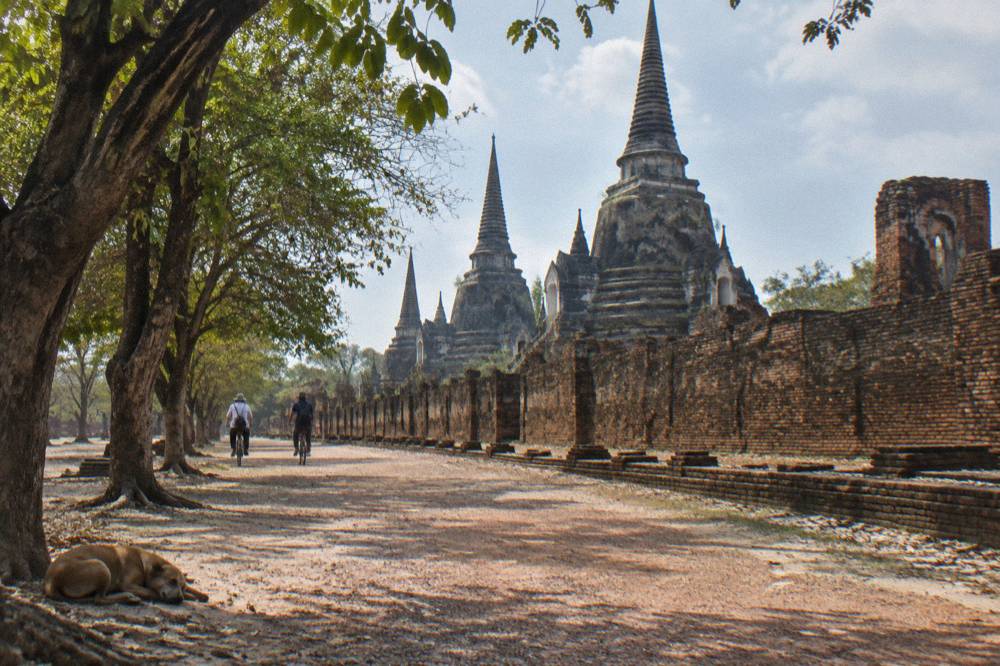
Crowding is the one cost of the cool months. More visitors means fuller groups and busier stops, especially around the headline temples. Two ways around it: pick small-group rides, such as the Colors Small Group Ride, 4 to 4.5 hours with a meal, from $42.00 per person and rated 4.8 across 185 reviews, or shift to the green side of the river, where the Bang Krachao peninsula absorbs crowds far better than the old town does.
Cool-season riding also opens the door to temple-heavy itineraries that involve indoor stops and dress codes. If a ride might end near the Grand Palace, note that the official banned dress list includes bike pants, alongside short pants, torn pants and tight pants, so pack something to change into; the foreign ticket is 500 baht and the official hours are 8:30 AM to 3:30 PM daily. That mid-afternoon closing time is one more argument for a morning ride in any season.
How Hot Does Bangkok Get For Cycling Between March And May?
Roughly March to May is the hot stretch, when temperatures push toward the top of the national 18 to 38 °C average band and the city's concrete amplifies the feel of it. Cycling remains entirely practical in these months, but the shape of a good ride changes: earlier starts, shorter distances, more shade and reliable water. Midday riding is the part to give up.
“Very enjoyable, relaxing afternoon cycling around Bang Kachao. Ate lots of food and had some nice conversations. Highly recommended.”
The hot months reward tours that lean on water and shade. The jungle rides across the river are the natural fit, because Bang Krachao's tree cover keeps the air more forgiving than the asphalt of Sukhumvit. The Jungle Ride, Meal and Pickup, 4 hours from $76.66 per person, rated 4.9 across 524 reviews, includes hotel pickup, a boat crossing, lunch and a group capped at 10, which removes nearly every hot-weather friction point: no transit in the sun, no planning a meal stop, no large group slowing the shade breaks.
Budget alternatives keep the same shape. The Green Ride, 4 hours from $39.86 per person, rated 4.7 across 66 reviews, includes a snack, drinks, a boat crossing and a group max of 15. Alcoholic drinks are strictly forbidden during the tour, which in the hot months is sound practice anyway. What it does not include is hotel transport, so the meeting point on Sukhumvit 26 is part of the morning's planning.
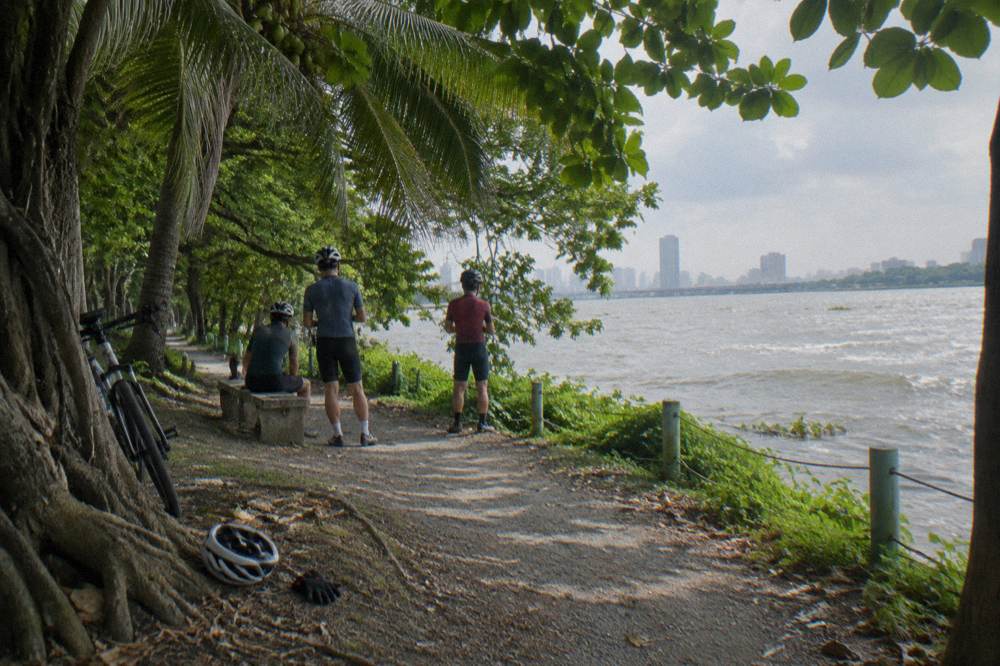
Hydration is the practical headline of the hot stretch. Most tours include water: the Classical City Ride lists water and soft drinks, the Half-Day Ride, Lunch Included lists bottled water, and the tours that include a meal almost always pair it with a drink. Riders should still carry more than they think they need, and treat the included bottle as a starting point rather than the plan. The heat-specific guide goes deeper on pacing, timing and what to do when a ride runs warmer than expected.
Start times matter more than route choice in April. A ride that begins at 8 AM finishes before the worst of the afternoon buildup; the same route at 11 AM is a different experience. When comparing tours in the hot months, look first at what the operator says about departure time, then at distance, and only then at the itinerary photos.
One more hot-month consideration: the sunset and evening rides become genuinely attractive. The Night Ride, Restaurant Dinner, 3.5 hours from $37.00 per person, rated 4.7 across 104 reviews, swaps the heat problem for a cool one, with dinner included and a group capped at 8. The full night riding guide covers how the city changes after dark.
What Happens To Cycling In The Rainy Season?
Roughly June to October is the rainy stretch, heaviest around September and October, when downpours tend to arrive in intense bursts rather than all-day drizzle. Morning rides frequently run dry while afternoons soak. The season's compensation is the greenest scenery of the year, especially across the river in Bang Krachao, and quieter groups at the major stops.
Rainy-season cycling in Bangkok is less about whether it rains and more about when. That makes the standard half-day morning ride the correct format: most 3 to 4 hour tours are back before the sky opens. Tours with free cancellation give a further buffer, since a genuinely washed-out forecast can mean rescheduling without losing the booking.
The 3-Hour Green Lung Ride, from $51.00 per person, rated 4.9 across 43 reviews, starts on the Bang Krachao side of the river and covers the peninsula's green heart in a window the rain rarely claims. The tour caps its group at 6 and excludes food, so it works as a fast, focused loop between breakfast and lunch. Rain-jungle greenery is the rainy season's quiet selling point: the paths and orchards of Bang Krachao look their best when everything else is soaked.
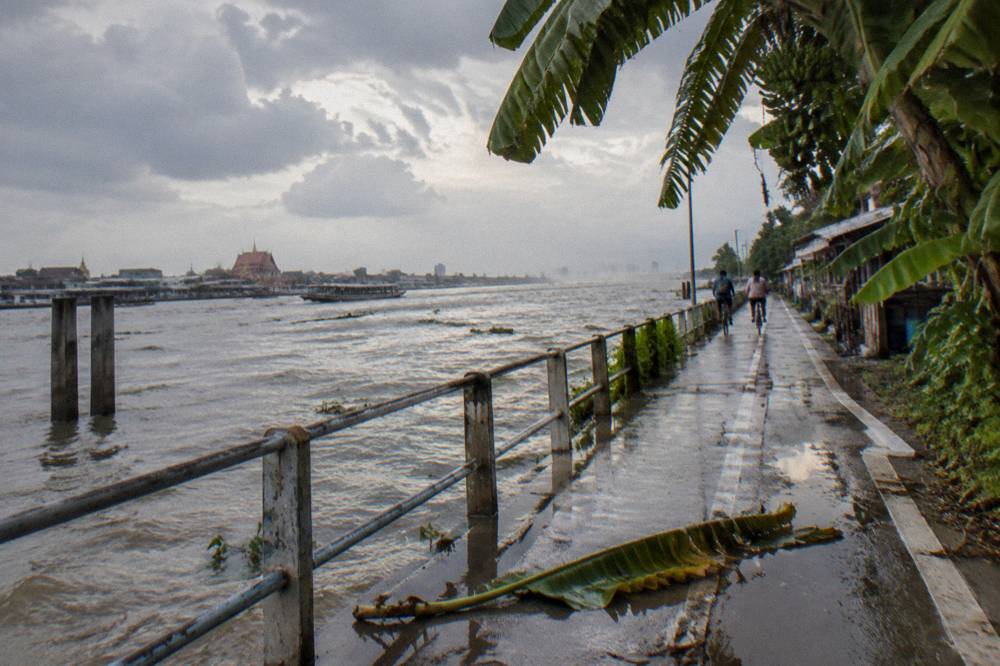
Surfaces are the honest risk of the season. Bangkok's lanes, alleyways and canal-side paths can be slick within minutes of a downpour, and standing water hides potholes. Guided rides handle this with local knowledge, slowing the group and rerouting, which is a real argument for a guided tour over independent riding in these months. The rainy season guide covers clothing, timing and what a tour does when the forecast turns.
The rainy months also suit the indoor-anchored itineraries. Rides built around markets, food tastings and covered alleys, such as the Hidden Bike and Food Tour, 4 hours 30 minutes from $56.73 per person, rated 5.0 across 592 reviews, with lunch or dinner included, spend much less time exposed to the sky than temple-loop routes do. When the forecast is uncertain, pick the tour whose worst case is a covered market rather than an open esplanade.
How Does The Time Of Day Change A Bangkok Ride?
Across every season, the hours between roughly 6 and 10 AM are the most comfortable for cycling in Bangkok, before heat builds and before crowds gather at the major stops. Early evening is the second good window, cooler and bright enough for photography. Midday is the weakest slot in the hot months and a crowded one in the cool months, so it is best used for meal stops rather than riding. If you're planning around the cool season, the Bangkok December cycling planner covers weather, outfits, budgets, and how to sidestep peak-season crowds.
The morning advantage stacks several effects. Temperatures are at their daily low, traffic in the old town lanes has not yet peaked, and the tour groups that will fill the flower market and the temple forecourts are still assembling. Tours that finish by late morning effectively see a different city from those that start at midday. Several of the rides covered here include a river or canal crossing by boat, a calm break between the busier stretches of the route.
The evening window has its own character. The Twilight Firefly Ride, 3 to 4 hours from $53.66 per person, rated 4.9 across 243 reviews, is built around it: dinner, bottled water, a boat crossing and a group capped at 8, with fireflies as the payload. Sunset times are not confirmed for any date, so the tour page's schedule is the reference for when the ride actually starts, and that shifts through the year with the season.
| Time window | Cool season | Hot season | Rainy season |
|---|---|---|---|
| Early morning | Comfortable, quiet stops | The best window, use it | Usually dry, green scenery |
| Midday | Fine for riding, busiest stops | Avoid for longer routes | Risk window for showers |
| Late afternoon | Pleasant, crowds easing | Improving but still hot | Often wet, then clearing |
| Evening | Cool, lively streets | Comfortable, food-focused rides | Post-rain freshness, some rides end in rain |
To match a tour to the clock, check the tour's duration and start time together. A 3-hour ride at 7 AM and a 3-hour ride at 1 PM share nothing but the saddle. The guide to reaching tour start points by public transport helps when the meeting point is across the city from your hotel at an early hour.
Which Tours Suit Which Season In Bangkok?
Cool-season riders should favour the long itineraries, 5 to 6 hour rides and the Ayutthaya day trips, when stamina and dry weather align. Hot-season riders should favour shaded jungle rides, early starts and evening food tours. Rainy-season riders should favour 3-hour morning loops, small groups and tours that state free cancellation. The most flexible format across all three seasons is the half-day ride with a meal.
Matching a tour to a season is mostly matching exposure to comfort. The table below groups the main formats by season fit, using each tour's own figures for price, duration and reviews.
| Format | Example ride | Price from | Duration | Reviews | Best season fit |
|---|---|---|---|---|---|
| Long city ride with lunch | Half-Day Ride, Lunch Included | $39.31 | 4 hours | 4.9 across 286 | Cool and early-start hot months |
| Full-day out-of-town | Full-Day Ayutthaya Ride, Lunch | $73.28 | 6 hours | 4.8 across 67 | Cool season |
| Shaded jungle loop | Jungle Escape Ride | $39.86 | 4 hours | 4.9 across 50 | Hot season |
| Short green loop | 3-Hour Green Lung Ride | $51.00 | 3 hours | 4.9 across 43 | Rainy season mornings |
| Evening food ride | Night Ride, Restaurant Dinner | $37.00 | 3.5 hours | 4.7 across 104 | Hot and rainy seasons |
| Street food ride | Hidden Gems and Street Food Ride | $19.00 | 3 hours | 4.9 across 119 | Any season, morning |
The cheapest entry point among rides with 15 or more reviews is the Hidden Gems and Street Food Ride at $19.00 per person, and at 3 hours it is short enough to fit any season's best window. At the other end, the highest from-price among Bangkok rides is the 8-Hour Boat and Bike, Pickup, at $113.15 per person, rated 5.0 across 26 reviews, a full-day format that belongs firmly in the cool-season column.
The Ayutthaya rides deserve their own note. They start in Ayutthaya, not Bangkok, so they add travel to an already long day, which is one more reason the cooler months suit them. The Pickup and Lunch option, from $43.00 per person, rated 5.0 across 54 reviews, includes shared pickup within Ayutthaya Island and the train station area, but not from Bangkok hotels, so check the transfer plan before booking. The Ayutthaya guide covers the full decision.
For the hot months, the e-bike options change the math. The E-Bike Backstreets ride, 3.5 hours from $46.00 per person, rated 4.8 across 117 reviews, does the same terrain as pedal tours with less physical output, which matters when the temperature sits at the top of the band. The e-bike guide compares the electric options in detail.
What Trips People Up When Picking A Month?
The common mistakes are assuming Bangkok has a European-style spring and autumn, expecting rain to last all day in the wet months, booking long rides in the hot stretch without early starts, and forgetting that the cool months are the busy months. Each of these is avoidable with a small change of plan.
The first mistake is importing a four-season calendar. Bangkok's three seasons do not include a gentle shoulder month; the transition from hot to rainy is abrupt, and the cool season arrives rather than easing in. Visitors asking about "spring" are usually best answered with the December to February band, which is the closest equivalent in comfort terms.
The second is over-weighting rain. The wettest months, roughly September and October, deliver their water in concentrated bursts, and mornings are frequently usable. Cancelling a whole trip, or writing off cycling entirely, because of the word "monsoon" usually means missing the greenest, quietest version of the city. The right response is format, not cancellation: short morning rides and flexible bookings.
| Mistake | Why it happens | The fix |
|---|---|---|
| Booking a 6-hour ride for April midday | Cool-season itineraries look identical online | Check stated start time before duration |
| Expecting all-day rain in October | Monsoon framing suggests nonstop rain | Plan morning rides, keep afternoons free |
| Skipping the cool season for "cheaper" months | Hot months look quieter and lower demand | Accept early starts, or budget for e-bikes |
| Arriving at the Grand Palace at 2 PM in riding clothes | Dress codes feel like trivia until enforced | Carry long loose trousers, arrive before mid-afternoon |
| Assuming hotel pickup is standard | Photos blur the difference between tours | Read what each tour page includes and excludes |
A dress-code point catches cyclists specifically: bike pants appear by name on the Grand Palace's official banned list, alongside short pants, torn pants and tight pants. The palace opens at 8:30 AM and stops admitting at 3:30 PM, and the foreign ticket costs 500 baht, covering Wat Phra Kaew and the Queen Sirikit Museum of Textiles. A rider combining a morning tour with an afternoon palace visit needs a change of clothes in the plan.
The fourth mistake is assuming uniformity between tours. Pickup policies differ sharply: the Jungle Ride, Meal and Pickup includes hotel pickup, while several similarly priced city rides explicitly exclude it. Cancellation terms differ too, with a couple of tours stating nothing about cancellation. The booking page, not the photo gallery, carries that information.
Finally, travellers arriving after mid-September 2026 should check the revised visa rules: the 30-day tourism exemption now covers 60 countries and territories, but the lists changed on 15 September 2026, and the Ministry of Foreign Affairs holds the authoritative version for each passport. Arrivals must also complete the Digital Arrival Card up to 3 days before landing. Neither point changes the weather, but both have ended trips before the saddle.
How Do Budget And Crowd Levels Change Through The Year?
The cool months bring the fullest groups and the earliest sell-outs. The hot and rainy months bring quieter routes and easier late bookings, at the price of heat or afternoon showers. The cheapest and least crowded combination is a rainy-season morning on a short loop.
Because tour pricing does not move with the calendar the way hotel pricing does, a budget-driven traveller gains little by waiting for a low season on the tour itself. The cheapest rides are cheap year-round: the Hidden Gems Bike and E-Scooter ride with street food stops at $19.00 per person and the Temples and Canals loop at $22.00 per person anchor the low end, the latter rated 4.9 across 4,122 reviews, the largest review pool of any ride in the city. What the seasons change is whether you can get a seat on the day you want it.
Crowds interact with format. A group capped at 6 or 8 riders fills with six or eight people; a group capped at 16 has more room to feel busy in February than in June. Small-group tours, such as the Nature Ride capped at 6, from $54.00 per person and rated 4.8 across 149 reviews, have six seats per departure, so one party of five leaves a single place open. The small group guide ranks the options by cap.
Money practicalities are season-independent but worth fixing early. The baht has traded around 33 to 34 per US dollar, and rates move daily, so the Bank of Thailand's published rates are the reference for any cash planning. Small costs on the rides, such as the THB 20 per person temple donation on one Ayutthaya ride, are paid in cash in baht, which argues for carrying notes rather than relying on cards in the old town and the markets.
The seasonal sweet spot, for a reader who values quiet over comfort, is roughly late September to October in the mornings: green scenery, thin crowds, low chances of a full group, and showers that a 3-hour ride can outrun. For a reader who values comfort above all, roughly December to February remains the answer, booked early.
Common Questions About Cycling Seasons In Bangkok
When Is The Best Time To Cycle In Bangkok?
Roughly December to February, the driest stretch of the year, when temperatures sit toward the lower end of the national 18 to 38 °C band. Long rides and full-day itineraries are most comfortable in this window, though it is also the busiest time, so guided rides should be booked ahead.
What Are Bangkok's Three Cycling Seasons?
A rainy stretch of about six months, a hot stretch of about three months and a cooler dry stretch of about three months, as described by the Tourism Authority of Thailand. Roughly December to February is driest, roughly March to May is hottest, and roughly September and October are the wettest months.
Which Months Are The Coolest For A Bangkok Bike Ride?
Roughly December to February. These months combine the lowest rainfall with the most moderate temperatures, making 4 to 6 hour rides comfortable for most visitors. Crowds are at their peak in the same window, so small-group tours fill earliest.
How Hot Does Bangkok Get For Cycling Between March And May?
Roughly March to May pushes toward the top of the national 18 to 38 °C average band, and the city feels hotter than the countryside average. Cycling stays practical with early starts, shaded routes such as the Bang Krachao jungle rides, plenty of water and shorter loops.
What Happens To Cycling In The Rainy Season?
Roughly June to October brings intense bursts of rain, heaviest around September and October, usually in the afternoons. Morning rides often run dry, scenery is at its greenest, and tours that state free cancellation allow rescheduling if a forecast turns.
How Does The Time Of Day Change A Bangkok Ride?
Roughly 6 to 10 AM is the most comfortable window in every season, before heat and crowds build. Early evening is the second good window and suits the food-focused night rides. Midday is best reserved for meal stops, especially in the hot months.