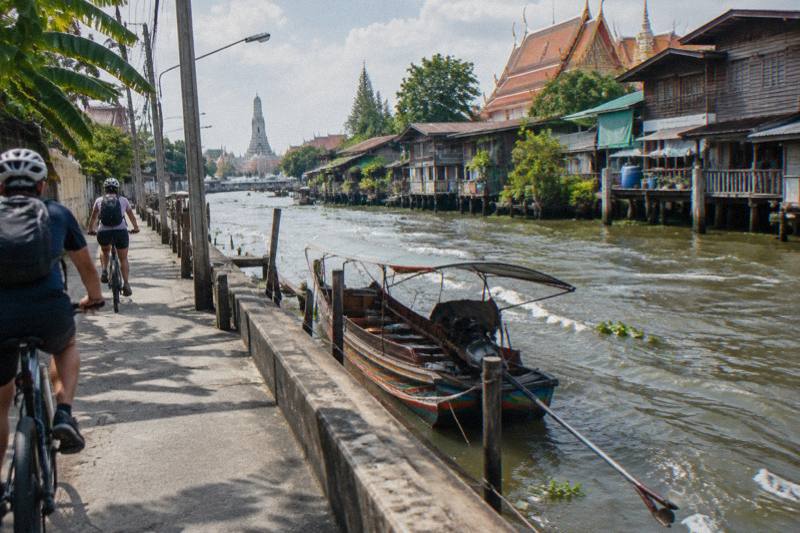
What To Wear On A Bangkok Bike Tour: Heat, Sun And Temples
Bangkok is hot, sunny and full of temples with dress codes, and a bike tour hits all three in a single morning. Here is what to wear, what to pack and what the temple rules actually say.
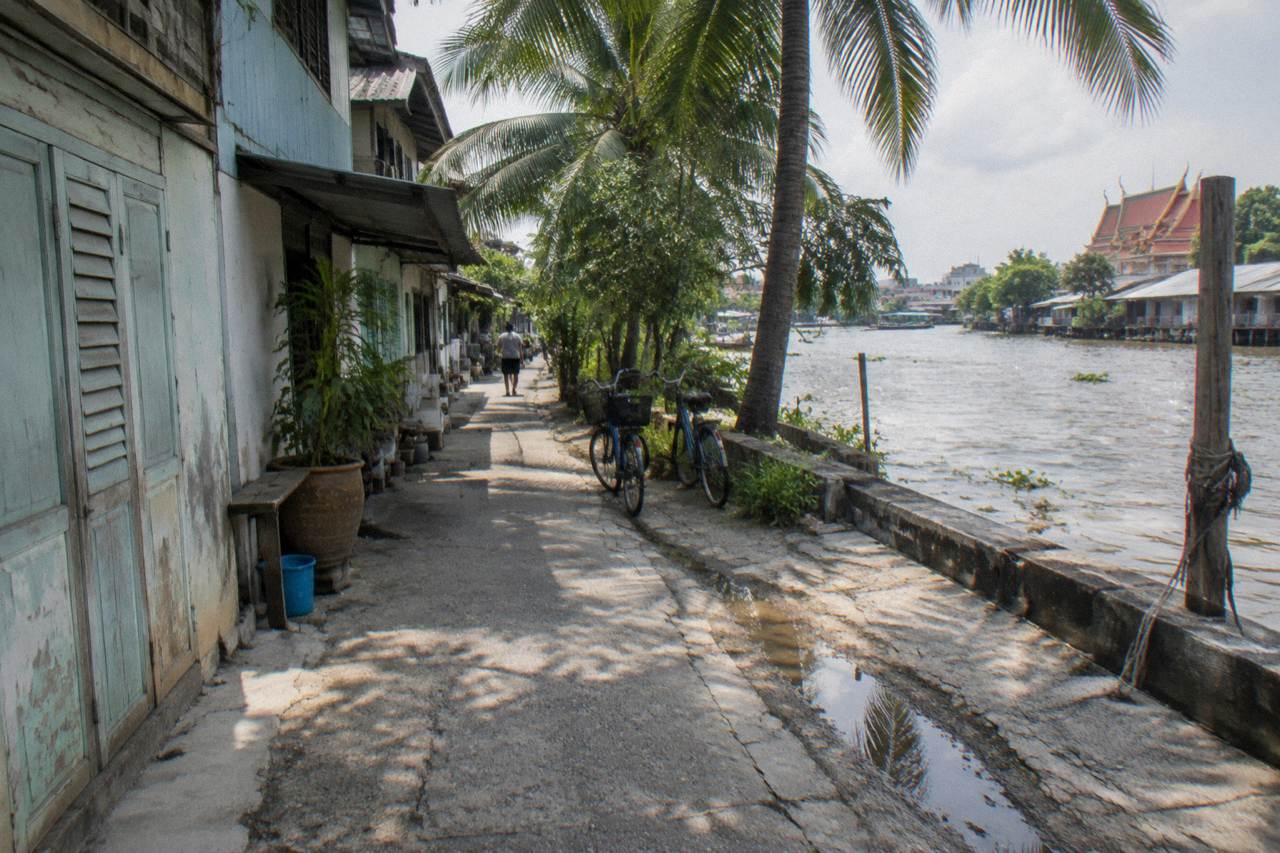
In Short
Wear light, breathable clothing that covers your shoulders and knees, closed-toe shoes, a hat and sunscreen. Bangkok averages 18 to 38 °C nationally and rides run roughly three to eight hours, so sweat management matters more than fashion. If a temple stop is on the route, note that the Grand Palace's official banned list includes bike pants, short pants and sleeveless tops.
Bangkok does three things to clothing that few other cycling cities do at once: it heats you, it suns you, and then it asks you to cover up. A typical guided ride here crosses the river, threads through old neighbourhoods and stops at one or more temples, all within three to eight hours depending on the tour. What you wear has to work in every one of those settings, and the wrong choice is not just uncomfortable, it can keep you outside the gate of the one temple you came to see. If you're still choosing when to ride, the guide to Bangkok's heat, rain and daylight for cyclists helps you pick a window that dodges the worst of it.
The good news is that nothing about this is complicated. Light layers, real sun protection, closed shoes and a scarf or long layer for temple stops cover almost every tour on the schedule. This guide walks through the details: how the heat shapes your clothing choice, what the official dress rules at the Grand Palace actually ban, what footwear survives a Bangkok pedal, and what changes when the tour runs after dark.
What Should You Wear On A Bangkok Bike Tour?
Wear lightweight, breathable clothing in light colours, with shoulders and knees covered for temple stops, plus closed-toe shoes, a hat, sunglasses and sunscreen. Several tour descriptions on this site advise comfortable shoes, a hat, sun protection and a camera, and that short list reflects real conditions rather than marketing. Nothing technical is needed: regular summer cycling clothes or loose street clothes work on nearly every tour covered here.
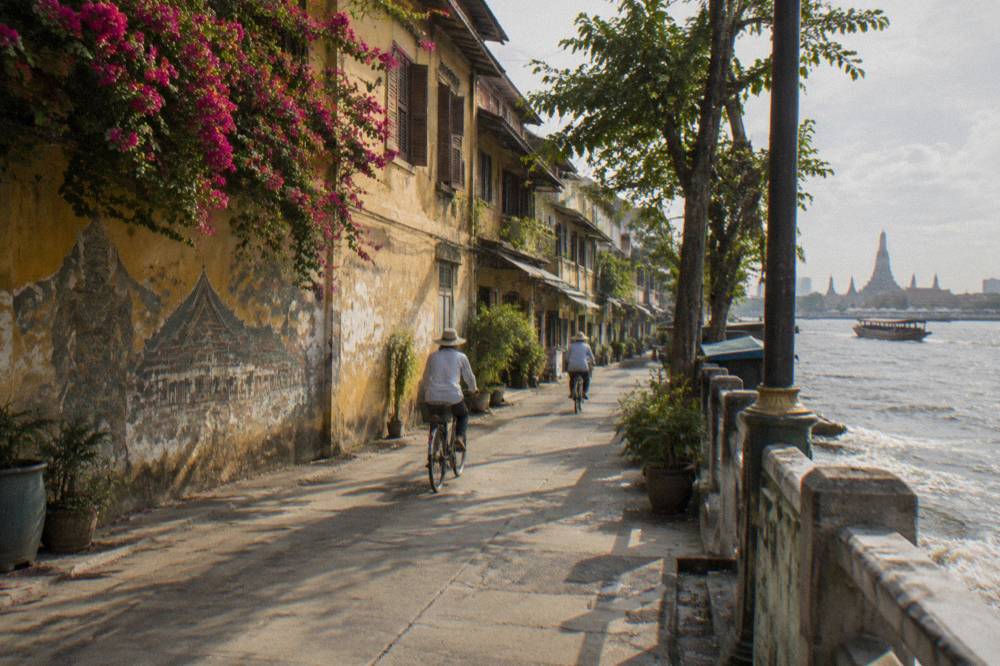
The standard outfit that works on nearly every guided ride in the city is simple. A loose, light-coloured t-shirt or breathable cycling top, knee-length or longer shorts or trousers, or lightweight long trousers from the start if temples are on the route. Dark fabrics absorb heat fast under a Bangkok sun, and a black shirt that feels fine at the meeting point can feel like an oven an hour into the ride. With your outfit sorted, the next question is where to base yourself, and this guide to Bangkok neighbourhoods near bike tour meeting points covers which areas put you closest to the morning starts.
Guided tours here are not races. Durations on the tours covered here run from three hours, such as the Classical City Ride rated 4.8 across 2,481 reviews from $39.56 per person, up to eight hours on the Boat and Bike tour from $113.15 per person. On a half-day ride the pace is conversational, with frequent stops, so clothing that works standing still in heat matters as much as clothing that works while pedalling.
One decision saves the most trouble: if your route includes temple stops, start the day in clothes that already pass the dress code. Shoulders and knees covered, nothing tight, nothing torn. Riders who begin in short shorts then have to rig up a sarong or borrowed wrap at every gate, and the queue for those wraps is part of the visit nobody enjoys.
For anyone still choosing a ride, three options illustrate the range of commitment: a compact city loop, a half-day with lunch, and a small-group neighbourhood ride. The selection below shows the current prices and styles side by side.
The Classical City Ride is a useful reference point for clothing planning because it packs a lot into three hours: old-town lanes, a river crossing by boat and temple-adjacent streets, starting from 23 Charoen Krung 24 in Talat Noi. The tour offers helmets on request rather than as a guaranteed inclusion, which is one more reason a cap or hat under or instead of a helmet is worth carrying. More on helmets and what tours actually supply appears later in this guide.
How Hot Does Bangkok Get And What Should You Do About It?
Thailand runs three seasons, roughly a hot stretch from March to May, a rainy period heaviest around September and October, and a drier, cooler stretch around December to February, with national average temperatures spanning 18 to 38 °C. For clothing that means dressing for sustained heat and sun almost year round, with a rain layer added in the wet months. Light colours, breathable fabrics and covered skin beat exposed skin for sun protection.
The Tourism Authority of Thailand describes the country's climate as six rainy months, three cooler dry months and three hot months, with national averages from 18 to 38 °C. Bangkok sits toward the warm end of that band for most of the year. The exact month boundaries shift, so treat the seasons as approximate, but the practical conclusion holds: on almost any date you book, heat management is the first clothing problem.
Sweat is the mechanism. Loose, breathable fabrics let air move and sweat evaporate, which is how the body cools itself on a bike. Tight synthetic layers that trap heat work against you, and this is also why the temple dress rules matter to cyclists specifically: the Grand Palace's official banned list names tight pants and bike pants alongside short pants and sleeveless tops. Standard padded cycling shorts, the most technical item many riders own, are explicitly unwelcome at that particular site.
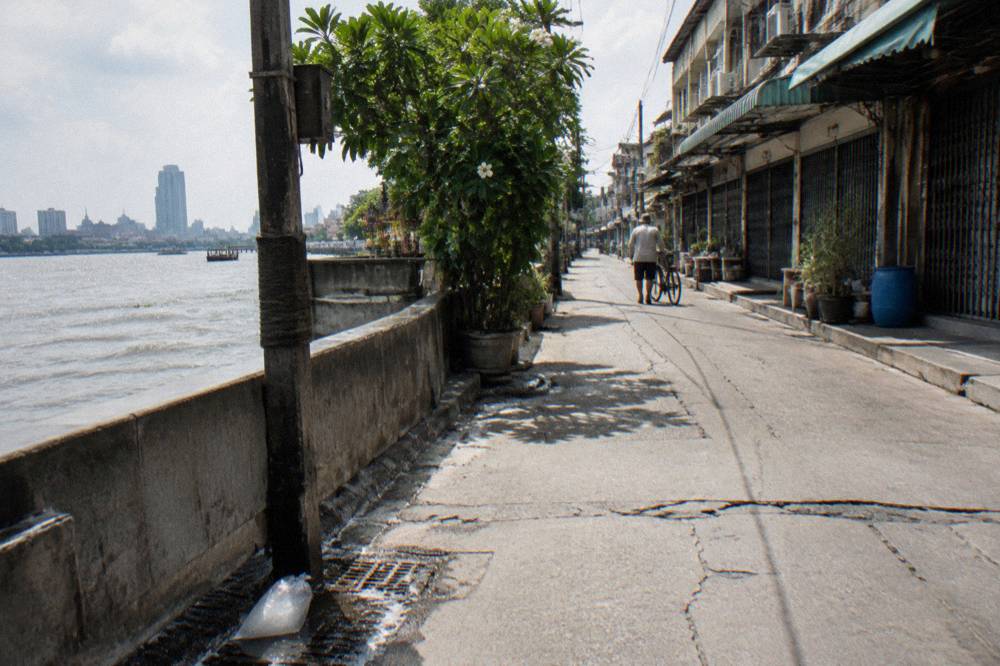
Sun protection is not optional. A brimmed hat, sunglasses and sunscreen on every exposed limb are the baseline, and long, loose sleeves are often cooler over a full morning than bare arms slowly cooking. A hat, sun protection and a camera round out the standard kit. Timing matters too: morning departures dodge the worst of the afternoon heat, and several tours start early for exactly that reason.
The rainy side of the calendar has its own clothing logic, covered in more depth in the site's rainy season ride guide. A light packable rain shell dries fast on a moving bike, and sandals with grip can make sense on wet-day rides, with closed shoes reserved for dry days. For a fuller treatment of heat itself, the Bangkok heat and cycling guide goes deeper than clothing alone.
| Season (approximate) | Typical feel | Clothing priority |
|---|---|---|
| Hot, roughly March to May | Peak heat, strong sun | Loose light-coloured layers, covered shoulders, hat, high-SPF sunscreen |
| Rainy, wettest around September and October | Humid, frequent showers | Quick-dry fabrics, packable rain shell, grip footwear |
| Drier and cooler, roughly December to February | Warm days, milder mornings | Same light kit, plus a light layer for early starts |
Money is a small side note worth one sentence: the baht trades at about 33 to 34 per US dollar per the Bank of Thailand's published exchange rates, useful if you buy a hat or scarf locally the day before your ride.
What Temple Dress Rules Apply When You Arrive By Bike?
Arriving by bike changes nothing about the dress code: at the Grand Palace, the only Bangkok site with a verified rule, bike pants are explicitly banned alongside sleeveless shirts, vests, short or see-through tops, short, torn or tight pants, mini skirts, pants skirts and sleeping suits, and every other temple informally expects the same shoulders-and-knees coverage, so pack spare clothes before you pedal there. For everything else you need before rolling up, the Grand Palace guide covering entry, dress rules and timing explains how to fit the stop into a bike route.
That dress list deserves reading twice by cyclists, because two items on it are cycling staples. Bike pants, meaning padded lycra shorts, are named outright, and tight pants are banned separately. A rider who shows up in standard road-cycling kit will not be admitted. The fix is simple: pack or wear a loose layer over the kit, or better, ride in loose trousers or a knee-length skirt or shorts-plus-wrap combination from the start.
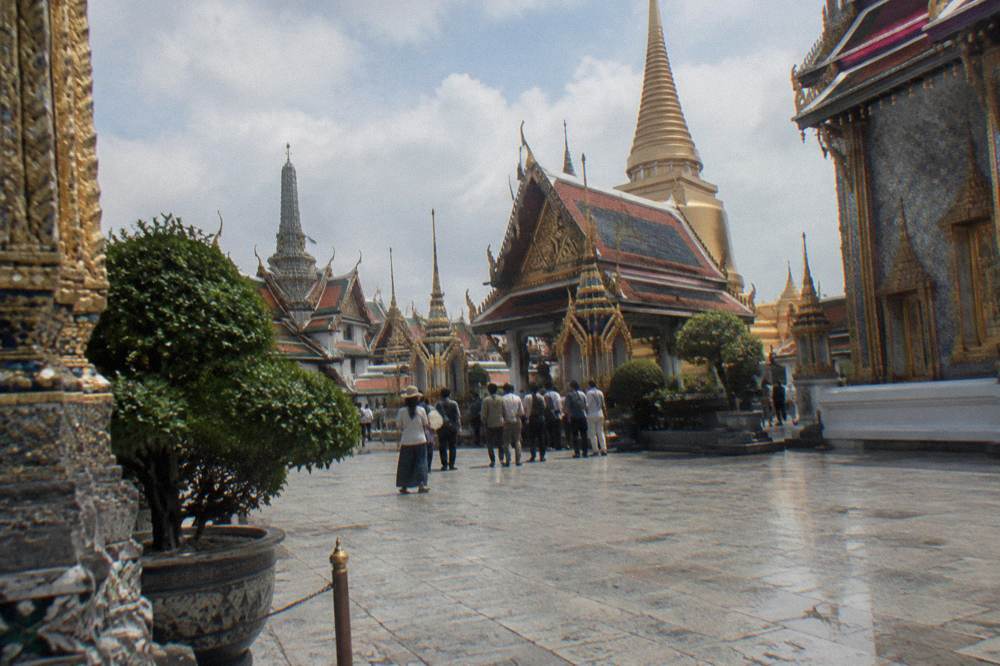
The practical wardrobe items that solve the temple problem weigh almost nothing. A large light scarf or sarong drapes over shoulders or wraps around legs at a gate and stuffs into a bag on the bike. A loose, long-sleeved overshirt does the same job and doubles as sun protection while riding. Thai nationals enter the Grand Palace free with ID, foreign visitors pay 500 baht, and the ticket covers the temple of the Emerald Buddha and the textiles museum on the same site, per the official practical information page.
Other temples in the city, including Wat Pho and Wat Arun, follow the same broad convention of covered shoulders and knees, but their specific rules and any fees are not verified here, so check before assuming. The safe approach is to dress to the strictest standard you will encounter that day and never think about it again. More background on the main sites sits in the site's Grand Palace visitor guide.
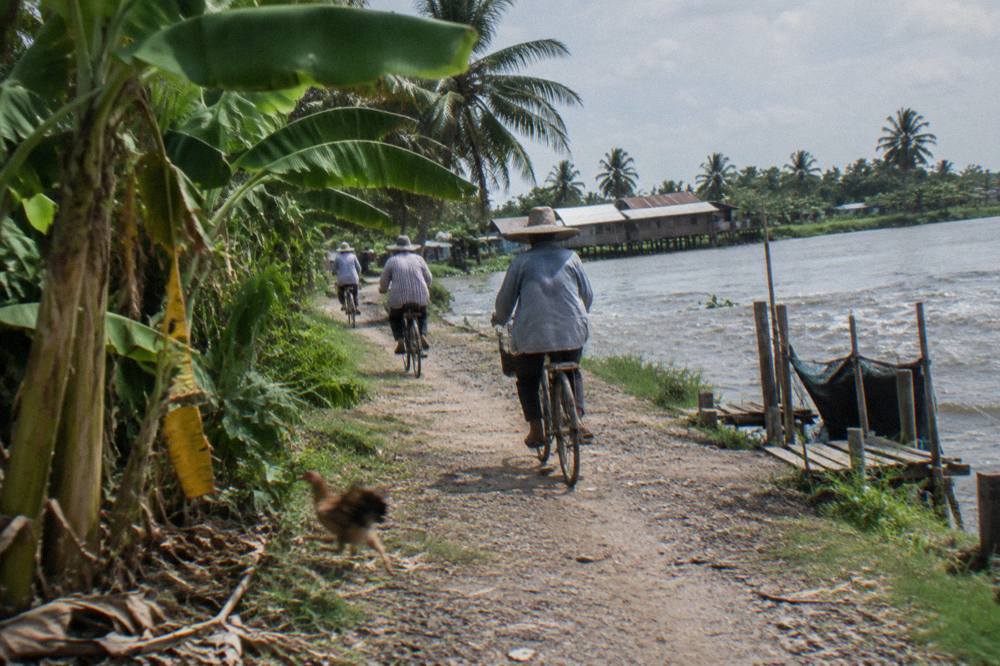
Not every tour visits a temple interior. Rides focused on the green lung of Bang Krachao, such as the jungle tours starting near the river on the Bangkok side, spend their time on paths, palm groves and waterways rather than at gated temple sites, and clothing there is purely about heat and comfort. The Temples and Canals ride, 4.9 across 4,122 reviews and the most reviewed tour covered here at from $22.00 per person, is the opposite: dress code compliance should be part of your morning plan.
That tour starts at 429 Krung Thon Buri Road and lists free cancellation, so if the forecast or your wardrobe argues against a temple-heavy day, the booking page is where dates and availability show. Helmets are available on request only, another reason to bring your own cap for sun. For the site's broader look at temple-focused routes, the temple ride guide lays out the options.
If a dress-code stop is part of a longer day, the same clothing rules apply from the first minute. The Classical City Ride keeps things flexible, and free cancellation is listed, which makes it an easy ride to lock in early and adjust later.
What Footwear, Helmets And Accessories Should You Bring?
Closed-toe shoes with grip are the best footwear for a Bangkok bike tour, and nearly every tour page that gives clothing advice names comfortable shoes first. Helmets are supplied on some tours and only on request on others, so check the specific tour's inclusions. Beyond that, the short kit list is a hat, sunglasses, sunscreen, a light scarf for temples, a small towel and a water bottle, with water supplied on the tours that list drinks included.
Footwear gets decided by the surfaces. Bangkok rides cross canal-side concrete, wet market floors, ferry ramps and occasionally sandy or gravelly path edges in the green areas. Flat closed-toe shoes or light trainers handle all of it. Flip-flops work for travellers who ride in them at home, but they slip on ferry ramps and offer nothing if a foot meets a pedal wrong, and several hours of that gets tiring. Everything else covered here is indexed on Bangkok Bike Tours.
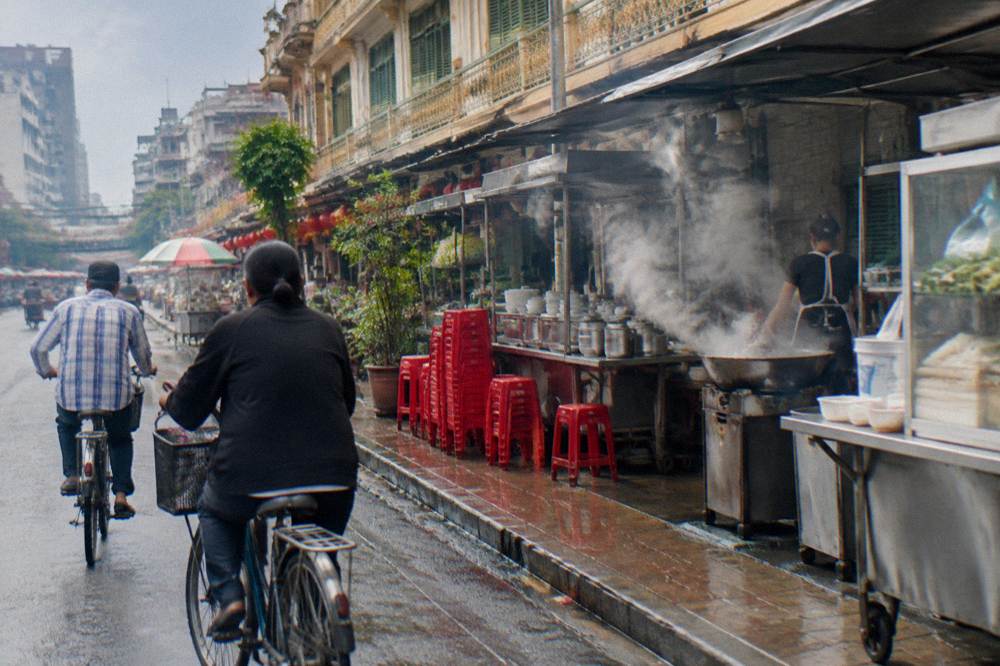
Helmets are a per-tour question, not a universal. The tours here differ: the Jungle Escape Ride lists a helmet included, the Half-Day Ride with Lunch lists a helmet included, while the Classical City Ride and the Temples and Canals ride list helmets only on request or if desired. Thai helmet law is not addressed here because the rules for bicycles are not verified; what matters practically is that if you want a helmet on every ride, pick a tour that lists one included or bring your own.
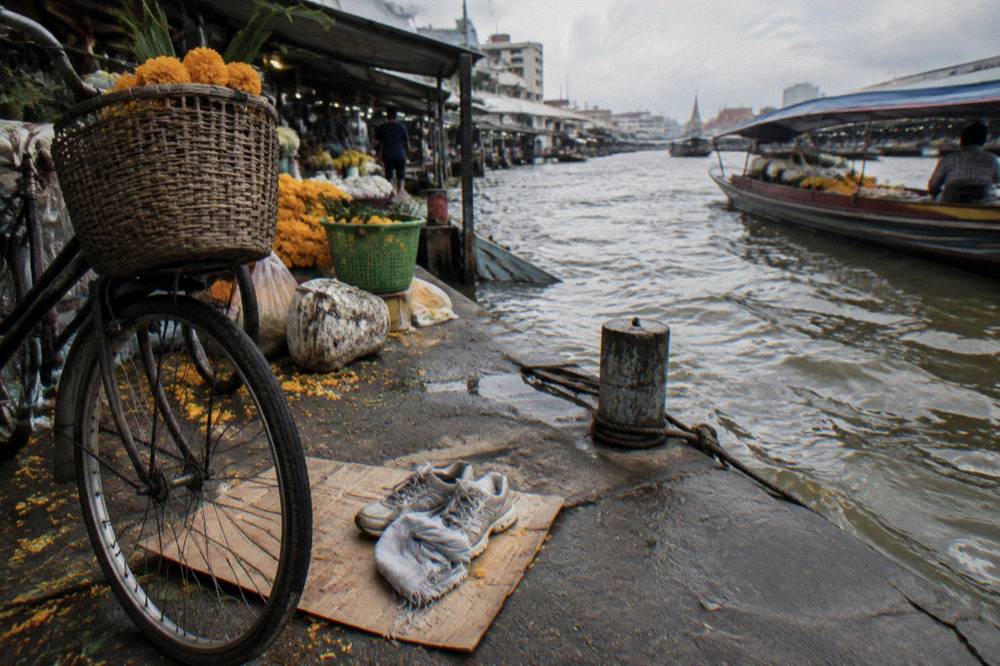
Hydration is supplied more often than not. Most tours list drinks included, and the specifics vary: bottled water on some rides, water and soft drinks on others. That detail sits on each booking page. A small towel is the single most underrated item in the bag, more useful on a Bangkok handlebar than almost anything else sold as cycling gear.
| Item | Why it earns its place | Notes |
|---|---|---|
| Closed-toe flat shoes | Grip on wet ramps, markets and path edges | Avoid stiff soles and loose flip-flops |
| Hat and sunglasses | Sun is constant on open stretches | Hat also works where helmets are on request only |
| Sunscreen | Applied before the ride, carried for reapplication | High SPF, all exposed skin |
| Light scarf or sarong | Covers shoulders or knees at temple gates | Weighs nothing, stuffs anywhere |
| Small towel | Sweat and sudden rain alike | More useful than most cycling accessories |
| Rain shell (wet season) | Showers arrive fast | Packable, quick-drying |
For families packing for children as well, the site's kids on a bike tour guide covers child seats, family tours such as the Family Bamboo Bikes private ride, and what to pack for younger riders. Dressing a child for the same heat and temple rules follows the same logic scaled down.
What Should You Wear On A Night Bike Tour In Bangkok?
Night rides shift the clothing problem from sun to visibility and mosquitoes: light breathable layers still rule, but a light-coloured or reflective top matters more, and a long-sleeve loose layer helps against insects on the green-lung paths. Night tours here run three to five hours and several include dinner, so you are out well after dark, another argument for a layer you can add.
After dark the temperature eases but does not collapse, and the riding surfaces stay the same. The Night Ride with Restaurant Dinner, 4.7 across 104 reviews from $37.00 per person, spends three and a half hours on lit streets and includes a ferry crossing, and the tour comes with a helmet, which day riders cannot take for granted on every tour. Light-coloured clothing shows up in headlights better, which is the whole visibility strategy in one sentence.
The Twilight Firefly Ride adds a different wrinkle. It runs three to four hours from $53.66 per person, rated 4.9 across 243 reviews, and heads into the green area where fireflies gather, which means still air, water and mosquitoes. A loose long-sleeve layer and long trousers beat repellent alone on that ride, and closed shoes matter more in the dark.
Dinner-inclusive night tours change what you wear in one more subtle way: you end the evening seated indoors. A shirt that survived four sweaty hours on a bike is not the shirt you want at a restaurant table. Packing a fresh top costs nothing in bag weight and saves the one wardrobe decision most night riders regret.
| Night ride concern | Clothing answer |
|---|---|
| Visibility to traffic | Light-coloured or reflective top, reflectors on the bike where supplied |
| Mosquitoes near water and greenery | Loose long sleeves and trousers, repellent on exposed skin |
| Temperature drop after dark | Light packable layer for the ride home or dinner stop |
| Dinner at the end | Fresh shirt in the bag |
What Clothing Mistakes Do Riders Make In Bangkok?
The most common mistakes are riding in dark tight clothing, showing up at the Grand Palace in bike shorts, wearing brand-new shoes on a four-hour ride, skipping sunscreen because the morning felt mild, and packing nothing for rain in the wet season. Each one is avoidable with a five-minute packing check the night before, and none of them requires buying specialised cycling clothing.
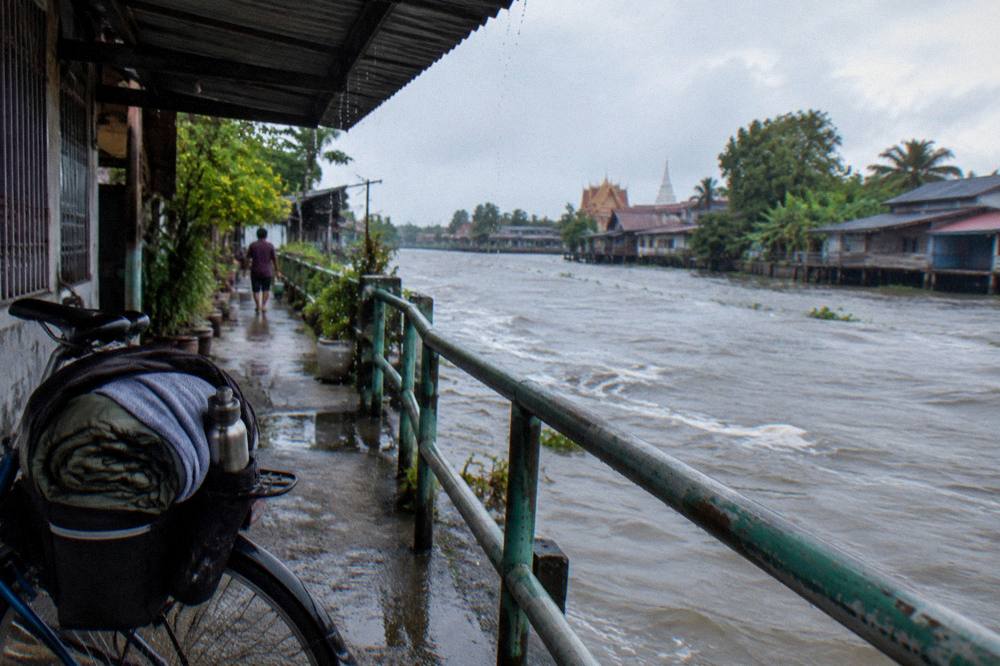
Dark tight clothing combines both heat problems: it absorbs sun and blocks evaporation. The Grand Palace mistake is the one with a hard consequence, because bike pants sit on the official banned list of items not allowed on the palace grounds. New shoes cause blisters that a three-hour ride turns into a genuinely bad afternoon. Sunscreen skipped at a mild 8 AM departure is regretted by 10 AM, because the sun strengthens fast and reflection off pavement and water adds to it.
Two smaller mistakes deserve their own lines. First, do not assume every tour supplies a helmet: some list one as included, others offer one only on request, and the difference is clear before you commit. Second, treating temple dress as a women's-only issue: the rules apply to all visitors, and men in sleeveless tops or short shorts are turned away at the same gates.
The budget rides reward good preparation as much as the premium ones. The Hidden Gems Bike and E-Scooter Tour, 4.9 across 119 reviews and the lowest from-price covered here at $19.00 per person, runs three hours with a group capped at seven, and its visit to ancient temples adds covered shoulders and knees to a hat and closed shoes.
| Mistake | Consequence | Fix |
|---|---|---|
| Dark, tight clothing | Overheating within the first hour | Loose, light-coloured, breathable layers |
| Bike shorts at the Grand Palace | Entry refused, bike pants are on the banned list | Loose layer over kit, or trousers from the start |
| Brand-new shoes | Blisters by the second hour | Broken-in flat shoes |
| No sunscreen on a mild morning | Burn by mid-ride | Apply before departure, carry for reapplication |
| No rain layer in the wet season | Soaked mid-tour | Packable shell, quick-dry fabrics |
Before any of this, two arrival formalities shape the day you ride. Since 15 September 2026 Thailand's revised 30-day tourism visa-exemption scheme covers 60 countries and territories following the Royal Gazette publication of 31 August 2026, and the Ministry of Foreign Affairs summary briefing is where your own passport's status should be checked. All passengers must also complete the Thailand Digital Arrival Card, submitted up to three days before arrival; the official page lists no fee.
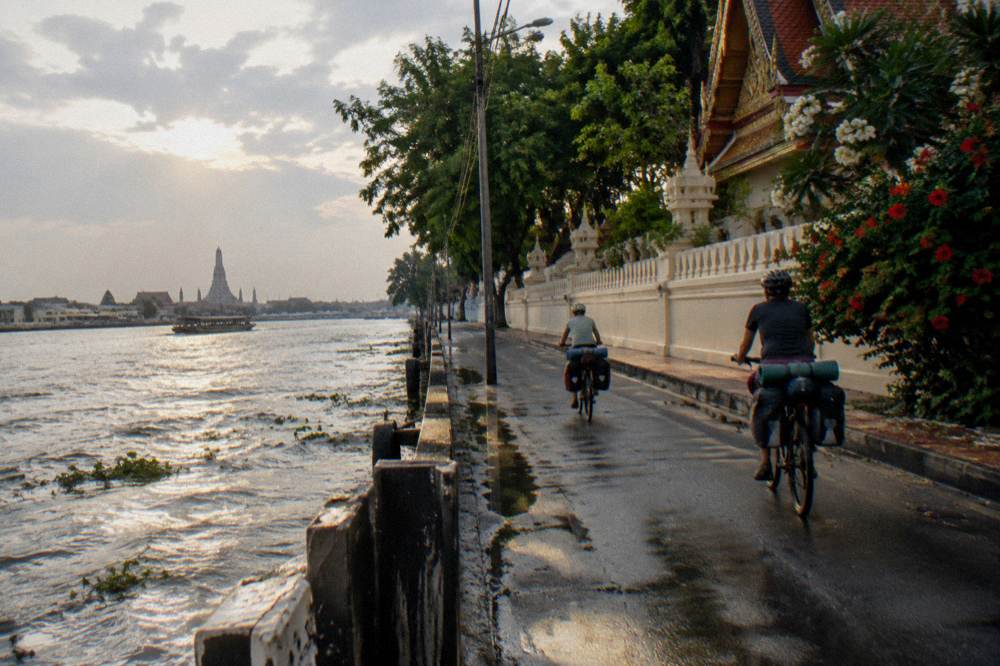
With clothing sorted, the ride itself is the easy part, and Bangkok Bike Tours keeps the full range of guided options, from $19 street-food loops to full-day boat-and-bike combinations, in one place. Whether you choose a temple-heavy old-town loop or a green-lung escape, the kit barely changes, which is the quiet advantage of dressing right once.
How Does The Length Of Your Ride Change What You Pack?
Longer tours shift the carrying from your bag to the tour. The Half-Day Ride, Lunch Included pairs a meal with bottled water, so your own kit shrinks to clothing layers, sunscreen and a towel, while the three-hour rides stop at water, and sometimes a snack, leaving food, reapplication sunscreen and a temple wrap to you. The tour includes a bag.
On a three-hour ride the bag stays small. The Temples and Canals ride, from $22.00 and rated 4.9 across 4,122 reviews, lists bottled water and no meal is stated, and the Classical City Ride adds soft drinks and a snack to the bottle. Three hours in the heat still asks for one sunscreen reapplication, a scarf if temple gates are on the route, and the towel, and all of that fits a bag small enough to forget on the bike.
Half-day rides change the arithmetic. The Half-Day Ride, Lunch Included runs 4 hours, from $39.31, rated 4.9 across 286 reviews, with lunch, bottled water and a helmet in the listed inclusions. The Canal Boat Combo, Lunch does the same job in 3.5 hours from $45.00, rated 4.9 across 1,592 reviews, adding a boat leg. With lunch and bottled water covered mid-route, the weight you personally carry drops to clothing: a spare layer, sunscreen, the scarf.
The full-day option is the only one where the bag becomes a real bag. The 8-Hour Boat and Bike, Pickup runs 8 hours from $113.15, rated 5.0 across 26 reviews, and lists hotel pickup, so whatever you pack at your hotel rides with you until evening. The tour's other inclusions can help you decide how much food money to bring.
One line of booking-page wording trips riders up. The Bamboo Original Jungle Ride, 3 to 4 hours from $35.26 and rated 5.0 across 140 reviews, says a Thai snack or meal, and a snack is not a lunch promise. Eat a real breakfast before that one or carry food money, and let the surprise go the pleasant way.
| Tour | Duration | From price per person | Names supplied on the tour page | What you still carry |
|---|---|---|---|---|
| Temples and Canals | 3 hours | $22.00 | Bottled water | Wrap, snacks, helmet if you want one |
| Classical City Ride | 3 hours | $39.56 | Water, soft drinks, snack | Wrap, towel, helmet if you want one |
| Canal Boat Combo, Lunch | 3.5 hours | $45.00 | Lunch, bottled water, helmet | Sunscreen top-up, spare layer |
| Half-Day Ride, Lunch Included | 4 hours | $39.31 | Lunch, bottled water, helmet | Towel, spare layer |
| 8-Hour Boat and Bike, Pickup | 8 hours | $113.15 | Hotel pickup listed | Full-day kit, food money, other inclusions on the booking page |
Read the included column before you pack, then subtract. What a longer ride adds is mostly food and water you no longer carry, and that freed space is exactly where the spare shirt belongs.
Common Questions About What To Wear On A Bangkok Bike Tour
What Should You Wear On A Bangkok Bike Tour?
Light, loose, light-coloured clothing that covers shoulders and knees, closed-toe shoes, a hat, sunglasses and sunscreen. If temples are on the route, start the day in clothes that already meet the dress code rather than adjusting at each gate.
Can You Wear Shorts On A Bangkok Bike Tour?
Yes, on the bike itself, but short pants appear on the Grand Palace's official banned-dress list, so a temple stop needs longer coverage. Knee-length or longer shorts with a wrap or scarf packed for gates is the usual compromise.
Are Bike Shorts Allowed At The Grand Palace?
No. The official visitor page names bike pants and tight pants on its list of items not allowed. Wear loose trousers over them or change before arriving; Thai nationals enter free with ID and foreign visitors pay 500 baht.
Do Bangkok Bike Tours Provide Helmets?
Some do and some list helmets only on request. Tours differ on this detail, so check the specific tour's inclusions on its booking page before assuming one will be waiting at the meeting point.
What Shoes Are Best For A Bangkok Bike Tour?
Flat, closed-toe shoes that are already broken in. Rides cross wet market floors, ferry ramps and uneven path edges where flip-flops slip, and a three-to-four-hour ride in new shoes tends to end in blisters.
What Should You Wear On A Night Bike Tour In Bangkok?
The same light breathable kit, plus a light-coloured or reflective top for visibility, a loose long-sleeve layer against mosquitoes near green and waterside areas, and a fresh shirt if dinner is included at the end of the ride.