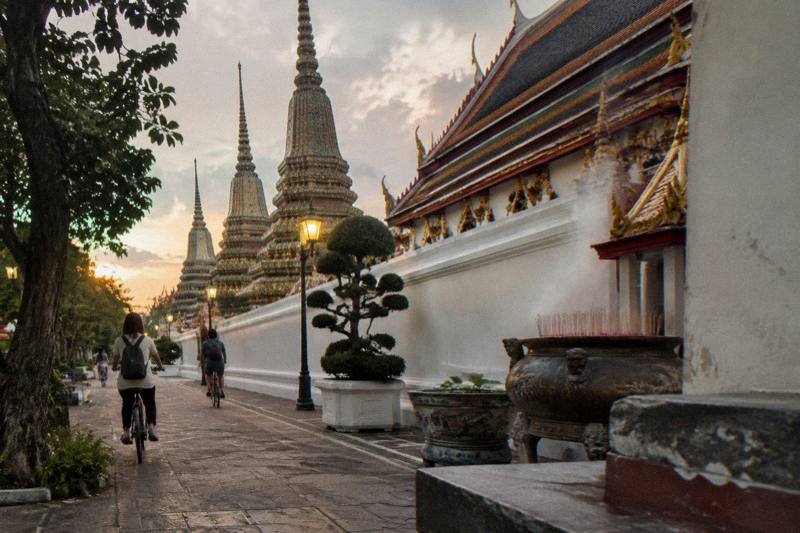
Wat Pho: The Reclining Buddha And Visiting Tips
Wat Pho is one of the stops that pulls almost every old town ride toward the river, and a little planning around it changes the whole day.
In Short
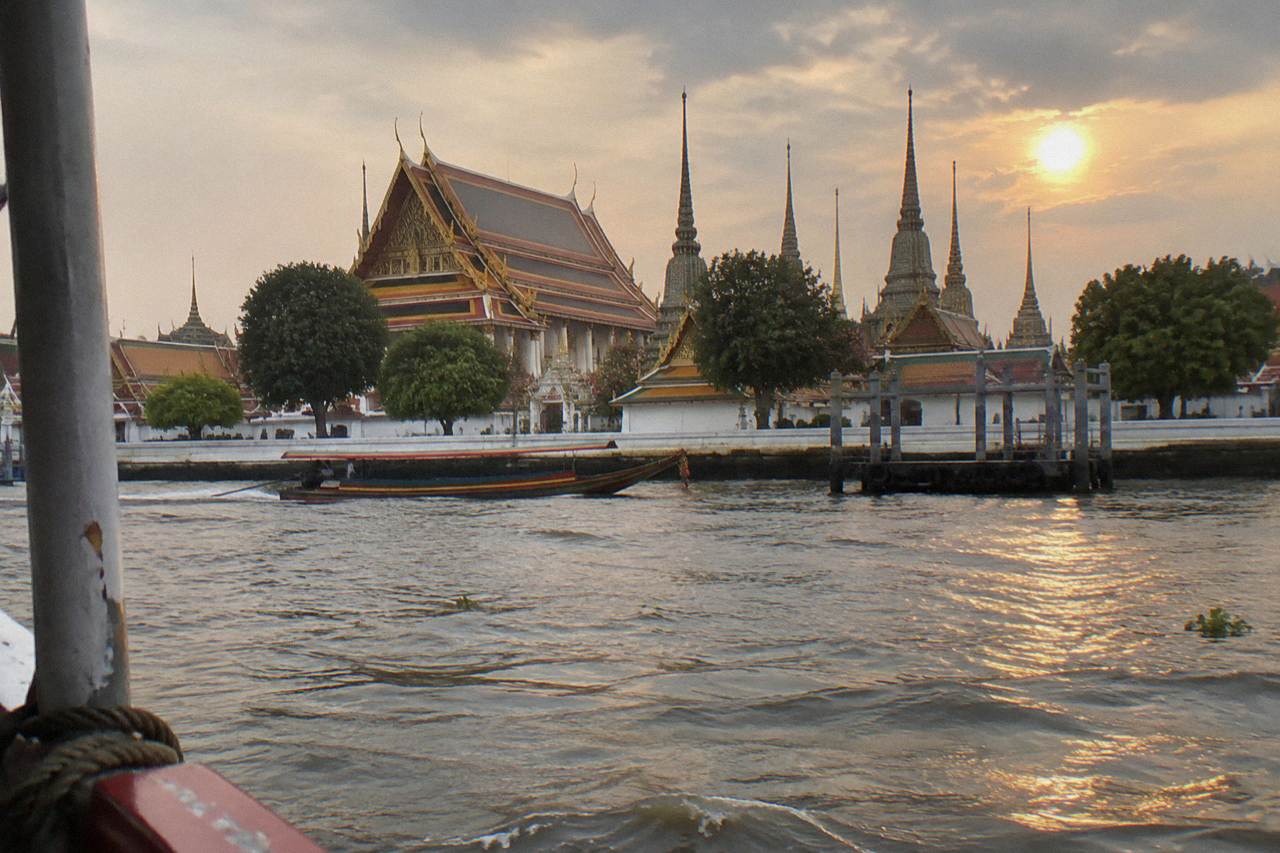
Wat Pho sits beside the Chao Phraya, about 10 minutes on foot from Tha Tien pier. Guided old town rides from $22.00 per person pass through this district, and the temple's dress rules matter for cyclists: bike pants are on the official banned list at nearby royal sites, so pack a change of clothes.
Wat Pho, the Temple of the Reclining Buddha, anchors the riverside old town district of Rattanakosin Island. For cyclists it works as a natural waypoint: the lanes around it are narrow, shaded and largely free of the expressway traffic that defines other parts of the city, and the temple sits within pedalling distance of the flower market, Wat Arun across the river and the Grand Palace compound. Several of the guided rides covered on Bangkok Bike Tours route through this exact neighbourhood, which is why it deserves its own planning page.
This guide covers what Wat Pho actually is, how to reach it by bike or by boat, which guided tours bring you into its orbit, the dress rules that catch cyclists out, and what a realistic budget for an old town ride looks like. Where prices and tour details appear, they come from the tour bookings themselves; where something is not confirmed, this page says so plainly rather than guessing. Once you've had your fill of temple crowds, the Lumphini Park guide for walkers and riders explains how to trade the old town for central Bangkok's biggest green space.
What Is Wat Pho And Why Do Cyclists Stop Here?
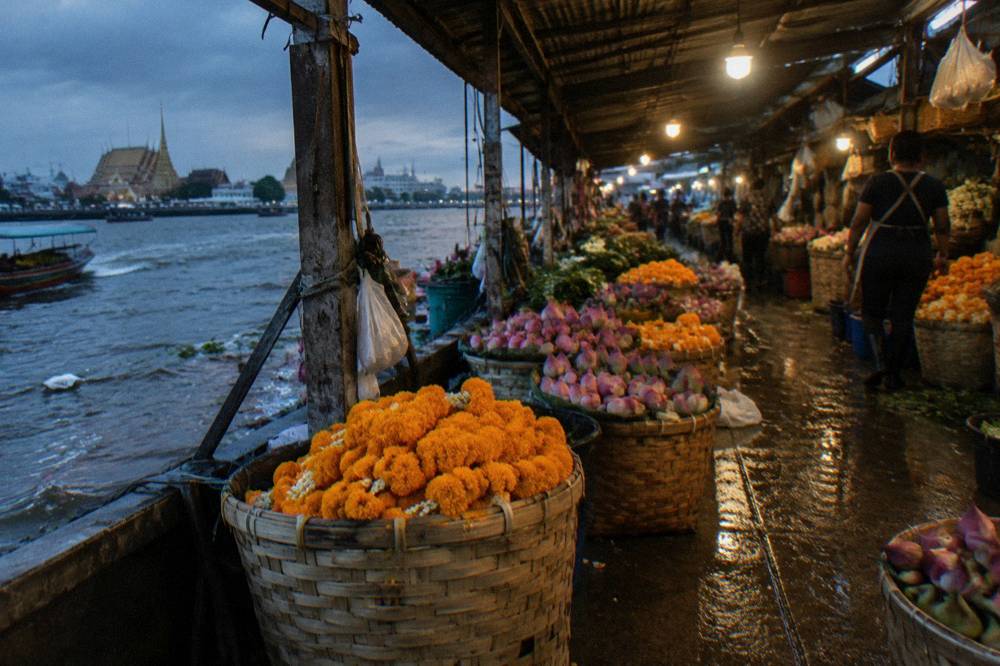
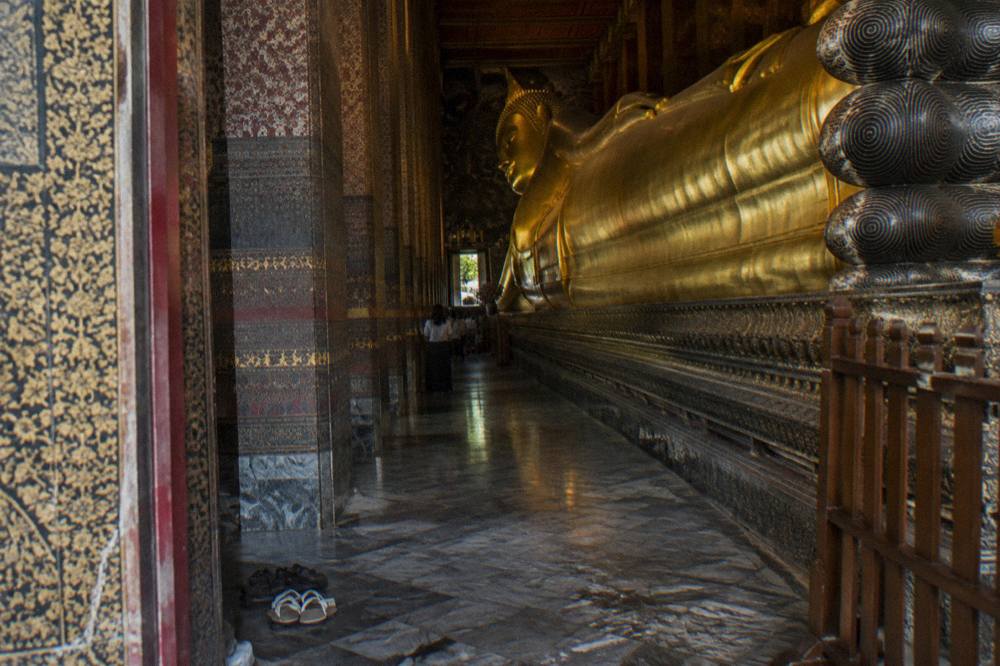
Wat Pho is Bangkok's oldest and largest temple compound, famous for an enormous gold plated Reclining Buddha that draws visitors off their bikes. Sitting on the east bank of the Chao Phraya directly south of the Grand Palace, it makes a natural rest stop for cyclists riding along the river, who pause here to take in one of the city's most celebrated sights. Cyclists stop here because the surrounding Rattanakosin district is one of the few areas of central Bangkok where a bicycle feels like the right tool: the soi are narrow, the traffic is slow, and the major sights cluster within a compact area along the river. The temple also marks the point where the old town meets the river promenade, which connects onward to the flower market at Pak Khlong Talat and the neighborhoods of Thonburi across the water. The Temple of Dawn sits just across the water, and the guide to visiting Wat Arun by bike explains how the river crossing works, which tours pass by, and what to wear when you get there.
The temple's full context matters to riders planning a route. Wat Pho gave its name to the famous traditional medicine school founded on its grounds, and the compound is dotted with chedi, colonnades and stone figures that reward slow wandering. It is a working religious site, not a museum piece: monks live on the grounds, and ordinary Bangkok life continues at its edges, with food stalls, shophouses and school runs in the surrounding lanes. A cyclist arriving in the mid-morning will find the forecourts busy and the side streets surprisingly quiet.
Why does it work so well on two wheels? The answer is geography. Rattanakosin Island is small, flat and hemmed in by the river to the west and by old canals on its other sides, so the distances between the Grand Palace, Wat Pho, the amulet market, the flower market and Sanam Chai Road are short. Walking them in heat is draining, and driving them is pointless because parking is scarce. A bicycle closes that gap neatly, which is exactly why the guided old town rides cluster here.
For riders who want the wider picture of cycling in this city, the cycling in Bangkok overview covers road conditions, traffic culture and route types across the whole metropolis, and the Bangkok cycling routes guide maps out the corridors that connect the old town to the green areas further out.
How Do You Get To Wat Pho By Bike Or By Boat?
The practical answer is a combination: most visitors arrive by boat to Tha Tien pier and walk about 10 minutes, because the official Grand Palace visitor page places Wat Pho roughly ten minutes on foot from Tha Tien (N8), with Tha Chang (N9) serving the palace end of the district. There is no confirmed fare or timetable for the cross river ferries or the tourist area boats, so treat any boat leg as a short hop and check the operator's own page before relying on a specific departure.
The boat network deserves a short explanation, because the pricing confuses people. The Chao Phraya Express Boat runs commuter lines on weekdays, with the Orange line at a flat 19 baht, the Yellow at 24 baht and the air conditioned Red at 33 baht, per the operator's site. Those are commuter routes to and from the northern suburbs, not the boats that shuttle tourists between the central piers, and no tourist area fare is confirmed on the operator's page. The practical takeaway: use the boats to reach the district if that suits your hotel location, but do not budget a specific fare to Tha Tien until you see it at the pier. The Chao Phraya Express Boat site lists the lines and their operating days.
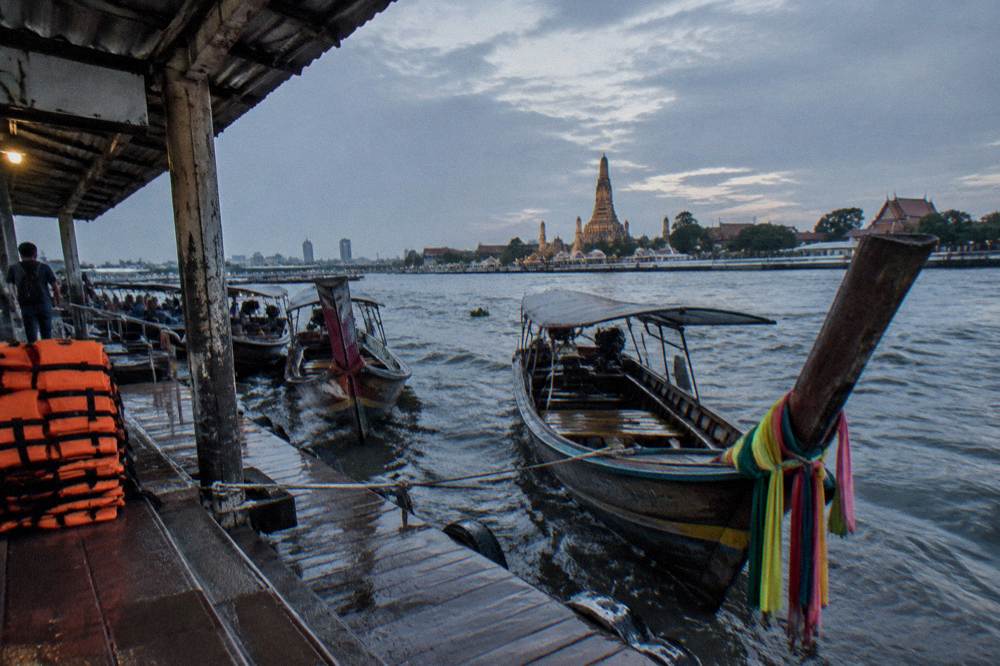
For riders approaching under their own steam, the district is reachable from the riverside promenade, from Sanam Chai Road on the east side, and via the bridge network toward Thonburi. Traffic in Thailand drives on the left, and the old town soi generally reward a slow, defensive pace over speed. Most guided rides include a short ferry crossing at some point in their route, which is a good model to copy if you are riding independently: cross the river by boat, ride the quiet Thonburi side, and cross back near Wat Arun.
Getting to the start point of a tour is its own question, and the public transport to tour start points guide covers how the transit system connects to the meeting addresses riders actually use. The Bangkok canal bike tour guide also explains how boat and bicycle legs combine on the Thonburi side of the river.
Which Guided Rides Pass Wat Pho Or The Old Town?
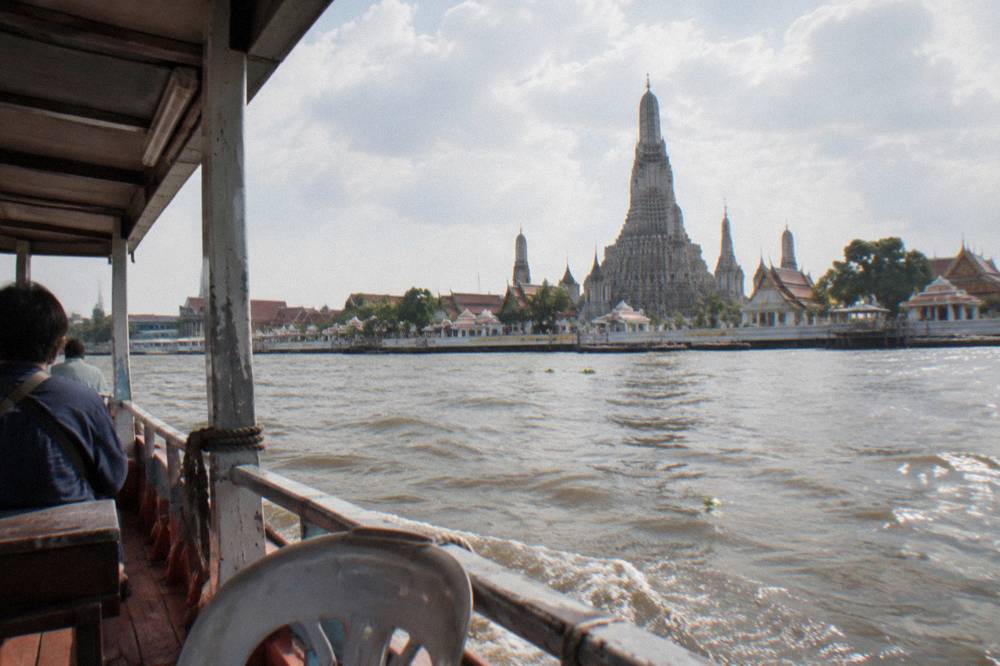
The most reviewed ride on this site, the Temples and Canals tour at 4.9 across 4,122 reviews and from $22.00 per person, starts in Thonburi and works temple and canal lanes through Talat Phlu and Phasi Charoen deep on the west bank, while the Classical City Ride from $39.56 per person, 4.8 across 2,481 reviews, starts in Samphanthawong and covers the riverside old town lanes directly. Between those two anchors, several operators run old town and riverside routes of three to five hours that bring riders within a short walk of Wat Pho's gates. The pair below is a fair cross section of what the district's rides look like.
The Classical City Ride is the natural fit for a Wat Pho focused day. It runs three hours, caps groups at 16, includes the bike, a guide, a snack, water and soft drinks, and a boat or ferry crossing, from $39.56 per person. Its Talat Noi meeting point sits on the river south of Chinatown, and its route covers Chinatown and a pass along the Chao Phraya rather than Wat Pho itself. Free cancellation applies and hotel pickup is not part of the ride, so you make your own way to Charoen Krung 24.
| Ride | Duration | Price per person | Rating and reviews | Group max | Meal |
|---|---|---|---|---|---|
| Temples and Canals, 3 Hours | 3 hours | from $22.00 | 4.9 across 4,122 reviews | 8 | no meal stated |
| Classical City Ride, 3 Hours | 3 hours | from $39.56 | 4.8 across 2,481 reviews | 16 | snack, not a meal |
| Half-Day Ride, Lunch Included | 4 hours | from $39.31 | 4.9 across 286 reviews | 10 | lunch |
| Colors Small Group Ride, Meal | 4 to 4.5 hours | from $42.00 | 4.8 across 185 reviews | Not stated | a meal |
| Canal Boat Combo, Lunch | 3.5 hours | from $45.00 | 4.9 across 1,592 reviews | 10 | lunch |
Meeting points cluster on both sides of the river, and knowing which side you start on changes the shape of your day. A Thonburi start means canals first and the old town later; a Rattanakosin or riverside start reverses that.
| Ride | Meeting point | Side of river |
|---|---|---|
| Temples and Canals, 3 Hours | 429 Krung Thon Buri Road | Thonburi |
| Classical City Ride, 3 Hours | 23 Charoen Krung 24, Talat Noi | Bangkok, riverside |
| Half-Day Ride, Lunch Included | 161/1 Thanon Somdet Phra Pin Klao | Bangkok Noi |
| Canal Boat Combo, Lunch | 253/6 Thanon Itsaraphap | Bangkok Yai |
| Hidden Bike and Food Tour | 378 Soi Somdet Chao Phraya 3 | Thonburi |
If the boat plus bicycle combination appeals, the dedicated Bangkok bike and boat tour guide compares the combo rides in detail, and riders based across the river should read the Thonburi guide for the neighborhood those Thonburi side starts sit in.
For riders who want an electric assist in the heat, there is a quieter alternative worth a mention.
What Should You Wear When A Temple Stop Follows A Ride?
Cyclists need to plan clothing around two different rulebooks: the heat and road grime of riding, and the dress codes of active temples, and the single most important fact is that the official Grand Palace visitor page names bike pants on its banned list, alongside sleeveless shirts, short pants, torn pants, tight pants and mini skirts. Wat Pho is an active religious site and modest dress is expected in the same spirit, so the safe plan is simple: ride in what is comfortable, and carry a lightweight change of clothes, or wear loose long trousers from the start. The trap is arriving at a temple gate in full riding kit and being turned back.
The Grand Palace rules are the strictest in the district and they are published by the palace itself: the banned list covers sleeveless shirts, vests, short tops, see through tops, short pants, torn pants, tight pants, bike pants, mini skirts, pants skirts and sleeping suits, and the compound is a no drone zone. The palace opens daily 8:30 AM to 3:30 PM and the foreign visitor ticket is 500 baht, which includes Wat Phra Kaew and the Queen Sirikit Museum of Textiles. Wat Pho itself charges foreign visitors 300 baht and opens roughly 8:00 AM into the early evening, far later than the palace gates. The official practical information page is the source for all of the palace details above.
Beyond dress, a few practical habits make a temple stop on a ride go smoothly. Lock or hand over the bike as the guide directs, since temple forecourts are crowded. Remove shoes before entering halls, which is standard practice across Thai temples. Keep shoulders and knees covered inside the grounds even where enforcement is loose, out of respect rather than fear of a fine. And carry a small dry cloth: between sweat, river humidity and temple floors, it earns its place in a bag.
| Item | Ride role | Temple gate verdict |
|---|---|---|
| Padded bike shorts | comfort on longer rides | banned at the Grand Palace, poor form at temples |
| Loose long trousers | warm but acceptable | the safest single choice |
| Sleeveless jersey | cooler in heat | banned at the Grand Palace |
| Lightweight overshirt | packs small, covers shoulders | solves the sleeveless problem |
| Sandals or slip on shoes | easy on and off in halls | fine, bring socks for hot stone |
The what to wear on a Bangkok bike tour guide goes deeper on fabrics, footwear and rain gear, and the heat specific advice lives in the Bangkok bike tour heat guide.
What sits inside those prices differs ride by ride, and the differences are where the value judgments live. The Temples and Canals ride at from $22.00 includes the bike, a guide, a helmet on request and bottled water, with no meal stated. Step up to the Half-Day Ride, Lunch Included at from $39.31 and you get a four hour loop, a group capped at 10, a helmet and a proper lunch. The Colors Small Group Ride at from $42.00 adds a boat crossing and a meal over 4 to 4.5 hours. In other words, the jump from the budget tier to the mid tier buys food and longer routes, not smaller groups or a fundamentally different district; the budget ride caps groups at 8 and the Half-Day Ride at 10.
How Much Time And Money Should You Budget For An Old Town Ride?
The cheapest ride with a substantial review pool is the Hidden Gems ride with street food stops, a three hour ride from $19.00 per person with bottled water included and a 4.9 rating across 119 reviews; the most reviewed is the Temples and Canals ride at 4,122 reviews; and the highest from price among the city's rides is the 8-Hour Boat and Bike tour at from $113.15 per person with hotel pickup included. Time wise, plan a half day: three to four hours on the bike plus travel to the meeting point.
| Budget line | Typical planning range | Notes |
|---|---|---|
| Guided ride | $19.00 to $56.73 per person | from prices across the city rides; combos and full days cost more |
| Temple entry | 500 baht at the Grand Palace | covers Wat Phra Kaew and the textile museum; no confirmed Wat Pho fee |
| Boat hop to the district | a few baht | no tourist area fare confirmed; commuter lines are 19 to 33 baht weekdays |
| Extra food and water | modest | street food near the old town is inexpensive; tours include at least water |
| Cash cushion | small bills in baht | about 33 to 34 baht per US dollar, rates move daily |
The exchange rate point matters for anyone budgeting in dollars: the Bank of Thailand's published rate sits at about 33 to 34 baht per US dollar, and it moves daily, so treat baht prices as the fixed reference and convert roughly. The Bangkok bike tour cost guide breaks the whole price question down tour by tour.
Timing the ride against the weather is part of budgeting too. Thailand's year splits into roughly six rainy months, three cooler dry months and three hot months, with national average temperatures spanning 18 to 38 °C; roughly December to February is the driest and most comfortable window, roughly March to May the hottest, and roughly September and October the wettest, per the Tourism Authority of Thailand weather page. The best time to cycle in Bangkok guide and the rainy season guide cover the seasonal tradeoffs in full.
For a morning start with temple time before the heat builds, the Bangkok sunrise bike tour guide explains the early ride format.
What Mistakes Trip Up First Time Visitors To Wat Pho?
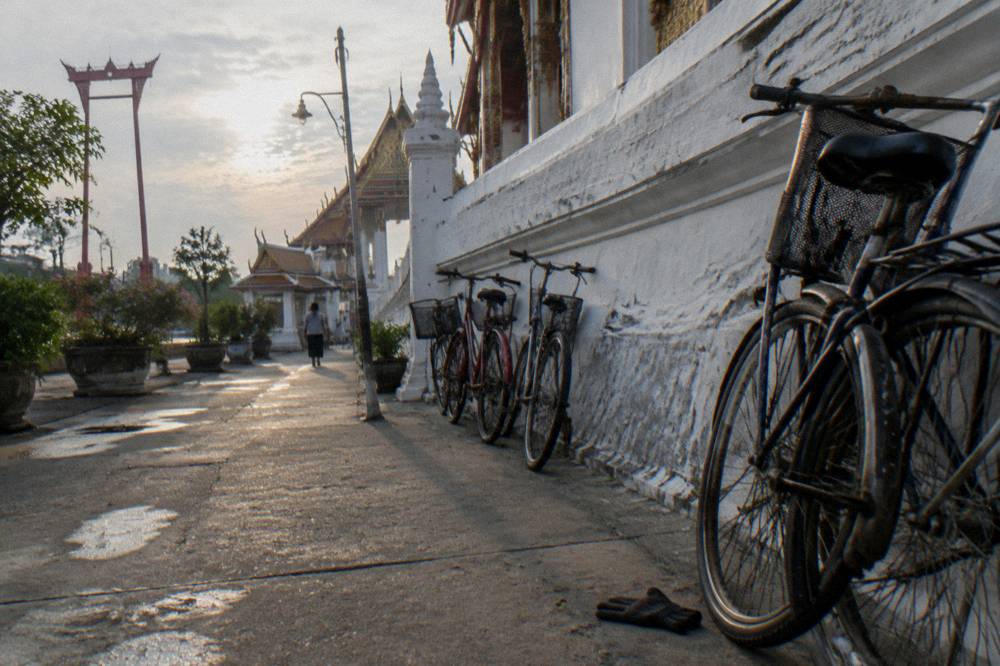
The mistakes that cost people the most are dressing for the ride instead of the temple, underestimating midday heat in a district with little shade, assuming a boat fare or timetable that nobody has published, and turning up at the Grand Palace in cycling kit after 3:30 PM when the official hours end, bike pants and all. Each of these is avoidable with a small amount of planning, and none of them requires spending more money, only packing differently and starting earlier.
The dress mistake deserves its own paragraph because it is the most common. Riders in padded shorts and a sleeveless jersey are dressed perfectly for the road and perfectly wrongly for a royal temple compound. The fix costs nothing: a pair of loose trousers over the shorts, or a change of clothes in the pannier, plus something to cover the shoulders. Do this at the hotel rather than at the gate, so the shoulders-and-knees rule is already taken care of before arrival.
The heat and timing mistakes compound each other. The old town's stone forecourts hold the afternoon heat, and the temple halls, while cooler, involve queues in the open. Guided rides through these districts run 3.5 or 4 hours, so an early start can finish before the worst of the afternoon heat. Independent riders should copy that pattern. Also: this is a district for slow riding, not speed, and a patient pace through the soi is both safer and better for taking in the temple architecture.
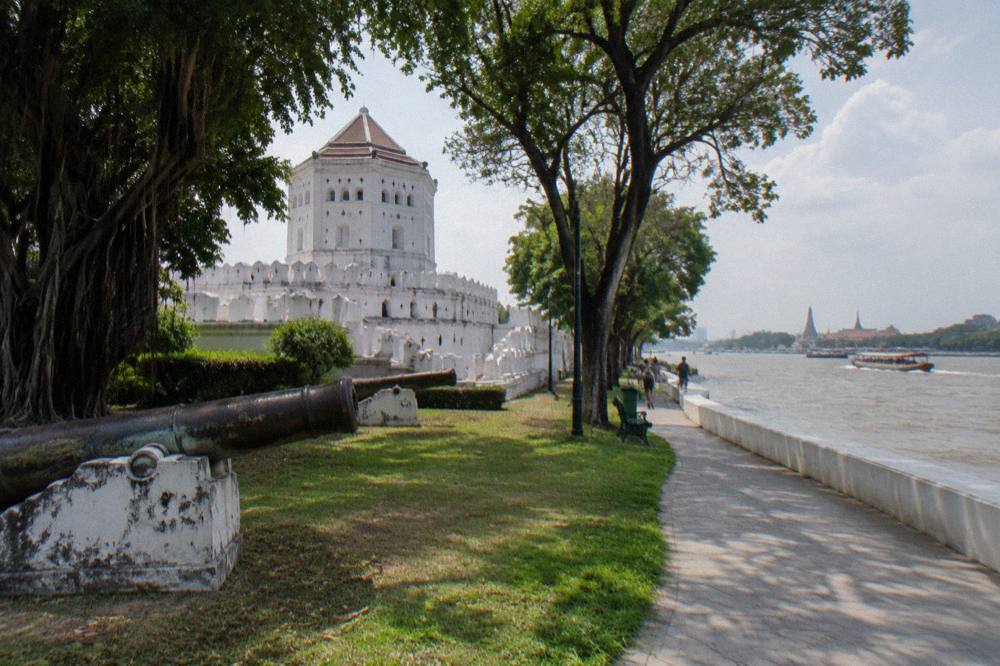
A few smaller traps round out the list. Do not count on a published ferry fare or schedule for the river crossings; the commuter boat lines and fares that are published serve weekday commuters, not the tourist piers. Do not assume hotel pickup: most of the riverside and old town rides list no hotel pickup, and the few exceptions state it explicitly. If a grand combined Bangkok plus temples day is the plan, remember the Grand Palace closes mid afternoon. And for foreign visitors arriving into Thailand, the entry rules changed on 15 September 2026: the 30 day tourism exemption scheme was revised and expanded, a 60 day scheme was revoked, and all arrivals must complete the Thailand Digital Arrival Card, submitted up to three days before arrival, via the official TDAC page, which lists no fee. The Ministry of Foreign Affairs list is the authority for which scheme applies to a given passport.
For families weighing whether a temple district ride suits children, the Bangkok bike tour with kids guide covers group formats and pacing, and the private bike tour guide explains when a private booking beats a shared group.
If the green escape side of Bangkok appeals as a contrast to the old town, there is one more option worth flagging before the wrap up.
Where Should You Stay And What Else Sits Near Wat Pho?
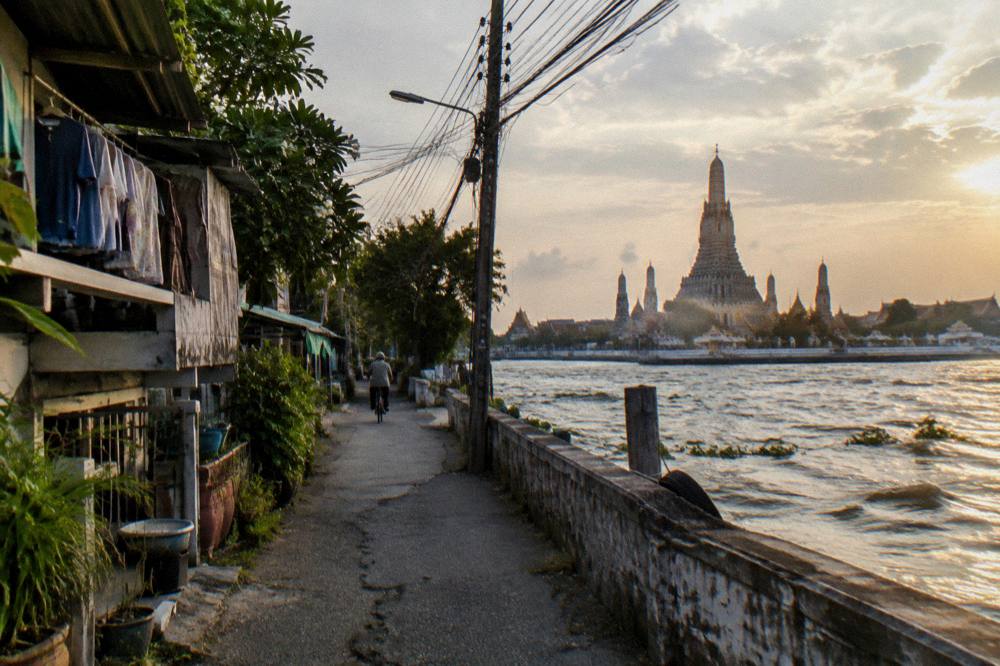
The districts that pair best with an old town ride are the riverside and old town areas themselves for zero commute, but Thonburi, Sathorn and even Sukhumvit all work because tour meeting points cluster on the river within a short hop of each other, and the temple district is compact enough that a single well chosen base covers Wat Pho, the Grand Palace, the flower market and the Thonburi canals. The choice is really between staying inside the old town for atmosphere and early starts, or staying near the Skytrain corridors for everything else Bangkok offers and accepting a commute to the meeting point.
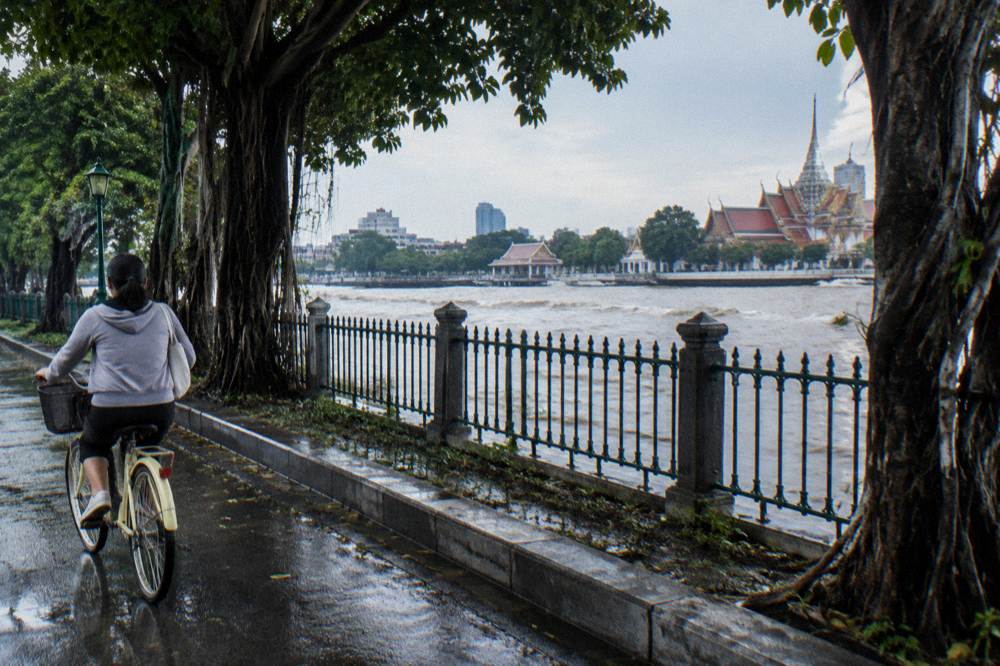
The sights within cycling or walking range of Wat Pho form a natural full day. The Grand Palace and Wat Phra Kaew sit immediately north. The amulet market and the riverside promenade run along the water. Pak Khlong Talat, the flower market, sits south and comes alive in the small hours. Across the river, Wat Arun's spires mark the Thonburi bank, reachable by a short ferry hop, and the canal neighborhoods of Bangkok Yai and Bangkok Noi stretch out behind it, which is precisely where the Thonburi side rides start. The flower market guide, the Wat Arun guide, the Grand Palace guide and the Yaowarat Chinatown guide each go deeper on their piece of this map.
For ride selection, the pattern to remember is simple. Book by meeting point and start time first, then price, because a cheap ride whose start point is an hour across the city in morning traffic is a false economy.
Common Questions About Wat Pho
What Is Wat Pho And Why Do Cyclists Stop Here?
Wat Pho is Bangkok's oldest and largest temple compound, famous for its gold plated Reclining Buddha, and it sits on the east bank of the Chao Phraya just south of the Grand Palace. Cyclists stop here because the surrounding Rattanakosin district is compact, flat and threaded with narrow, low traffic lanes, making it one of the few central areas where a bicycle is genuinely the best way between sights.
How Much Does It Cost To Enter Wat Pho?
No entry fee for Wat Pho is confirmed, so check at the gate rather than trusting a number read online. The confirmed temple district price is the Grand Palace next door, where the official visitor page lists a 500 baht foreign visitor ticket covering Wat Phra Kaew and the Queen Sirikit Museum of Textiles, with free entry for Thai nationals with ID.
Can You Wear Bike Shorts Into Wat Pho?
Treat padded or tight bike shorts as unacceptable at temple grounds. The official Grand Palace dress list explicitly bans bike pants along with short pants, tight pants, sleeveless tops and mini skirts, and the same standard of modesty applies at active temples generally. Carry loose long trousers and a shoulder covering, and change before you arrive rather than at the gate.
How Do You Get To Wat Pho By Boat?
The express boat network stops at Tha Tien (N8) and Tha Chang (N9), and the official Grand Palace page puts Wat Pho about 10 minutes on foot from Tha Tien. No tourist pier fare is confirmed, so expect a short hop and pay at the pier; the published 19 to 33 baht commuter fares apply to weekday commuter lines, not the central tourist boats.
Which Bike Tour Is Best For Seeing Wat Pho?
The Classical City Ride, from $39.56 per person with a 4.8 rating across 2,481 reviews, starts in Talat Noi on the riverside and covers the old town lanes around the temple district in three hours. The Temples and Canals ride, from $22.00 and 4.9 across 4,122 reviews, is the most reviewed option and covers temple territory from a Thonburi start.
When Is The Best Time Of Year For An Old Town Ride?
Roughly December to February is the driest and most comfortable window, while roughly March to May is the hottest and roughly September and October the wettest. National average temperatures span 18 to 38 °C across the year. Start any old town ride in the morning regardless of season, and remember the Grand Palace closes at 3:30 PM if it is on your list.