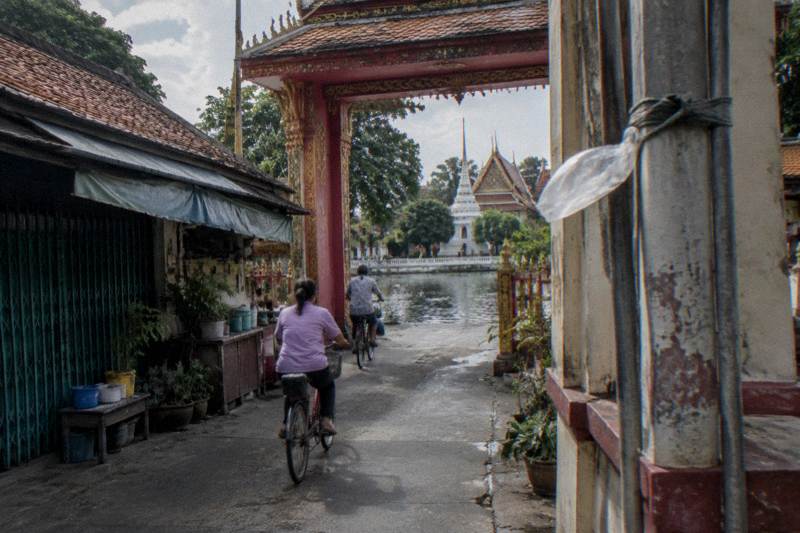
Yaowarat Chinatown Bangkok: Streets, Food And Temples
Yaowarat is Bangkok's Chinatown: a compact district of gold shops, temples and one of the densest street-food stretches in the city, laid out around a single main road a short river crossing from the old town.
In Short
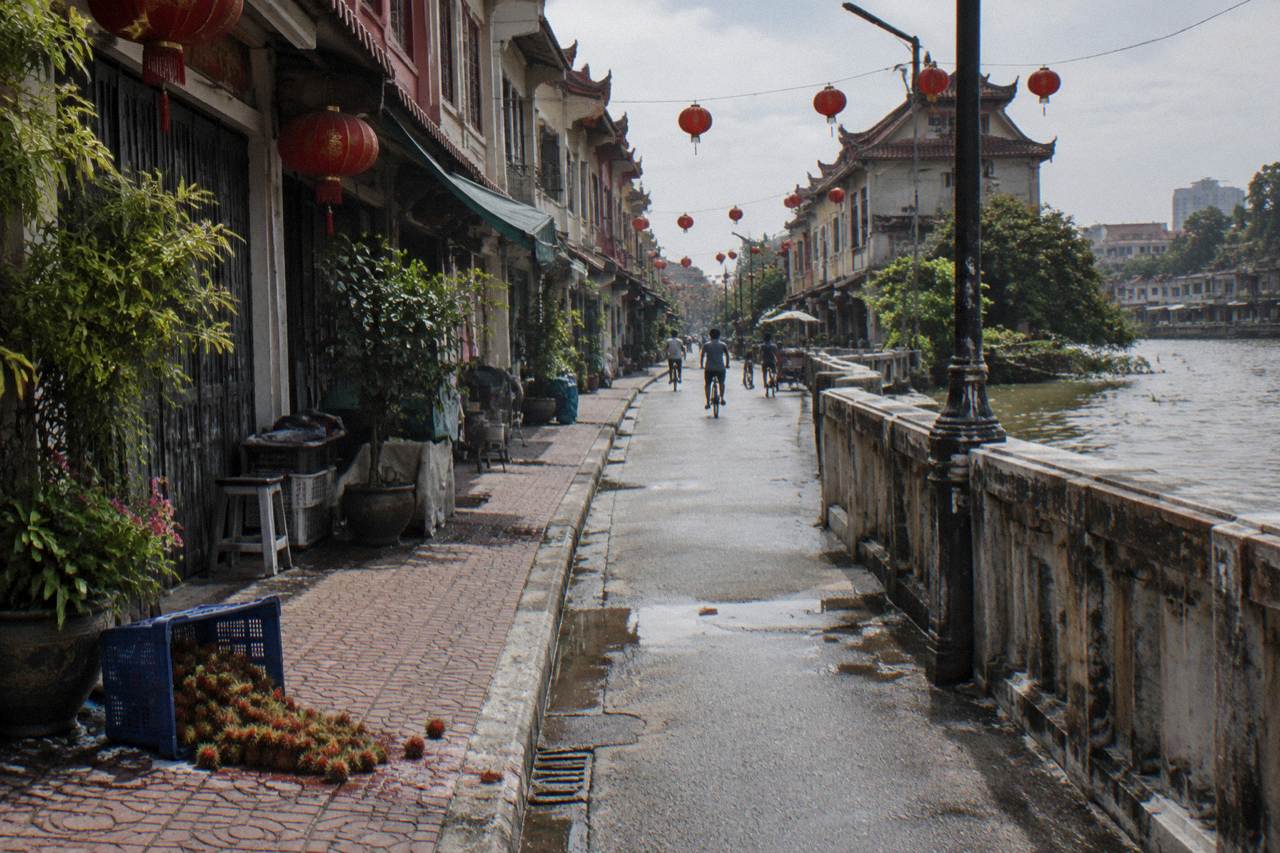
Yaowarat is the main street of Bangkok's Chinatown, a stretch of shophouses, gold dealers and food stalls between the Chao Phraya river and Phadungdao intersection. Guided bike rides that pass through the district start from $39.31 per person, run 3 to 4 hours, and link Chinatown with the river, Talat Noi and the flower market.
Bangkok's Chinatown grew out of a forced move: when the new capital was established on the east bank of the Chao Phraya, the Chinese communities already settled in the area around where the Grand Palace now stands were relocated south to a strip of land beside the river. That strip became Sampeng, then Yaowarat, and today it is one of the densest urban districts in the city: shophouses packed shoulder to shoulder, a main road strung with neon signage, side lanes that turn into food markets after dark, and temples tucked between gold shops. Traffic in Thailand drives on the left, and Yaowarat's lanes are narrow, which is why almost every guided ride here moves through the back sois rather than along the main drag. For a site named Bangkok Bike Tours, this district is one of the anchor neighbourhoods of the old-town routes, and several of the rides covered later pass directly through it.
What Is Yaowarat Chinatown In Bangkok?
Yaowarat is the name of the main road through Bangkok's Chinatown, and by extension the district around it, sitting on the east bank of the Chao Phraya just south of the old town and roughly between the river and Ratchawong Road. The district's backbone is Yaowarat Road itself, famous for its concentration of gold shops, Chinese pharmacies, restaurants and neon signs. Around it sits a web of side lanes: Sampeng Lane running parallel nearer the river, Charoen Krung Road running parallel on the north side farther from the water, and Talat Noi continuing south where the shophouses give way to older communities and workshops. A visitor who arrives with no plan will still find the district legible, because almost everything of interest sits within a few minutes' ride of the Yaowarat and Charoen Krung intersection.
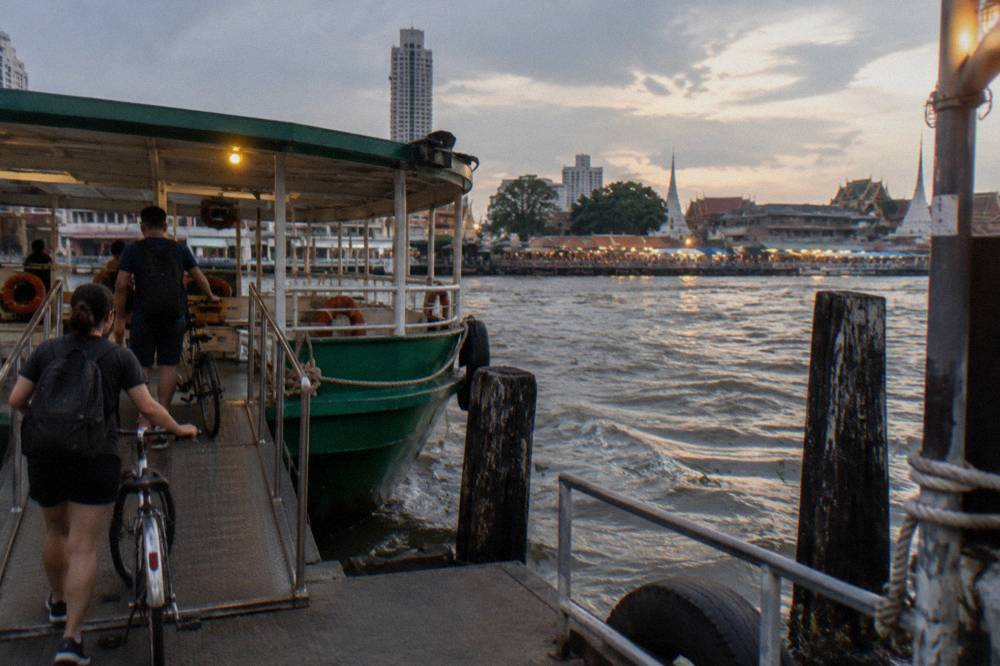
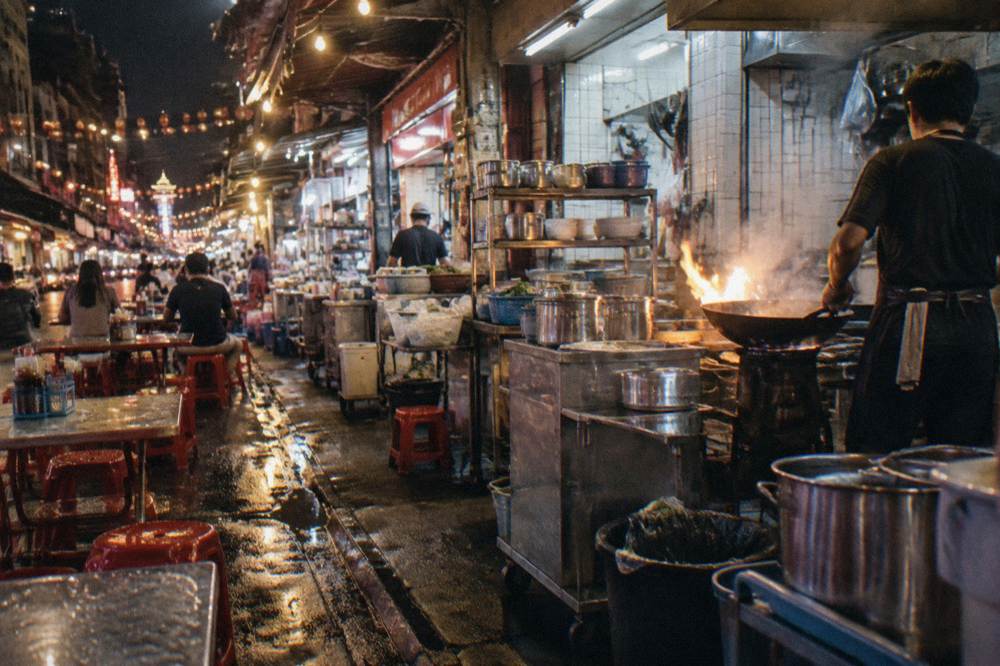
The district works on two clocks. By day it is a wholesale and retail machine: fabric in Sampeng, gold along Yaowarat, hardware and religious goods in the lanes off Phadungdao. From late afternoon the balance tips toward food, and Yaowarat Road itself becomes one of the best known street-food stretches in Thailand, with stalls taking the pavements and the road filling with people until late evening. Anyone planning a visit around food should think about timing first, because the district's two faces are almost unrecognisable from each other.
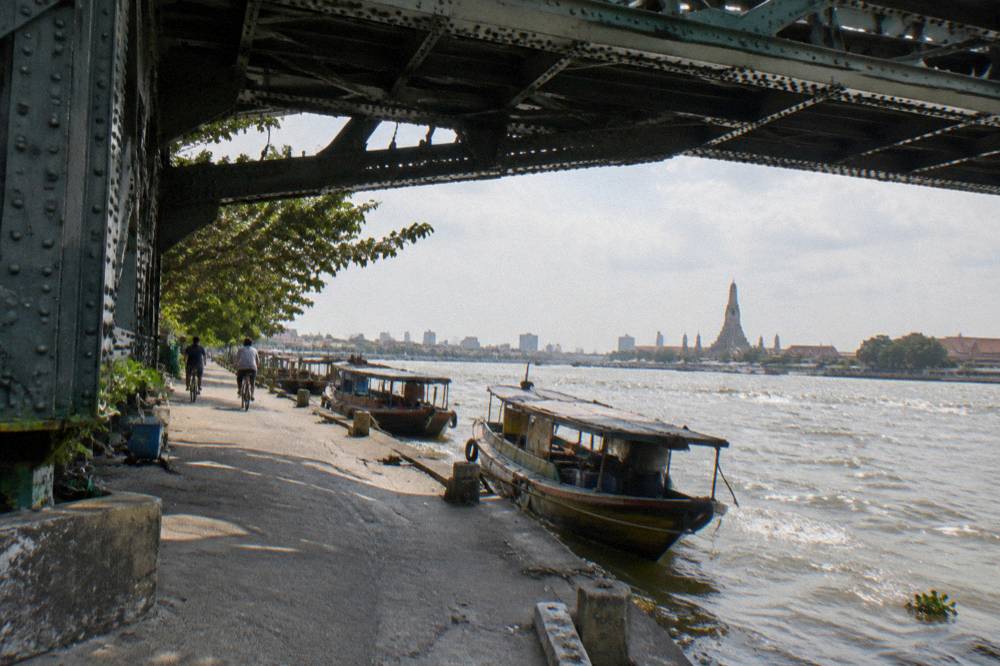
Two things make Yaowarat unusually good territory for a slow bike ride. First, the interesting parts are close together: temples, markets, shrines and the riverfront sit within a compact area, so a guided group can cover the district without long stretches on busy roads. Second, the district sits beside the Chao Phraya, and several crossings connect it to Thonburi on the west bank, which is how the classic city rides combine Chinatown with quieter canal-side lanes in a single loop.
How Do You Get To Yaowarat And Around It?
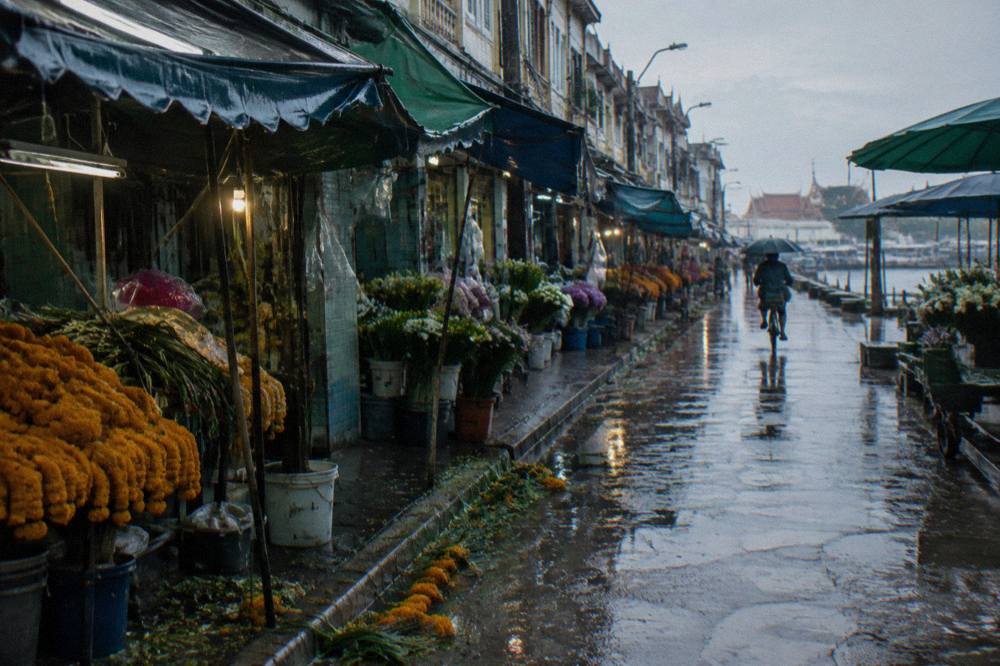
The simplest approach is by river: the express boat serves piers within a short walk of Chinatown, with Tha Ratchawong the traditional stop for Yaowarat itself, and the district is otherwise reached by road from the old town in a matter of minutes depending on traffic. The operator's own site, Chao Phraya Express Boat, lists its commuter lines, which run Monday to Friday with flat fares of 19 baht on the Orange line and 24 baht on the Yellow line, though these are commuter services rather than dedicated tourist boats, and the site publishes no fare for the tourist-area piers nearest the Grand Palace. Cyclists on the guided rides described below do not need to plan this independently, since most of those tours cross the river as part of the route with the crossing included.
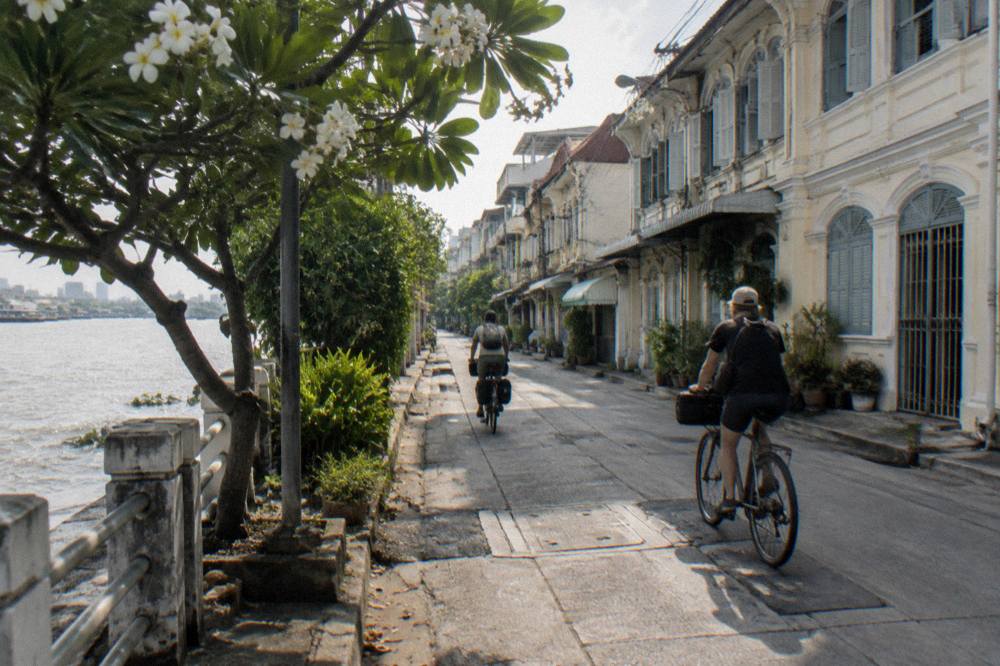
Getting around inside the district is a different question from getting to it. Yaowarat Road carries buses, cars and delivery bikes, and the side lanes of Sampeng are pedestrian-dense through the day, so a bicycle is at its best here early in the morning or in the hands of a guide who knows which sois stay rideable. The guided city rides that pass through Chinatown typically enter via Charoen Krung or the riverfront lanes, loop through Talat Noi to the south, and cross to Thonburi or continue north toward the flower market at Pak Khlong Talat rather than riding the main road end to end. If you want to build that detour into your own ride, the Pak Khlong Talat planning guide covers the best hours to arrive and what to expect once you're off the bike.
For riders putting their own route together, the practical frame is the pair of arterial roads that bracket the district: Yaowarat Road across the middle and Charoen Krung Road along the river. Nearly every lane worth exploring hangs off one of those two, so getting temporarily lost is low-risk; the river is always the western reference point. A fuller breakdown of routes through this part of the city sits in the Bangkok cycling routes guide.
If you are weighing guided versus independent, this is one district where the guided option earns its keep quickly. The food stalls that matter are unmarked or move, the lanes reverse from empty to impassable by hour, and a guide who lives in the pattern removes most of the guesswork. The two rides below are the ones among the options covered here that pass through or alongside Chinatown on their standard routes.
Each of those three takes a different angle. The Chinatown, Flower Market and Turtles ride starts on Thanon Naret in Bang Rak, runs four hours, and is capped at 8 riders with a bike, helmet, guide, a snack, water and soft drinks, a river crossing and free cancellation included, from $39.86 per person; it is rated 4.9 across 90 reviews. The Classical City Ride out of Talat Noi covers Chinatown and Thonburi in three hours from $39.56 per person with up to 16 riders, and carries 4.8 across 2,481 reviews. The Half-Day Ride with Lunch starts from the Bangkok Noi side and cycles through Thonburi past Baan Bu, Wat Tha Phra and Bangkok Yai to the Taling Chan Floating Market in four hours from $39.31 per person, 4.9 across 286 reviews.
Which Temples And Sights Sit In And Around Chinatown?
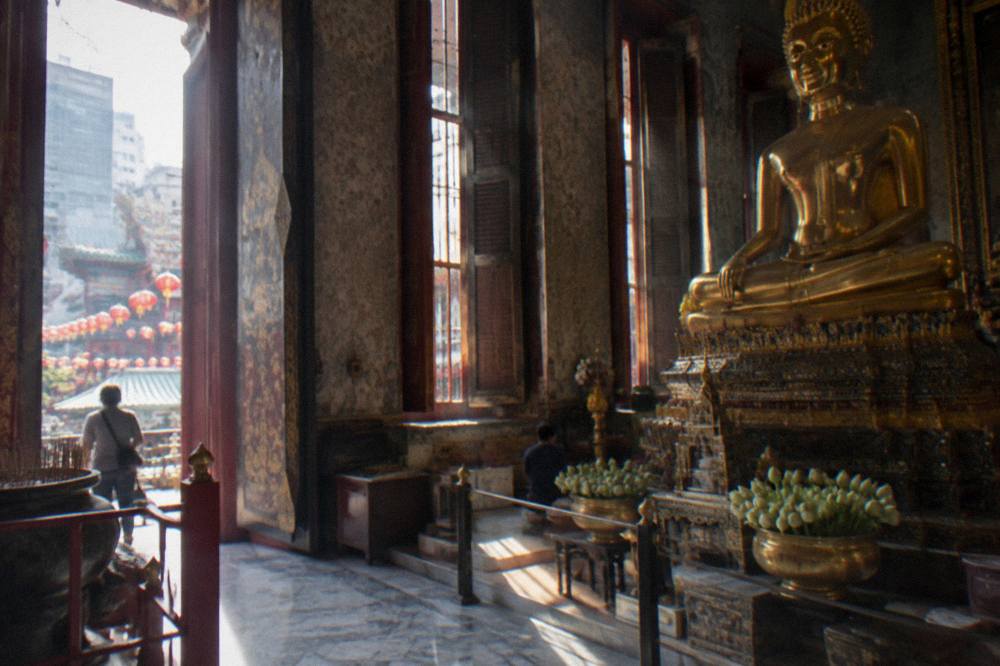
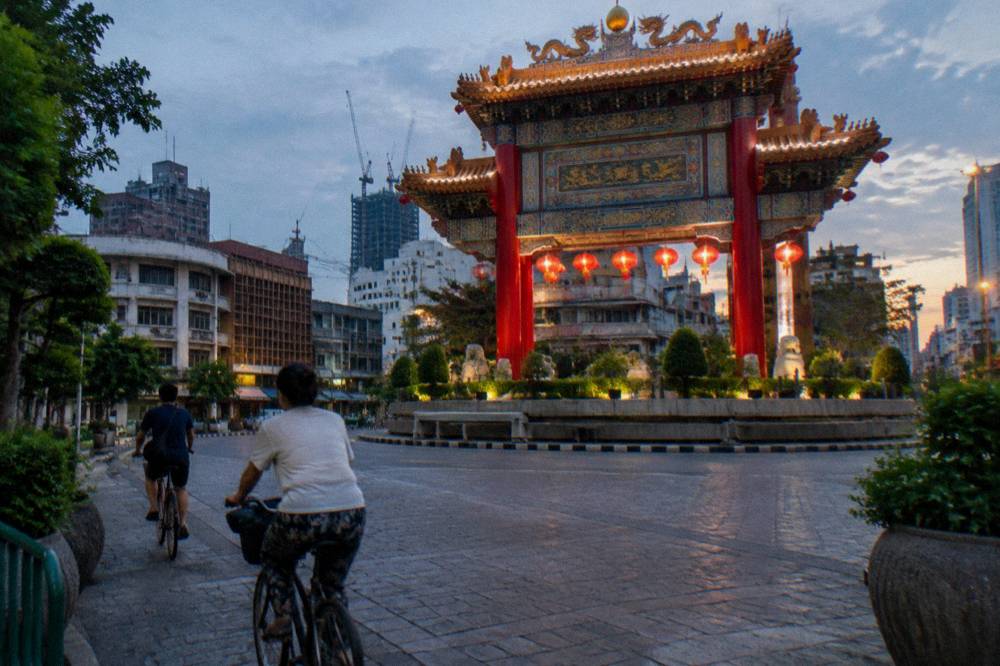
The district holds some of the oldest Chinese temples in Bangkok, including Wat Traimit with its gold Buddha at the Yaowarat end, plus a cluster of shrines and community temples through Sampeng and Talat Noi, and the major royal temples of the old town sit a short way north on the same bank of the river. Wat Traimit is the headline sight: a temple near the Hua Lamphong end of Yaowarat Road known for its large solid-gold Buddha image, and the building is a landmark worth the detour even from outside. From there the trail runs south and west through Wat Mangkon, the district's principal Chinese Buddhist temple, and the smaller shrines of Sampeng Lane, ending in Talat Noi, where older community temples sit among machine workshops and street art along the river. The story of Talat Noi's riverside lanes, and why they anchor so many bike routes, is covered in the Talat Noi and Thonburi guide.
North of Chinatown the scale changes. The Grand Palace complex, Wat Pho and Wat Arun all sit within a short ride upstream, and riders sometimes combine a morning temple circuit with an afternoon in Yaowarat. One planning note matters for cyclists: the Grand Palace's official visitor page states that foreign visitors pay 500 baht, that it opens daily 8:30 AM to 3:30 PM, and that its banned dress list explicitly includes bike pants along with short pants, torn pants and tight pants, so anyone planning to walk in wearing riding kit will be turned away. The palace rules are published on the official practical information page, and the express boat stops at Tha Chang (N9) and Tha Tien (N8), with Wat Pho about 10 minutes on foot from Tha Tien.
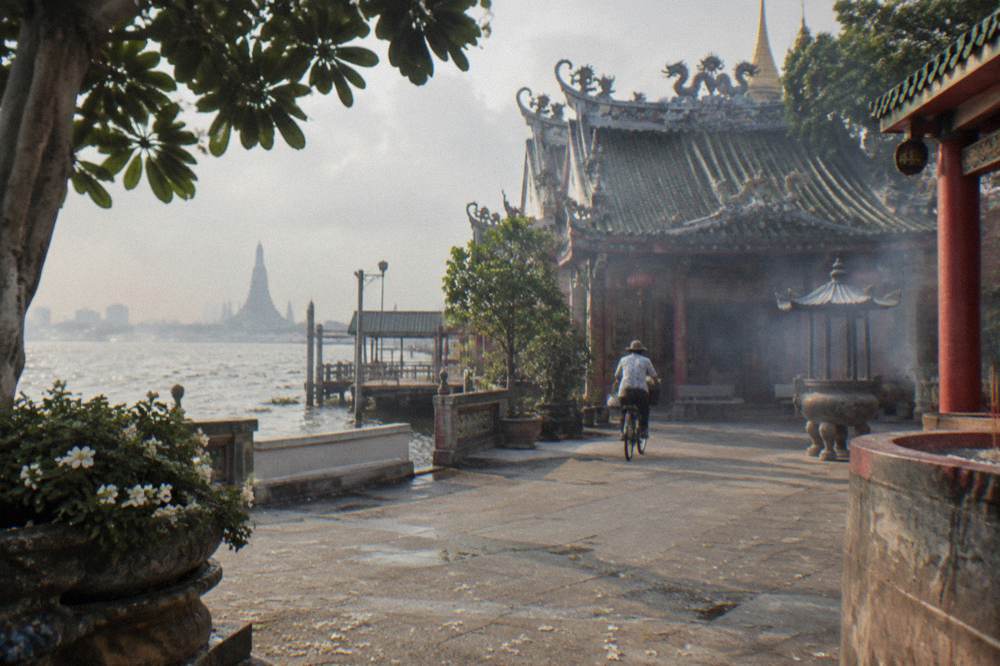
For bike-tour purposes, temples sort into two groups: those you ride past and those you stop at. The guided rides through this district lean on the ride-past group, using temple courtyards and shrine lanes as scenery and shade stops rather than ticketed visits, which keeps the ride moving and avoids dress-code problems entirely. Riders who want interior visits, Wat Traimit or the Grand Palace in particular, are better off scheduling those separately, on foot, with the right clothing. For a different pace after the shrine lanes, the guide to Lumphini Park for walkers and cyclists maps out the park's paths and the bike rides that swing past them.
What Food Is Yaowarat Known For?
Yaowarat is regarded as one of the best street-food districts in Bangkok, known for Chinese-Thai dishes served from stalls and shophouses, with the strongest concentration along Yaowarat Road and its side sois from late afternoon into the night, and a second, different market rhythm by day in Sampeng Lane. The district's food identity comes from its history: descendants of Chinese immigrants cooking noodles, dim sum, roasted meats and bird's nest or shark fin dishes alongside Thai street staples, all within a few hundred metres. No individual stalls are named here, because stalls in Yaowarat move, close and reopen on their own schedules, and any specific recommendation ages badly. What is stable is the geography: the evening food stretch is on and around Yaowarat Road itself, daytime snacking happens in the lanes, and Chinatown's night-time food scene is the reason many visitors come at all, a theme expanded in the Bangkok street food guide.
Timing matters more than destination in this district. Through the morning the food action is small-scale: coffee shops, congee, Chinese pastry. From late afternoon the pavements of Yaowarat Road fill, and by evening the main road's atmosphere is closer to a festival than a street. A rider finishing a guided afternoon tour nearby can walk into that scene within minutes, which is one reason the district pairs so well with a late ride. Anyone whose main goal is eating should plan the bike portion earlier in the day and treat the evening food crawl as a separate, on-foot event; the combination of night riding and heavy eating works better in one direction than the other.
For visitors who want both in a single booking, two night rides in the options covered here combine cycling with an evening meal. The Hidden Paths Night Ride with Street Food runs three hours from $50.59 per person, rated 4.8 across 86 reviews, starting on Charoen Krung in Talat Noi with dinner and a river crossing included. The Chinatown Night Ride with Street Dinner starts on Thanon Naret right on the edge of the district, runs four hours from $42.93 per person with dinner, a snack, drinks and a helmet included for groups of up to 8, and holds a 5.0 rating from a small pool of 15 reviews.
The table below sums up the rides that touch Chinatown or its immediate edges, using the figures from each booking page.
| Ride | Duration | From (per person) | Rating | Group max | Meal |
|---|---|---|---|---|---|
| Chinatown, Flower Market, Turtles | 4 hours | $39.86 | 4.9 from 90 reviews | 8 | Snack, not a meal |
| Classical City Ride | 3 hours | $39.56 | 4.8 from 2,481 reviews | 16 | Snack, not a meal |
| Half-Day Ride, Lunch Included | 4 hours | $39.31 | 4.9 from 286 reviews | 10 | Lunch |
| Hidden Paths Night Ride, Street Food | 3 hours | $50.59 | 4.8 from 86 reviews | 16 | Dinner |
| Chinatown Night Ride, Street Dinner | 4 hours | $42.93 | 5.0 from 15 reviews | 8 | Dinner |
When Is The Best Time To Visit Yaowarat?
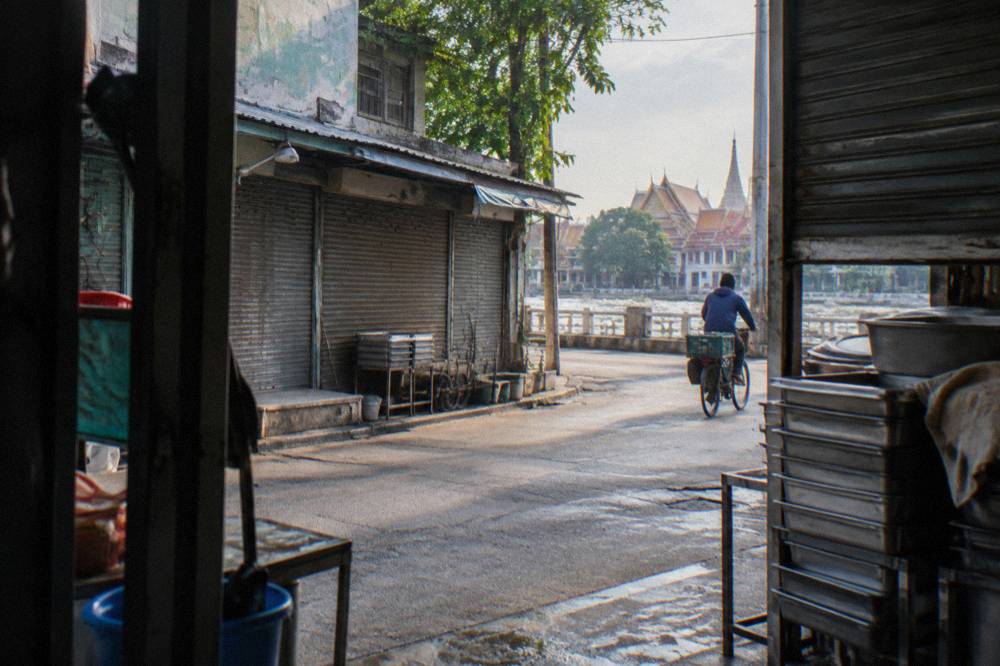
Early morning and late evening are the two windows that suit Yaowarat best: mornings give empty lanes, open temples and rideable streets before the wholesale crowds build, while evenings deliver the food scene the district is famous for, and midday is the least rewarding slot, combining peak crowds, peak heat and the thickest traffic. Bangkok's climate, as the Tourism Authority of Thailand describes it, runs six rainy months, three cooler dry months and three hot months, with national average temperatures spanning 18 to 38 °C; roughly speaking, the hottest stretch is March to May, the wettest months September and October, and the driest December to February. Within any given day, heat and crowding both climb through the middle hours, which is why the guided rides here start early, and why night rides have become a format of their own. More detail on seasonal timing sits in the best time to cycle in Bangkok guide.
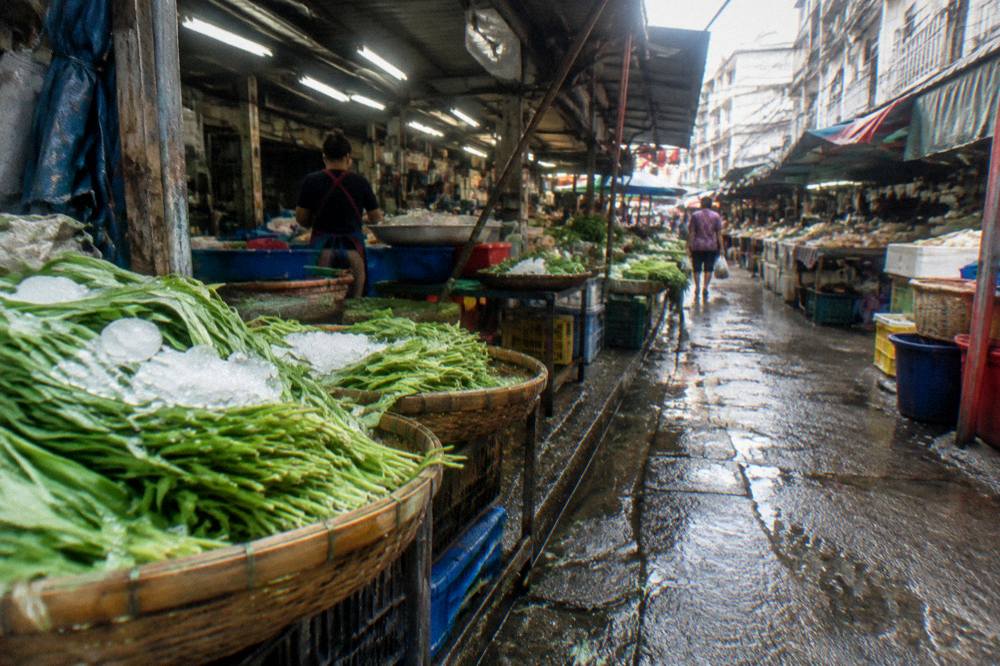
Rain is a different constraint from heat. Yaowarat's lanes partly empty in a downpour and refill fast afterward, but riding narrow, wet lanes with delivery traffic is a job for a local guide or a patient rider, and the covered arcades of Sampeng are a reasonable place to wait one out. The rainy-season trade-offs, and what operators actually do when a storm rolls in mid-ride, are laid out in the rainy season cycling guide.
For most visitors the clean answer is to book the earliest start available and keep the evening free. Morning versions of the old-town rides reach Chinatown while the gold shops are opening and the food stalls are still being set up, which is the district at its most photogenic and least crowded, then hand you back your afternoon anywhere in the city centre.
Which Guided Bike Rides Pass Through Chinatown?
Five guided rides in the options covered here pass through or directly alongside Chinatown, ranging from $39.31 to $50.59 per person, running three to four hours, with group caps from 8 to 16 and meal inclusions varying from a snack to a full dinner. The anchor choice for the district is the Chinatown, Flower Market and Turtles ride: four hours from $39.86 per person, up to 8 riders, bike, helmet, guide, snack, water and soft drinks, a river crossing and free cancellation included, rated 4.9 across 90 reviews. It starts at 230 Thanon Naret in Bang Rak, which sits at the southern edge of the district, and threads Chinatown, the river crossing and the flower market into one loop. Riders comparing it against a broader old-town circuit can weigh it against the coverage in the Bangkok Chinatown bike tour guide.
The Classical City Ride is the volume option, 4.8 across 2,481 reviews, three hours from $39.56 per person, capped at 16 riders and starting at 23 Charoen Krung 24 in Talat Noi, immediately south of Chinatown; it includes a snack, water and soft drinks and a boat crossing, with helmets available on request rather than as a guaranteed inclusion. The Half-Day Ride with Lunch approaches from Bangkok Noi, includes lunch and a helmet for groups up to 10, and carries 4.9 across 286 reviews. Two night formats, listed in the food section above, cover the district after dark with dinner included.
One more ride deserves a mention for food-first visitors. The Hidden Bike and Food Tour runs four and a half hours from $56.73 per person, is capped at 10 riders, includes lunch or dinner and bottled water, and is rated 5.0 across 592 reviews, starting from Soi Somdet Chao Phraya in Khlong San, across the river from Chinatown. It is not a Chinatown tour as such, but its start point and food focus place it in the same planning conversation for many visitors.
Choosing among them comes down to three questions: do you want Chinatown as the main subject or one stop on a bigger loop, do you want a meal built in, and how small a group do you want? The table below separates those axes.
| Ride | Start point | Meal inclusions | Pickup | Free cancellation |
|---|---|---|---|---|
| Chinatown, Flower Market, Turtles | 230 Thanon Naret, Bang Rak | Snack, water and soft drinks | Not stated | Yes |
| Classical City Ride | 23 Charoen Krung 24, Talat Noi | Snack, water and soft drinks | No hotel pickup | Yes |
| Half-Day Ride, Lunch Included | 161/1 Somdet Phra Pin Klao, Bangkok Noi | Lunch, bottled water | No hotel pickup | Yes |
| Hidden Paths Night Ride | 23 Charoen Krung 24, Talat Noi | Dinner, water and soft drinks | No hotel pickup | Yes |
| Hidden Bike and Food Tour | 378 Soi Somdet Chao Phraya 3, Khlong San | Lunch or dinner, bottled water | Not stated | Yes |
What Mistakes Do Visitors Make In Yaowarat?
The most common mistakes are arriving midday and expecting the evening food scene, trying to ride the main road rather than the side lanes, planning a temple interior visit in cycling clothes, and underestimating how quickly the district's lanes change character between morning, afternoon and night. Each of these is avoidable with a small amount of planning, and none of them costs money to fix, only timing.
The dress-code error is the one with a hard consequence. As noted above, the Grand Palace's official banned list includes bike pants and tight pants, so a rider who finishes a morning tour near the old town and walks toward the palace in kit will be refused entry; the fix is a temple visit in street clothes on a separate occasion, or clothing packed in a bag. Midday arrival is the more common mistake simply because it is the default: visitors drift into Chinatown after a morning elsewhere, find the district at its hottest and most crowded, and miss both the calm morning lanes and the evening stalls. The third mistake, riding Yaowarat Road itself, is mostly made by independent riders; the road is a traffic artery, and the district's real texture is one lane in, either direction.
A fourth, quieter mistake is treating Chinatown as a half-day box to tick. The district rewards two visits, morning and evening, more than one long one, and the rides covered here split along the same line, with daytime formats for the lanes and markets and evening formats built around the food streets. Riders coming in the opposite direction, booking a night ride and then trying to sightsee by day, should note that the night formats include dinner and run to late evening, so an early start the next morning needs honest planning.
How Much Does A Chinatown Bike Ride Cost?
Guided rides that pass through Chinatown cost from $39.31 to $56.73 per person depending on format, with the four-hour day rides priced from $39.31 and $39.86 per person, the three-hour Classical City Ride from $39.56, the night rides with dinner from $42.93, and the extended food tour at $56.73; nearly every tour price here includes the bike and a guide, and several include a river crossing. Those are from-prices on a per-person basis, taken from each booking page, and the inclusions vary enough that the headline number is not the whole comparison: the $39.31 half-day ride includes lunch, while the $39.86 Chinatown ride includes only a snack, and the $50.59 night ride includes dinner as a single dish street-food meal. Fuller price context across the city sits in the bike tour cost guide.
For budget context, the cheapest guided ride anywhere in the city's options covered here is a 3-hour Hidden Gems ride with street food stops from $19.00 per person, rated 4.9 across 119 reviews, with bottled water included, though it starts on the Thonburi side and does not focus on Chinatown. On the other end, the most expensive ride in the city's options is an 8-hour boat and bike tour from $113.15 per person. Chinatown-focused rides sit in the middle band, which is typical for old-town routes: the district is central, the routes are short, and the price reflects the guide and the group size more than the distance.
Spending in the district itself runs on baht. The exchange rate sits at about 33 to 34 baht per US dollar, with rates moving daily; street food purchases and temple donations are cash transactions, so arriving with small notes is more useful than arriving with a plan. The 500 baht Grand Palace ticket, for anyone extending north, is the single largest typical outlay in this part of the city.
| Item | Typical figure | Basis |
|---|---|---|
| Chinatown, Flower Market, Turtles ride | From $39.86 | Per person, 4 hours, group max 8 |
| Half-Day Ride, Lunch Included | From $39.31 | Per person, 4 hours, lunch included |
| Classical City Ride | From $39.56 | Per person, 3 hours, group max 16 |
| Chinatown Night Ride, Street Dinner | From $42.93 | Per person, 4 hours, dinner included |
| Hidden Bike and Food Tour | From $56.73 | Per person, 4.5 hours, lunch or dinner |
| Grand Palace ticket | 500 baht | Foreign visitors, includes Wat Phra Kaew |
| Exchange rate | About 33 to 34 baht per US dollar | Bank of Thailand, moves daily |
Common Questions About Yaowarat Chinatown Bangkok
What Is Yaowarat Chinatown In Bangkok?
Yaowarat is the main road through Bangkok's Chinatown and, by extension, the district around it, on the east bank of the Chao Phraya just south of the old town. It is known for gold shops, Chinese temples, dense shophouse lanes and one of the city's best known street-food stretches after dark.
How Much Does A Bike Ride Through Chinatown Cost?
The guided rides that pass through Chinatown cost from $39.31 to $56.73 per person. The four-hour day rides start at $39.31, $39.56 and $39.86, the night rides with dinner start at $42.93, and the extended four-and-a-half-hour food tour costs from $56.73.
Can You Cycle In Yaowarat?
Yes, but in the side lanes rather than on the main road. Yaowarat Road itself is a traffic artery, while the sois off it, Sampeng, Charoen Krung's riverfront and Talat Noi to the south, are narrow, slow and rideable, especially early in the morning. Guided rides use these lanes almost exclusively.
When Is The Best Time To Visit Yaowarat?
Early morning for empty lanes and open temples, or evening for the food stalls along Yaowarat Road. Midday combines the district's biggest crowds and highest heat, so it is the least rewarding slot. Roughly, the driest months are December to February and the wettest September and October.
Which Temples Are In Chinatown Bangkok?
Wat Traimit with its gold Buddha at the Yaowarat end, Wat Mangkon as the principal Chinese Buddhist temple, and a spread of smaller shrines through Sampeng Lane and Talat Noi. The Grand Palace, Wat Pho and Wat Arun sit just north across the river bend, reachable in a short ride.
Can You Visit The Grand Palace In Cycling Clothes?
No. The official dress list bans bike pants, short pants, torn pants and tight pants among other items, so riders in kit are refused entry. Foreign tickets cost 500 baht and the complex opens daily 8:30 AM to 3:30 PM; plan a palace visit in street clothes on a separate occasion.