Bangkok Flower Market By Bike: Pak Khlong Talat Stops
Pak Khlong Talat is Bangkok's great wholesale flower market on the Chao Phraya, and several guided bike rides in the old town pass directly through it. This guide covers timing, what to expect on the stalls, and which rides include the stop.
In Short
Pak Khlong Talat sits on Chak Phet Road by the Chao Phraya river in the old town. Wholesale activity peaks overnight and in the very early morning, while retail stalls run through the day, so no single opening hour applies. The most affordable ride that lists the market is the Night Ride and Restaurant Dinner tour at from $37.00 per person, 3.5 hours, 4.7 across 104 reviews.
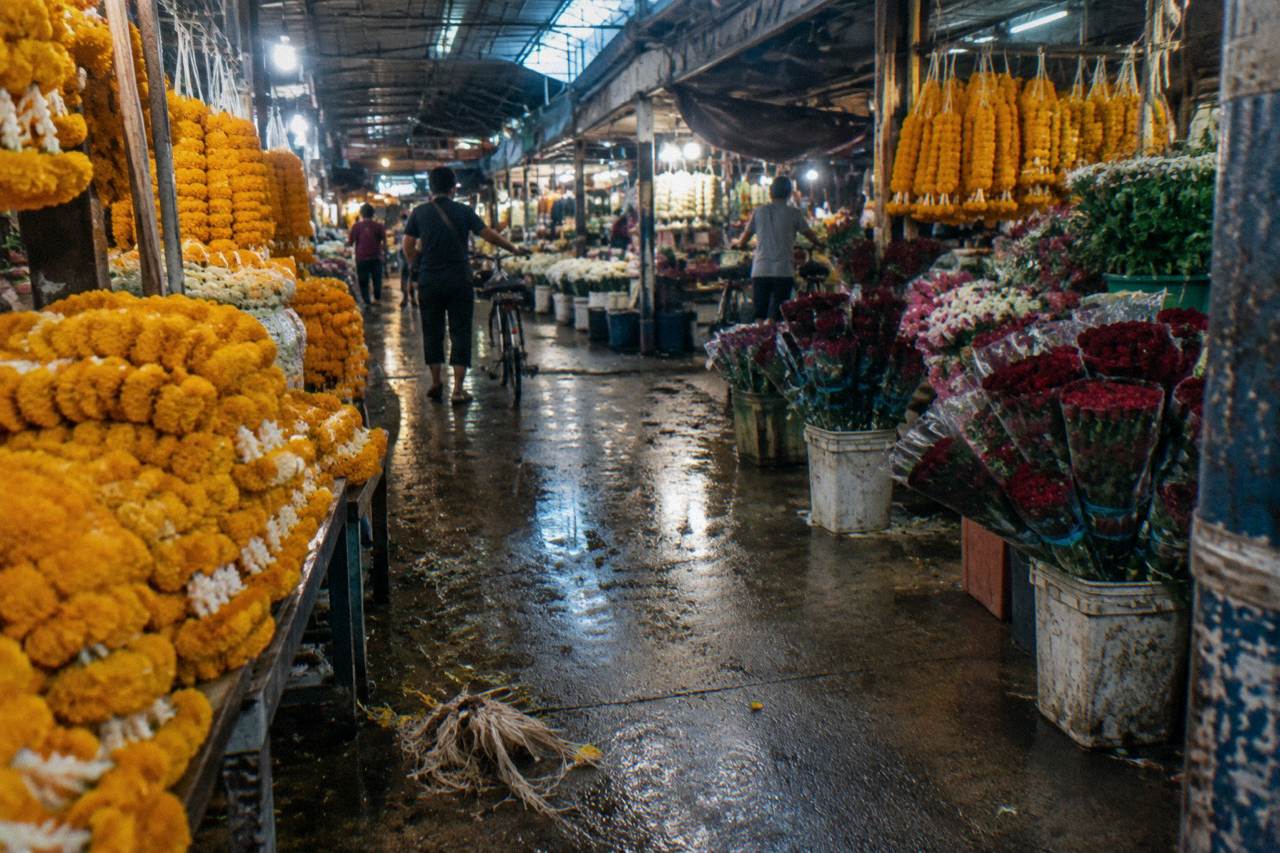
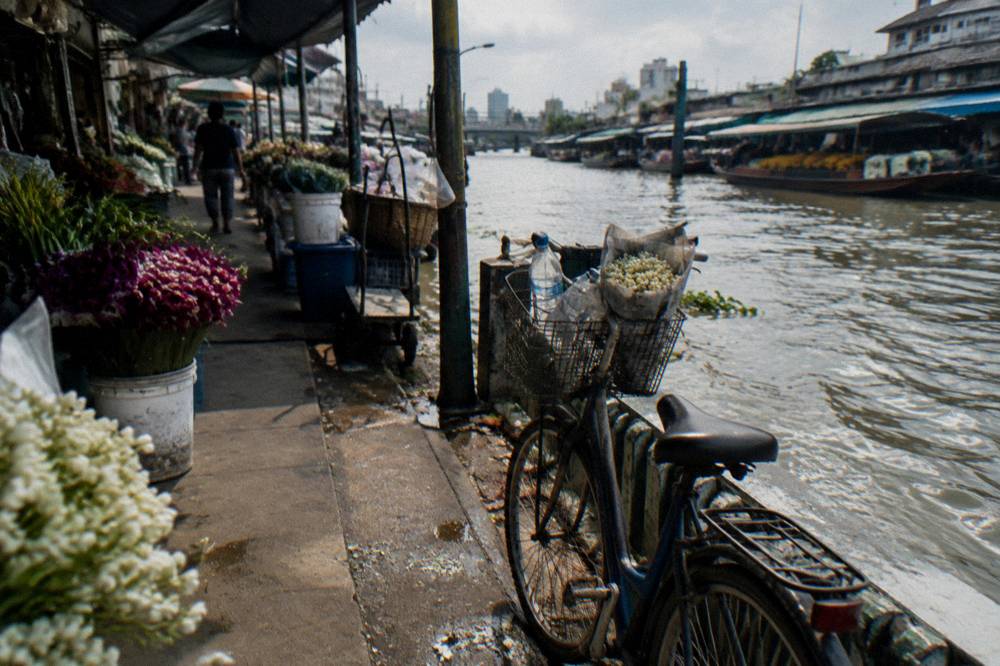
Pak Khlong Talat is the closest thing Bangkok has to a flower institution. Garlands of marigolds destined for shrine tables, roses by the thousand, orchids threaded into offerings, and buckets of blossoms stacked shoulder high under a low roof a short walk from the river. For cyclists it is one of the most reliable stops in the old town, and several of the guided rides covered here route directly through it. This guide lays out how the market works, when the stalls are busiest, what a bike stop there actually looks like, and how the touring options compare on price, duration and what is included. You will see riders in coloured vests zipping past the flower stalls on nearly every route here, and this guide to the benefits of cycling in Bangkok runs through the advantages of seeing the city by bike.
What Is Pak Khlong Talat And Where Is It In Bangkok?
Pak Khlong Talat is Bangkok's main wholesale flower, fruit and vegetable market, located on Chak Phet Road on the east bank of the Chao Phraya river, between the Memorial Bridge area and Wat Pho in the Phra Nakhon old-town district. It grew around the old river pier trade and still runs as a working market rather than a curated attraction, which is precisely why it photographs so well and why so many guided rides weave it into their routes. The stalls sit under a mix of covered halls and street-front awnings, and the surrounding lanes carry the small trucks and handcarts that keep the whole city supplied with cut flowers.
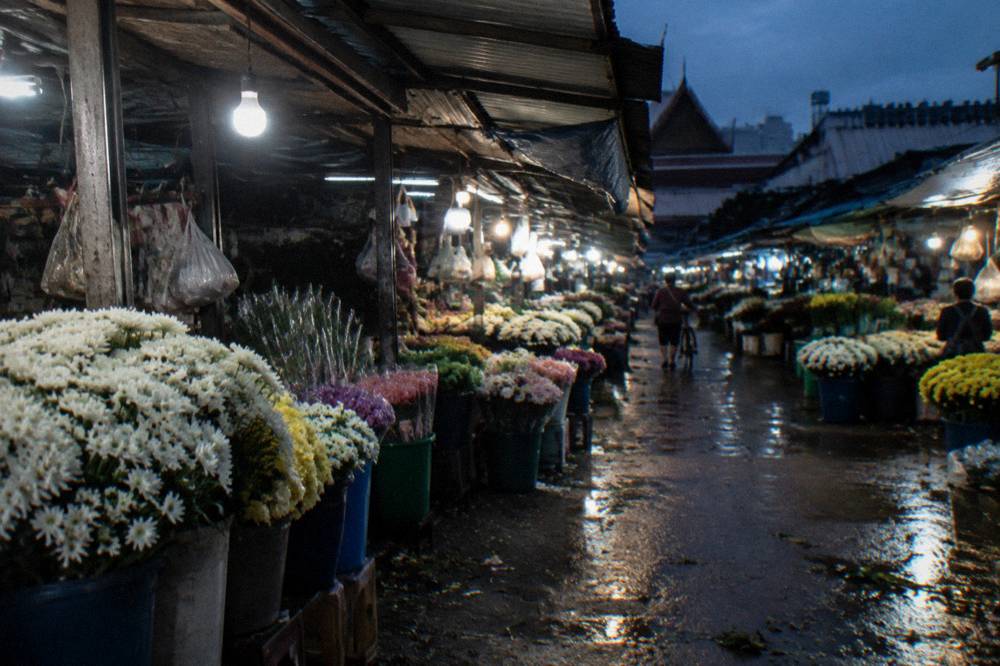
The market's character changes with the clock, and that matters more than any map. Overnight and in the hours around dawn, wholesale buyers fill the aisles: temple supply orders, hotel florists, wedding decorators and street vendors all collect stock here before sunrise. Later in the morning the wholesale trade thins out, and through the middle of the day retail stalls serve locals buying single garlands, potted plants and flowers for household shrines.
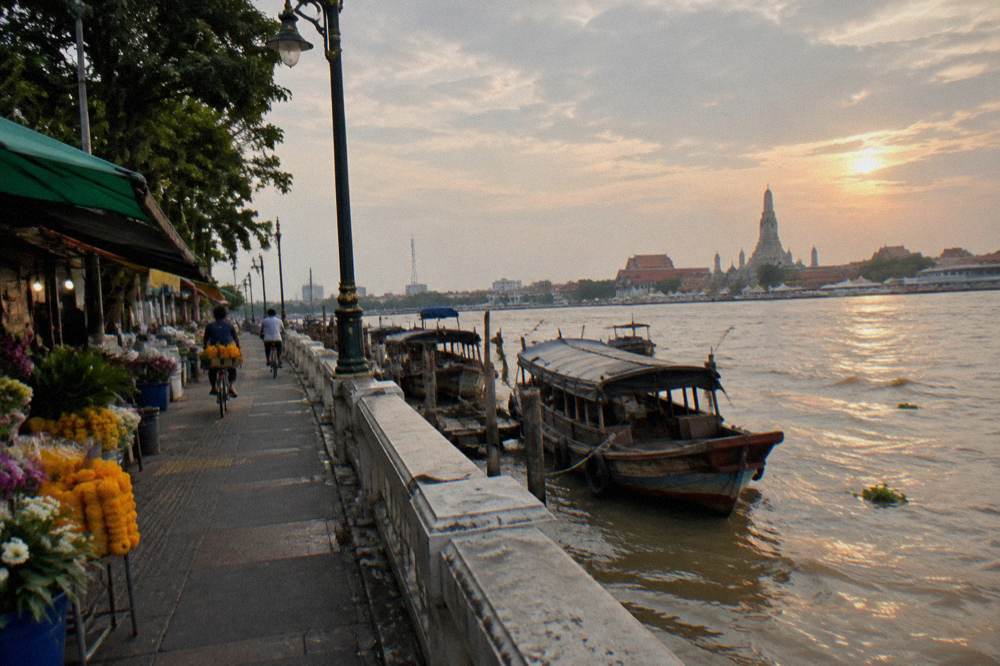
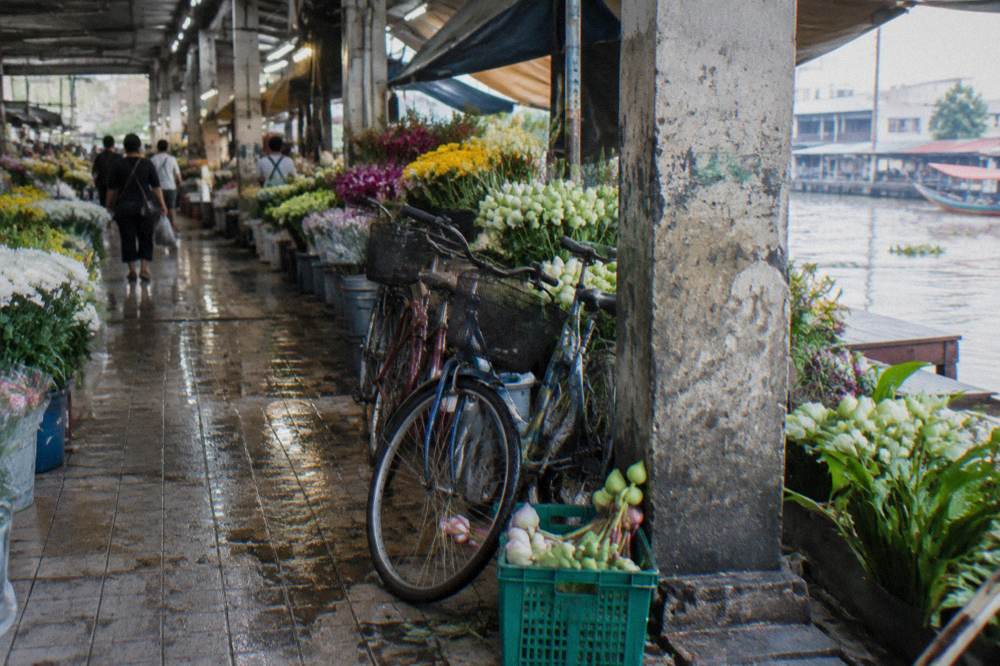
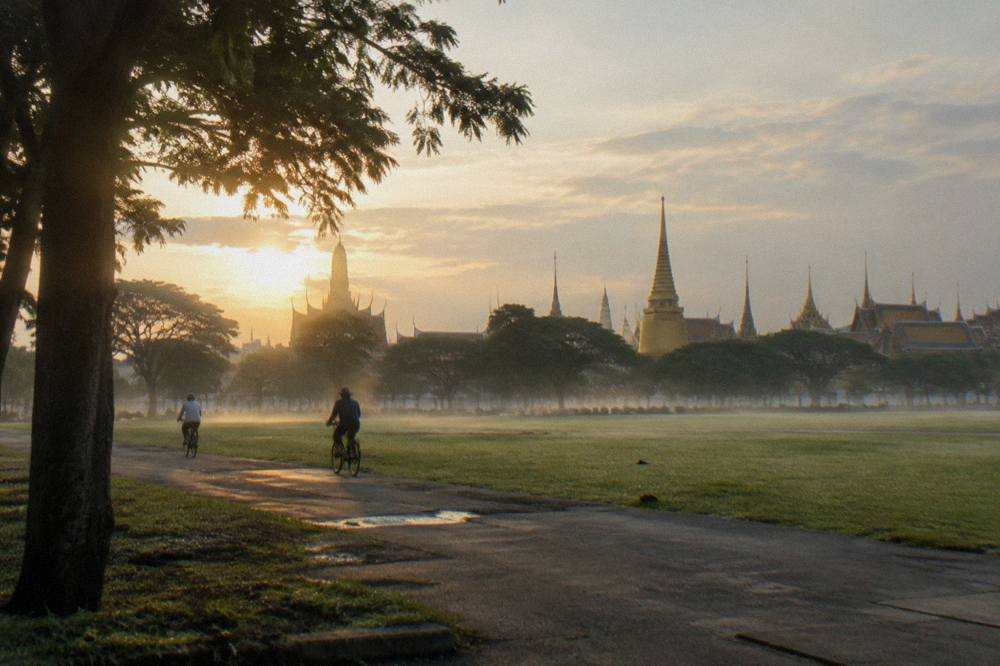
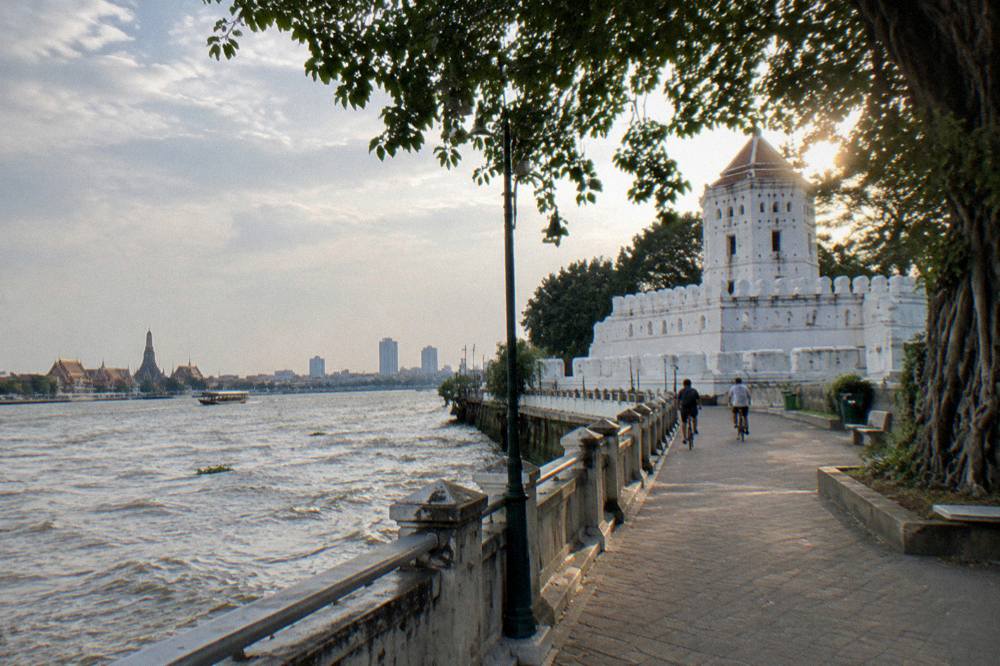
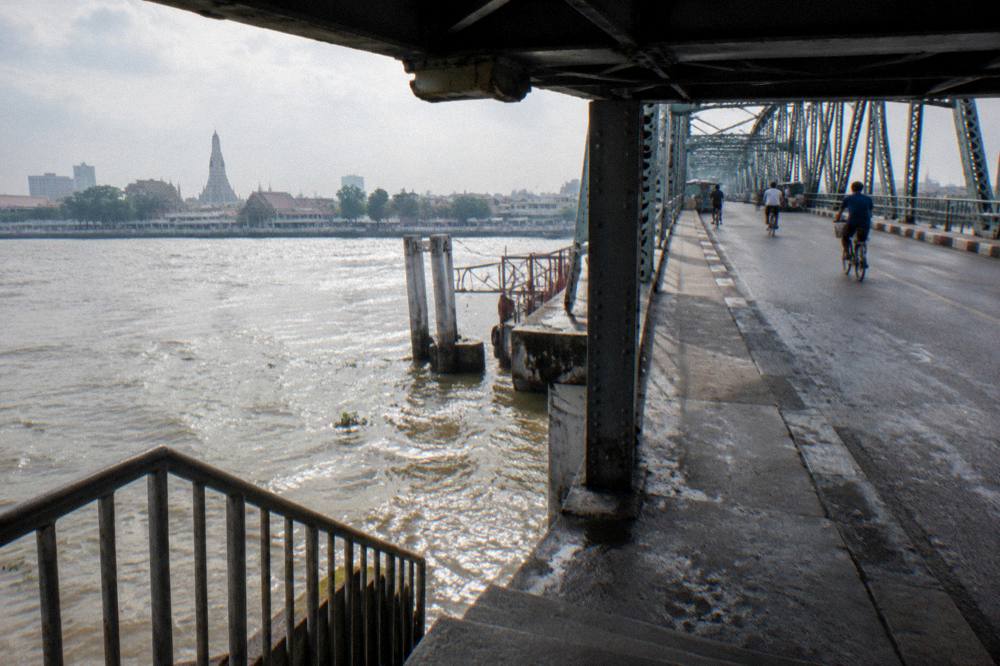
For a cyclist, the location is the point. Chak Phet Road is flat, close to the river path network, and within easy rolling distance of Yaowarat, Wat Pho, the Grand Palace approach and the Memorial Bridge crossing to Thonburi. That density of old-town sights in a small area is why bike tours cluster here, and the Bangkok Bike Tours collection leans heavily on this district. Readers planning a wider old-town loop can pair this with the Bangkok old town ride guide, which covers the wider temple district on two wheels.
When Is The Best Time To Visit The Bangkok Flower Market?
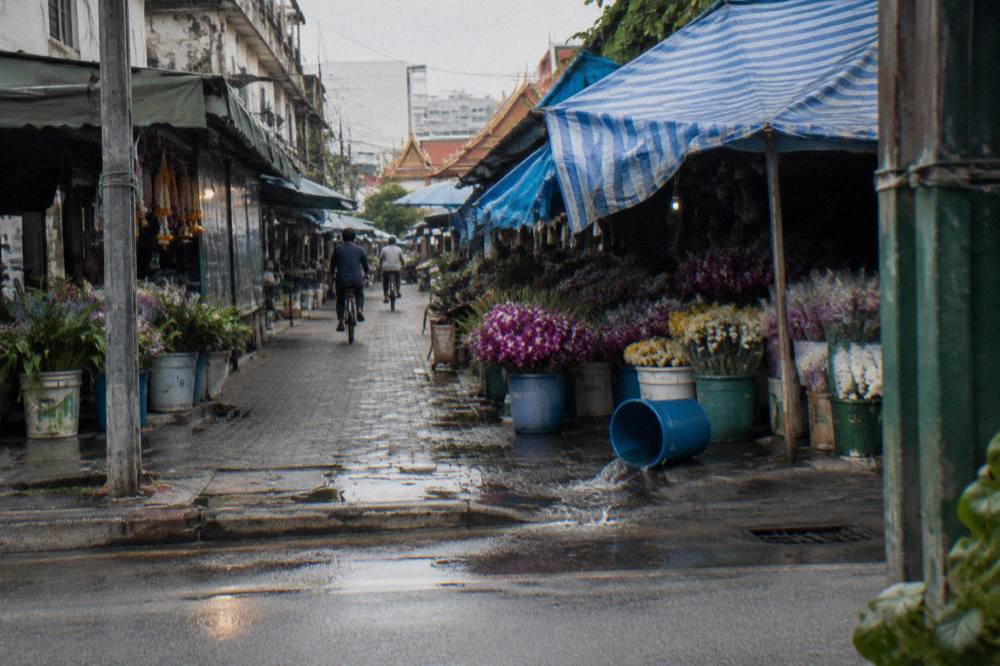
The wholesale peak runs overnight into the early morning, roughly from late evening until mid-morning, while daytime visits find a calmer retail market, so the best time depends on whether the goal is dawn spectacle, comfortable browsing or a night-time pass on a guided ride. No single opening hour applies, because the market operates as a patchwork of independent stalls, wholesalers and delivery windows rather than one venue with a gate. Travelers who want the full-throttle scene of carts, mountains of marigolds and buyers shouting orders should aim for the earliest hours their schedule allows. Travelers who want room to walk the stalls, buy a garland and take photographs will find the middle of the day easier and cooler out of direct sun.
Weather shapes the decision too. Thailand's seasons divide broadly into six rainy months, three cooler dry months and three hot months, with national average temperatures spanning 18 to 38 °C, according to the Tourism Authority of Thailand's weather page. Roughly speaking, December to February is the driest and most comfortable band, March to May the hottest, and September and October the wettest. An early market visit in the hot months doubles as heat management: the stalls are under cover, the wholesale action is at its best, and the ride there happens before the day builds. The seasonal detail is covered more fully in the best time to cycle in Bangkok guide.
The table below sums up how the three visit windows compare in practice.
| Visit window | What the market looks like | Best suited to | Trade-off |
|---|---|---|---|
| Late night to early morning | Peak wholesale: carts, buyers, full stalls | Photographers wanting the busiest scene | Early start, hardest in the coolest months to wake for |
| Mid-morning to mid-afternoon | Calmer retail trade, garlands and plants | Families, slow browsing, first-time visitors | Less wholesale drama |
| Evening | Lively stalls under night lighting | Riders pairing with dinner or a night tour | Wholesale quiet, softer colour |
Night tours deserve a mention here because the market is one of the few old-town stops that stays genuinely lively after dark. Guided night rides such as the Night Ride, Restaurant Dinner tour, from $37.00 per person, 3.5 hours, 4.7 across 104 reviews, route through illuminated old-town streets, and the Bangkok night ride guide covers the after-dark options in detail. A rider deciding between a dawn wholesale visit and an evening pass is really deciding which version of the market they want: raw commerce or softer night-lit colour.
Which Guided Bike Rides Pass The Flower Market In Bangkok?
The flower market is a stop on the old-town rides listed here, most directly the Chinatown, Flower Market and Turtles tour, from $39.86 per person for 4 hours with bike, helmet, guide, a snack, drinks and a boat crossing included, rated 4.9 across 90 reviews. That ride starts at 230 Thanon Naret in Bang Rak and links the market with Chinatown lanes and a riverfront turtle-feeding stop, which makes it the most complete market-centred option on the site. Its meeting point sits in the Bang Rak district, a short hop from the market district itself, and its group size caps at 8.
Two other rides form the natural comparison set. The Classical City Ride, from $39.56 per person, 3 hours, 4.8 across 2,481 reviews, starts at 23 Charoen Krung 24 in Talat Noi and covers the old river quarters where the market sits, with a snack, drinks and a boat crossing included. The Half-Day Ride, Lunch Included, from $39.31 per person, 4 hours, 4.9 across 286 reviews, starts on the Thonburi side at Somdet Phra Pin Klao and crosses into the old town with a full lunch, helmet and bottled water included.
The three rides above differ mostly in meal depth and starting point, not in whether they can reach the market district: they set off from Yan Nawa on the east bank, from Samphanthawong in the Chinatown quarter, and from Bangkok Noi on the Thonburi side of the river. The choice usually comes down to whether a rider wants a full lunch stop, the shortest time commitment, or the market-plus-Chinatown combination. Riders wanting a market stop plus a temple emphasis can also look at the Temples and Canals, 3 Hours tour, from $22.00 per person, 4.9 across 4,122 reviews, the most reviewed ride on the site, which starts at 429 Krung Thon Buri Road and crosses the river into this same district with bottled water included.
The Chinatown and flower market ride page carries the full detail for that tour, including its meeting point and everything the tour includes. It is worth checking availability early if travelling in the driest months, when old-town rides fill fastest.
What Does A Flower Market Stop Look Like On Two Wheels In Bangkok?
A typical guided stop means parking the bikes at the market edge, walking the covered aisles with the guide, and rolling on, so the market is seen on foot rather than from the saddle. Guides park the group where the lanes are widest, because the interior aisles fill with handcarts and flower buckets and are not practical to ride with ten people. From there the visit is a walk: past the garland makers folding marigolds and orchids onto thread, past cool rooms stacked with roses wrapped in newspaper, past the fruit and vegetable annex that still runs as part of the same market complex.
What surprises many first-time visitors is how much of the market is not about tourists at all. The bulk of the trade supplies temples, hotels, funeral arrangements and household shrines across the city, and the garlands hanging in rows are religious offerings first and souvenirs second. A guide adds real value here by explaining what each type of garland and flower arrangement is for, something the stalls themselves rarely have time to do mid-order. Photography is generally tolerated in the aisles, but the working wholesale hours are busy ones, and a courteous rider steps aside for loaded carts.
The sensory load is part of the appeal. The smell of cut stems and marigolds mixes with the diesel of delivery trucks and the fruit stalls next door; the floor can be wet where stems are trimmed and buckets are drained; the aisles are uneven underfoot. Closed shoes beat sandals for this stop, a point worth repeating in the packing section below. Riders who enjoy this kind of working-market atmosphere may also enjoy the Bangkok street food guide, since several food-focused rides use the same old-town lanes.
For riders weighing a food ride against a market ride, the Hidden Bike and Food Tour is a strong alternative, from $56.73 per person, 4 hours 30 minutes, 5.0 across 592 reviews, with a full lunch or dinner included and a group cap of 10. It does not center the flower market, but it serves the same appetite for the old city's working streets.
How Much Do Bangkok Bike Rides That Reach The Flower Market Cost?
Old-town rides that can include a flower market stop run from $22.00 to $80.00 per person depending on duration and inclusions, with the mainstream market-area options clustered between $39.31 and $56.73 per person, and every price on this page is a per-person from-price shown on the booking page. The cheapest ride on the site that reaches this district is the Temples and Canals, 3 Hours tour at from $22.00 per person, which keeps the price low by holding the inclusions to bike, guide and bottled water. At the other end, the 5-Hour Sunset Ride, Meal runs from $80.00 per person with a full dinner, helmet and boat crossing included, 5.0 across 25 reviews.
The table below compares the rides most relevant to a flower market plan. All are guided, all include the bike, and all prices are per person starting prices.
| Ride | Duration | From price | Rating | Group max | Meal or snack |
|---|---|---|---|---|---|
| Temples and Canals, 3 Hours | 3 hours | $22.00 | 4.9, 4,122 reviews | 8 | Bottled water only |
| Half-Day Ride, Lunch Included | 4 hours | $39.31 | 4.9, 286 reviews | 10 | Lunch |
| Classical City Ride, 3 Hours | 3 hours | $39.56 | 4.8, 2,481 reviews | 16 | Snack and drinks |
| Chinatown, Flower Market, Turtles | 4 hours | $39.86 | 4.9, 90 reviews | 8 | Snack and drinks |
| Canal Boat Combo, Lunch | 3.5 hours | $45.00 | 4.9, 1,592 reviews | 10 | Lunch |
| Hidden Bike and Food Tour | 4.5 hours | $56.73 | 5.0, 592 reviews | 10 | Lunch or dinner |
A few patterns are worth reading off that table. The sub-$25 options trade meal inclusions for price; rides between $39.31 and $45.00 per person are where most riders land, adding either a lunch or a snack plus drinks; and above $55 the rides add full meals and longer routes. The Canal Boat Combo, Lunch, from $45.00 per person, 4.9 across 1,592 reviews, pairs the bike loop with a boat leg and lunch, which suits riders who want the river seen from the water as well as the bank. Its details are covered in the Bangkok bike and boat guide.
For the budget side of the decision, the Bangkok bike tour cost guide breaks down what drives the price differences across the whole site, including which inclusions actually move the number.
Money practicalities for the market itself: stalls deal in cash, and the baht has traded around 33 to 34 per US dollar, with rates moving daily per the Bank of Thailand exchange rate page. Small notes make garland purchases smoother than large ones.
What Should You Wear And Bring For A Bangkok Flower Market Ride?
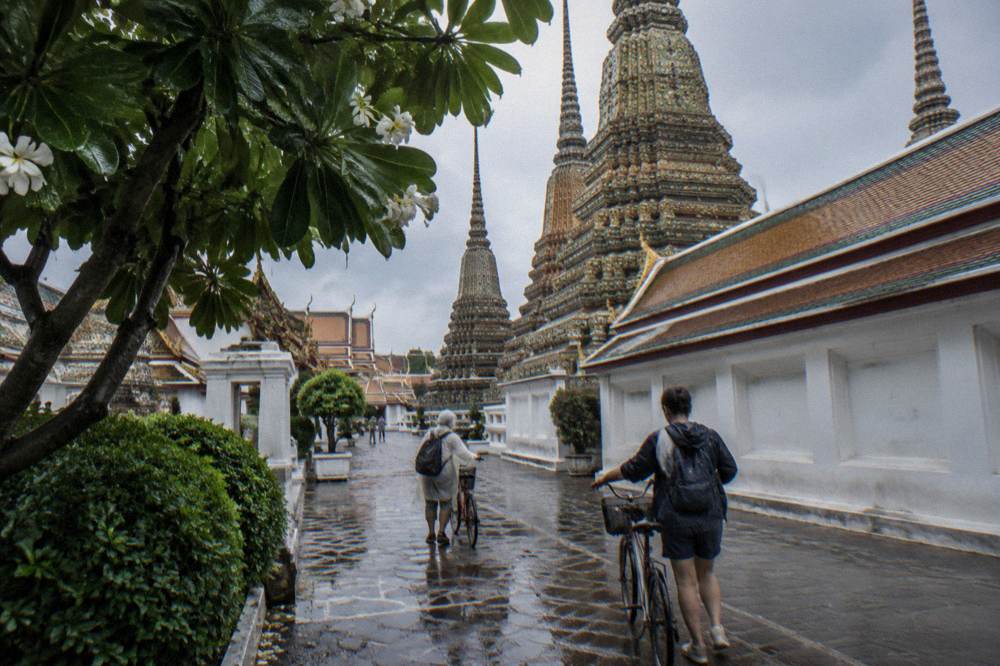
Dress for heat, covered walking and temple proximity: light breathable clothing, closed shoes for the wet market aisles, sun protection, and a modest layer or long item if the route continues to temple grounds, since the Grand Palace's official banned list includes short pants, tight pants and bike pants. The palace's practical information page is explicit that sleeveless shirts, vests, short tops, see-through tops, short and torn pants, tight pants, bike pants, mini skirts and pants skirts are not allowed, so any rider planning to pair the market with a palace visit needs a change of clothing or a longer layer. The full dress detail sits in the what to wear on a Bangkok bike tour guide. The same modesty rules apply at riverside temples, and the Wat Arun bike tour visitor guide explains which routes stop there and what layers work best for the crossing.
Bring water even on rides that include it, since most options supply a bottle per person but a hot-day loop calls for more. Bring a dry bag or a plastic sleeve for phones and cameras, because market floors are wet in places and rainy-season rides can catch a shower. The Chinatown, Flower Market and Turtles ride and the Half-Day Ride, Lunch Included include helmets; on the Classical City Ride and the Temples and Canals ride, helmets are available on request rather than a guaranteed inclusion, so riders who want one should ask in advance.
National average temperatures span 18 to 38 °C across the year, and in the hottest months, roughly March to May, a midday ride through uncovered streets is the hardest version of this itinerary. Booking the earliest departure of the day, drinking before the ride starts, and choosing a route with covered stops like the market is the standard approach, and the Bangkok bike tour heat guide goes deeper on timing and hydration.
What Mistakes Do Visitors Make At Pak Khlong Talat?
The recurring mistakes are arriving at the wrong hour for the experience wanted, expecting a walkable museum rather than a working wholesale floor, riding into the interior aisles instead of parking at the edge, and skipping the surrounding old-town stops that make the trip worthwhile. Each of these is easy to avoid with a little planning, and guided rides handle most of them by design, which is a fair part of what the ticket buys.
Timing errors top the list. A visitor arriving at mid-afternoon expecting peak flower drama finds a market in transition between retail and the next wholesale cycle, and can leave underwhelmed. The wholesale energy lives in the overnight and early-morning hours; if that is the draw, plan around it or pick a night ride. Conversely, a visitor with kids or limited heat tolerance may find the very early start brutal, and the calmer mid-morning retail market is a legitimate second choice.
The second error is footwear and expectations. Sandals on a wet market floor, and an expectation of tidy boutique stalls, both misfire. The market is a wholesale floor with trimmed stems, drained buckets and moving carts, and it rewards sturdy shoes and a working-market mindset. The third error is treating the market as the whole trip: it sits inside one of the densest sight districts in the city, with Wat Pho, the Grand Palace approach and the Yaowarat lanes all within a short ride, so a route that strings them together is far better value than a taxi in for the market alone. The Bangkok Chinatown bike guide covers the Yaowarat side of that pairing. If you want to see how the lanes, temples and food stalls of that district connect before you ride in, the Yaowarat streets, food and temple guide lays out the whole picture.
The table below collects the four traps and the simple fix for each.
| Mistake | What goes wrong | The fix |
|---|---|---|
| Arriving mid-afternoon | Market between cycles, stalls being restocked | Aim for the overnight-to-morning wholesale peak or an evening pass |
| Wearing sandals | Wet floors, trimmed stems, moving carts | Closed shoes for the market walk |
| Riding into the aisles | Carts, buckets and crowds in narrow lanes | Park at the market edge and walk in, as guided rides do |
| Market-only itinerary | Missing Wat Pho, Yaowarat and the riverbank nearby | Pick a ride that strings the old-town stops together |
A quieter fourth mistake concerns arrival logistics. Several of the best market-area rides have no hotel pickup, so riders need to reach the meeting point on their own; the getting to tour start points guide covers the options. Riders who would rather be collected should note that hotel pickup is included on the Jungle Ride, Meal and Pickup tour and on the 8-Hour Boat and Bike, Pickup tour, while the Ayutthaya pickup ride offers shared pickup on Ayutthaya Island and near the train station only, and most old-town options do not include pickup.
For a rider whose priority is simply the most flexible market-area loop with a big review pool behind it, the Classical City Ride remains the volume choice, from $39.56 per person with a snack, drinks and a boat crossing included.
How Does A Flower Market Stop Fit Into A Longer Bangkok Cycling Plan?
A market stop slots naturally into either a half-day old-town loop or a full-day plan that adds Chinatown, the river crossings or a sunset leg, and the deciding factors are meal timing, heat tolerance and how many districts a rider wants in one outing. A common shape is a morning market-and-temples loop of 3 to 4 hours, lunch, then a rest through the hot midday hours and an optional evening ride. The rides above cover both ends of that day: the 3-hour options handle the morning, and night rides such as the Hidden Paths Night Ride, Street Food, from $50.59 per person, 4.8 across 86 reviews, with dinner included, handle the evening. Since an included dinner changes how the rest of the day gets planned, the guide to which Bangkok bike tours include food and drinks spells out which rides cover a full meal and which only pause for street snacks.
Riders with two or more days can widen the map. The green jungle district of Bang Krachao across the river makes a strong second-day contrast to the old town, covered in the Bang Krachao bike tour guide, and Ayutthaya makes a full day of ruins and riverside cycling, covered in the Ayutthaya bike tour guide. Neither of those passes the flower market, but both reward the same planning instincts: early starts in hot months, cash in small notes, and a booking page checked before travel.
Arrival logistics are worth settling before the ride is booked. The Thailand Digital Arrival Card must be completed by all passengers, submitted up to 3 days before arrival, and the official TDAC page lists no fee. Visa terms changed on 15 September 2026, and because the country lists behind the revised schemes are long, the Ministry of Foreign Affairs briefing is the reference to check for a specific passport.
Whichever shape the plan takes, certain rides stand out as strong fits for a flower market stop.
Common Questions About The Bangkok Flower Market
What Is Pak Khlong Talat?
It is Bangkok's main wholesale flower, fruit and vegetable market, on Chak Phet Road by the Chao Phraya in the Phra Nakhon old-town district. It supplies temples, hotels and florists across the city and doubles as one of the most atmospheric stops on old-town bike rides.
Does Pak Khlong Talat Have Opening Hours?
No single opening hour applies, because it is a patchwork of independent stalls and wholesalers. The wholesale peak runs overnight into the early morning, and retail stalls trade through the day, so the best time depends on whether the goal is wholesale spectacle or calm browsing.
Which Bike Tours Stop At The Flower Market In Bangkok?
The flower market is a stop on the old-town rides listed here, most directly the Chinatown, Flower Market and Turtles tour, from $39.86 per person for 4 hours, 4.9 across 90 reviews.
Can You Buy Flowers At The Market As A Tourist?
Yes. Beyond the wholesale trade, retail stalls sell single garlands and small bunches through the day, and payment is in cash. Small baht notes are easier for garland purchases than large ones.
What Should You Wear To The Flower Market In Bangkok?
Light clothing for heat and closed shoes for wet, uneven aisles. If the plan continues to temple grounds, add a modest layer: the Grand Palace's official banned-dress list includes short pants, tight pants and bike pants, so cycling kit alone will not pass its gate.
Is The Flower Market Better In The Morning Or At Night?
For wholesale drama, early morning, when buyers collect stock and the aisles are busiest. At night the market stays lively with softer light and cooler air, and guided night rides through the old town pass close by, so both work depending on the experience wanted.